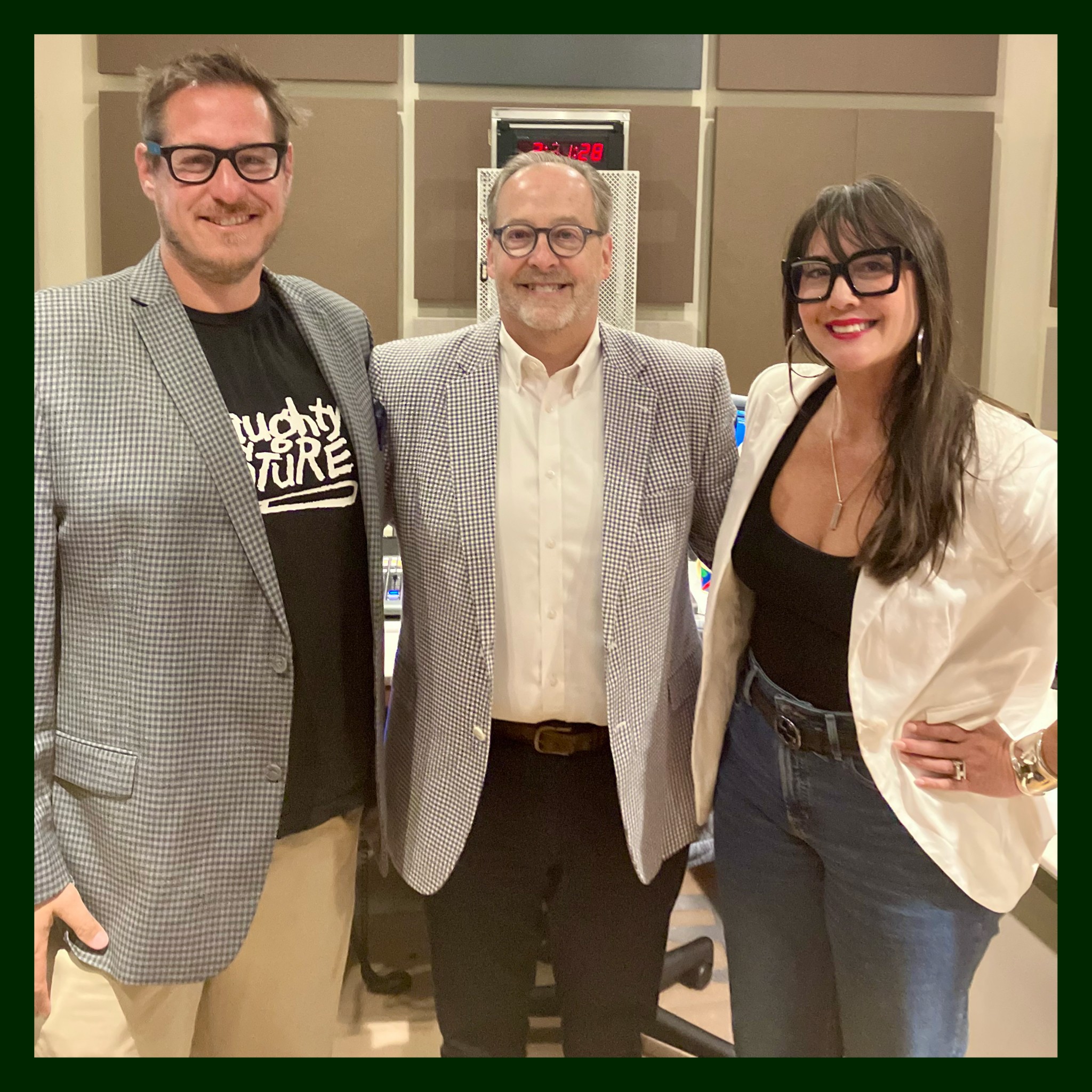
Bruce C. Bryan: My guest today on Naturally Curious is Theresa Dorlini. I'm your host, Bruce C. Bryan, and you're in for a treat this week on the show. Theresa makes things beautiful. Her company designs spaces with home design commissions all over the United States. She's a furniture designer with some custom-made pieces that I've seen personally in the showroom of Circle Design Studio.
Theresa creates jewelry, and I'm betting she does a lot more. With all those creative outlets, you might think a person could run out of ideas or have trouble coming up with new concepts. Instead, it seems like these different outlets fit together in unison. I'm looking forward to hearing about today's guest's creative process.
My interview with designer, artist, and creator Theresa Dorlini is coming up next on this week's episode of Naturally Curious
Dorlini Segment 1
Bruce C. Bryan: Theresa Derlini, thank you for being my guest on the show, and welcome.
Theresa Dorlini: Thank you for having me.
Bruce C. Bryan: So your work and your company's work has been recognized nationally. Will you talk about that a little bit?
Theresa Dorlini: Yeah. Um, our, uh, firm, Circle Design Studio, um, is an architecture and, uh, design firm, design build. Um, we are licensed interior designers, architects, and a Class A contractor.
Um, and we just have a holistic approach to design. We like to say that we are interior designers who think like architects, architects who think like, uh, builders, and builders who think like designers. So-
Bruce C. Bryan: So that's why it's a circle.
Theresa Dorlini: Yes. The full circle process and, um, yeah, holistic.
Bruce C. Bryan: So I know you don't- Do the work to win awards.
But it must be gratifying when that happens, yes?
Theresa Dorlini: Yeah. I think, I mean, it's always nice to be recognized. Um, you know, there's certain awards that I think mean more than others. Um, some of the ones that we're really proud of are, um, the IDEAS awards, which are, uh, ASID and IIDA. Um, that's, uh, being judged by your peers.
So it's one thing, you know, to have sort of the general public love your work, but, um, to be recognized amongst, um, other designers is really nice.
Bruce C. Bryan: So we'd maybe talk about your firm a little bit. 20 years now, but there must be some ebbs and flows, uh, especially in a situation with a creative company like yours that's been around 20 years.
Theresa Dorlini: Yeah. Um, I mean, besides just sort of like regular economic upturn, downturn, um, uh, our firm started out, uh, y- 20 years ago and really, um, my husband John and I were just young and dumb, and sometimes that's what it takes to go out there and-
Bruce C. Bryan: You not know any better, right?
Theresa Dorlini: Right. Um, knowing a lot about design and knowing about the type of firm we wanted to build, but maybe not knowing a lot about business.
Um, so but I think, um, you know, in the beginning when you're starting out, you, you, you take almost everything. You kind of have to. But, um, I think, uh, you do a good job on, on the small projects and you earn people's trust and that's kind of how it, how it grows over time.
Bruce C. Bryan: And leads to other introductions- Mm-hmm
and other projects and other types of work, right? Yeah. Grows organically.
Theresa Dorlini: Yeah.
Bruce C. Bryan: Um, have you seen some trends, maybe patterns to things, uh, not just with your company but even in the industry. What's happening in the industry these days?
Theresa Dorlini: I think there's so many, so many things are happening and obviously-
Bruce C. Bryan: And of course I have to say which industry 'cause you're involved in three different industries under one umbrella, right?
Theresa Dorlini: Yeah. I think, you know, design in general is, is, you know, it's, it's always growing, changing. I think in terms of like, you know, uh, furniture or home furnishings, that's been an interesting thing. And since our firm is, um, you know, multidisciplinary but also we, you know, do projects in almost, almost every type of pro- project type so, you know, everything from, uh, corporate to healthcare we've won awards for, and then high-end residential.
I think you, um, you know, you see kind of how the, the market, you know, changes and what you need. But say in, in, in furnishings, um, you know, there... It used to be that it was, there was a clear line between commercial furnishings and home furnishings and now it's very, you know, the term resimercial, respitality,
Bruce C. Bryan: um- Interesting.
Okay ...
Theresa Dorlini: and that's a shift in terms of people, um, the work environment becoming a little more casual and people, the younger generation wanting that living room feel, um, instead of feeling like they're all buttoned up and, you know, stiff. Um, and we were seeing that, you know, I would say at least, you know, 10 years ago and I think, um- Being able to touch so many different, um, sectors in design helped me because when that was emerging, there weren't a lot of designers who, you know, you were either a corporate designer or you're a residential designer.
But then when you have all these corporate projects that want a residential look, who do you turn to?
Bruce C. Bryan: Yeah. And so you had that generalist approach- Yeah ... which then probably served you well. I think about when I travel. You're listening to Naturally Curious, by the way. I'm Bruce Bryan. This is Teresa Dorlini from Circle Design Studio.
And when I travel, let's say you go to a hotel, maybe a boutique hotel, more and more of them are feeling like somebody's home, like you just described. And a comfortable workplace, I would guess probably since COVID, since people were working remotely, they tend to have some characteristics of comfort as well, and that's becoming probably a, a trend that you were just talking about, right?
Theresa Dorlini: Yeah. I think, um, and especially as the workforce gets younger, I think what they value is very different. So whereas you might have, you know, say, the Boomers who really valued that corner office and, you know, the big executive desk, you know, the younger kids, they wanna be able to plop their feet up and, you know, sit in a beanbag chair with a laptop and have mobility.
They don't wanna be stuck to just one desk. Um, it's just the value system has changed.
Bruce C. Bryan: And I guess I was thinking more about the residential side. Mm-hmm. But how would you describe your approach or y- I gu- I should say your company's approach, whether it is commercial or residential. How would you describe it?
Theresa Dorlini: Um, I, I think we're very client-focused. Uh, I, uh, it's, it's when people, um... You know, I've never been a designer who could just, you know, do me. Um, I, I, I really dig into what the client wants and, um, you know, so in, in residential design, that's really digging deep into how they're gonna use the space. Um, you know, we get into lots of deep questions.
We call them programming questions, and that's really to draw out what, um, what the client needs and, and, you know, their aesthetic needs, you know, functional needs. Um, we get into the nitty-gritty. But our approach is always client-focused and figuring out and helping them interpret, um, everything that they want, um, into a physical space.
Bruce C. Bryan: It's interesting to me because in that scenario, you probably are getting into people's spaces, not just physically, but into their emotional space, into their mental space. Yeah. I bet you ask some questions. You call them programming questions. And I don't wanna, like, get any big trade secrets, but can you tell me one or two questions you might ask somebody where you're in their house asking them a question and they're startled or shocked or they're thinking, "Why do you wanna know this?"
Like, is, is there anything that- Yes ... that...
Theresa Dorlini: Yes.
Bruce C. Bryan: I'd love to hear that. That sounds interesting to me.
Theresa Dorlini: There, there are so many of those. Um, we get into, you know, when you're, uh, working with, say, a couple and, uh, designing a, uh, the primary suite, uh, p- primary bath, there's, you know, questions where you get in...
They're n- pretty intimate questions where you're like, "You know, are, are you ever gonna shower together?" You know, it's like, what's the... You know, it's like, how are, "How many shower heads do we need? How are we gonna do this?" You know, um, and I think once we... By the time we get to that, you know, we've already had enough interaction with them, and I think we, i- we're not, you know, quote-unquote, "friends" with the clients by this point.
But I think we put them at ease so that they can answer those questions because, you know, uh, if they don't feel like they can trust you or know you, um, it feels a little weird. And they're like, "Why are you asking me if we shower together?" I'm like, "Well, hey, how are we gonna know the size of the shower and, you know, the other things that you're gonna need?"
So.
Bruce C. Bryan: So w- um, you're listening... That's a great, that's a great question and a great example, so thank you for answering that. You're listening to Naturally Curious. I'm Bruce Bryan. This is Theresa Doralini from Circle Design Studio. And, uh, it, I just, I was gonna ask, so when you two argue, do you tend to argue in the living room or in the kitchen?
No, just I- Yeah, exactly ... I'm sure that's not one of the questions. Sure. But do you want a, do you want an island between you to keep you... Anyway, uh, nothing like that. Yeah. Yeah. But um-
Theresa Dorlini: Maybe they argue in the shower. Who knows? There
Bruce C. Bryan: you go. That's right. So I guess, um, probably with the high-end, I'm thinking more on the residential side, with the high-end, uh- customized solutions that you're providing, it might be a little hard to get traction in a narrow geographic area with your approach.
Has that kind of caused you to, to broaden your, your approach in terms of regions or other parts of the state? Or, or how, how do you all end up working with, with the customers and the c- clients, I should say, that you work with?
Theresa Dorlini: Yeah. I think the clients, you know, by the time they find us, they've done their research on us um, which is, they end up being the best clients anyway.
Um, but in terms of, you know, region, I think we've... we're, we're sort of settling into a nice spot right now with, you know, Smith Mountain Lake. I think after COVID there was a lot of, uh, there were a lot of people sort of, uh, fleeing, you know, New York and DC just to kinda get away from, from the cities, and I think that that's kind of starting to become our sweet spot are these getaways, mountain getaways, lake getaways.
Um, so I don't, I don't know if the- if we, uh, targeted that or, or that's just, it's- Or it just
Bruce C. Bryan: happened naturally- It's kind of- ... because of the word-of-mouth and- ... organically.
Theresa Dorlini: Yeah ...
Bruce C. Bryan: the, the way referrals happen. Mm-hmm. So, so people think, and when they, when they go to your website or if, if people are listening and they...
If you're doing it while you're driving, please don't go to the website right now. But, but if people wanted to go look, they'll see that it, what you do plays, and I think is perceived to play really well, like, in the desert or in big mountains, and I, I know you went to Arizona State. Um, but you're also finding that it's working well in the hills and in the woods and like you just said, by the lake.
Um, talk a little bit about that.
Theresa Dorlini: I think it's just, it's just understanding the importance of setting, you know, and, and, and really allowing the, um, the landscape to dictate, um, the architecture. I think, you know, when you, when you, you know, go to university out in Arizona, there's just so much great, you know, desert landscape out there, and a lot of the architects out there are really focused on, um, building for that setting and, and sometimes, you know, building around mountains and rockscapes and things like that.
So you have to be sensitive. So I think, um, having a, an understanding of that, having an understanding of the act- like climate, um, you know, just for, um, you know, conditioning reasons. Which
Bruce C. Bryan: way the windows face and things like that. Yeah,
Theresa Dorlini: yeah.
Bruce C. Bryan: Yeah, it is interesting to me because people out west ta- And I've spent a lot of time in Arizona.
They talk about how beautiful it is here in Virginia, and people in Virginia talk about- Yes. ... how beautiful it is in the desert, and that seems to be something that comes up in a lot of these conversations. I'm betting with you doing some of these bigger projects, people might like to kinda consider you their secret weapon, let's say.
Mm. And, and that may mean getting referrals isn't as easy as one might think. Um- Perhaps you can expound on that some because I would think that you're doing this amazing work, but people might want to think it was their idea or p- and, and I'm not even saying that, but- Yeah ... but they may not wanna reveal- Yeah
how closely they worked with you and the work that your company might have done.
Theresa Dorlini: I think sometimes, you know, when y- y- when there are definitely, you know, clients, uh, you know, who maybe missed their calling as an architect or a designer and, and wanna live vicariously, but that's part of the process. Um, we have had clients where, you know, they, they really wanna be involved.
Um, uh, but then we also have clients who are just very private just because of who they are, um, and, you know, that sort of dictates what, what we can show and maybe also the, who, who we're crediting.
Bruce C. Bryan: Yeah, the kind of marketing pieces you can do- Yeah ... obviously.
Theresa Dorlini: Yeah.
Bruce C. Bryan: Yeah, I think that, um, everyone has a boss or a client, um, and you do as well, I bet.
But what do you do when someone pushes you just a little bit too far and, and starts to take that creativity and, and make it maybe a little more bland or more mainstream- Mm-hmm ... than, than you, you like? That, that's gotta be hard for you.
Theresa Dorlini: Yeah, we try to, to, to, you know, s- um, be really intentional and deliberate about what the, um, you know, the, the design intent is, you know, and, and stating that very, very early, and that comes from the client.
So a lot of times... And it's gotten worse since, you know, Pinterest and Instagram. It was- I
Bruce C. Bryan: was gonna go a step further, maybe worse since HGTV. I mean-
Theresa Dorlini: Yeah ...
Bruce C. Bryan: all your work gets done in about 22 minutes. Is that right? Right. Unless it's 44. Right. Is that how pretty much all, everything's handled really quick, right?
Theresa Dorlini: Exactly, yeah. And, and I think that, um, you know, just, um, uh, getting the client to come back to what that, um, design intent is, that statement, and really reeling them in because, you know, on- once we start a process, uh, you know, it's like we start off and we're, you know, it's Spanish mission, and then we're like, "Nope, we went here and we saw this."
And I go, "Well, just because you saw that, that tile doesn't mean that that tile belongs in this house."
Bruce C. Bryan: Right.
Theresa Dorlini: You know, or just because you like that roof line now, this is where we were. And, you know, you have to be, you have to be pretty firm. Um, but I think there's a lot of exploration in the beginning and a lot of freedom in the beginning to get to know them and draw all those things out so that we're not shutting them down.
We're hearing everything. But at some point, you need to stop, and, and we have to facilitate them, you know, and, and, and, and steward them, um, in a way.
Bruce C. Bryan: Through that process.
Theresa Dorlini: Yeah.
Bruce C. Bryan: When we come back, I'd like to talk more about how this architectural and design work fits into other creative outlets that you've been exercising.
Dorlini Segment 2
Bruce C. Bryan: Welcome back, Teresa Derlini. Circle Design Studio started with architecture and interior design, and now you've grown. Talk a little bit more about how that's happened.
Theresa Dorlini: Yeah. We've expanded, um, and, uh, have, uh, become a Class A contractor, so we can do the largest projects, you know, possible. And mostly, uh, going after and, and having the contractor's license was just, um, uh, uh, really, to be honest, was, uh, to, to have more control over the design process and who the subs were that were executing the work.
So th- there's a little bit of a control freak in both myself and my husband. Um, but, um, in terms of, you know, the other things that we've done, um, uh, Signature by Circle is our, uh, custom cabinetry line. And again, the control freak in me was if I'm going to be designing the cabinetry, why not also be able to, you know, supply, um, the cabinets and, and, and use a product that I believe in?
Bruce C. Bryan: Yeah. You want precise work from your surgeons- Yes ... from your architects, your builders, and- Mm-hmm ... not saying you're a surgeon. But yeah, there's certain industries where precision's important, right? Yes. Yes. So looking at it, stepping back, looking at it a little more holistically, um, what are you learning right now?
Theresa Dorlini: Oh, gosh. Um, I'm like professionally, personally, um, uh-
Bruce C. Bryan: So many lessons.
Theresa Dorlini: So many lessons. I mean, the, the joke in the office is that I'm in my midlife crisis. Um, I have... There's lots of things that are, are contributing to that. But I think it, it is just a, you know, I am a, uh, you know, naturally curious person, and there's so many things that I want to pursue.
Um, and, uh, uh, pursuing furniture design and, um, I recently, um, s- uh, was on a six-month, uh, sabbatical. I actually extended it, but creative sabbatical, and that was just because, um, uh, I wanted to actually dig in and, and, um, take the time that I needed to pursue furniture design and product design, which has always been a goal.
Um, we, you know, I, I design custom pieces for clients but had never gotten into the, you know, manufactured furniture realm.
Bruce C. Bryan: The, the broader-
Theresa Dorlini: Yeah ...
Bruce C. Bryan: idea of furniture design. Mm-hmm. So yeah, uh, focusing, kinda narrowing you back into that part- Mm-hmm ... and, and maybe things related to design, what have you learned?
And maybe, maybe it's- Mm ... appropriate, and if you're okay with it, during that sabbatical, which I think professionally is such a great thing for people if they're in a position where they can do it, especially if you come out with practical things. What kinds of things did you, did you come out of that or are you coming out of that with?
Theresa Dorlini: Um, I think it's a deeper knowledge of the manufacturing process. I think it's a deeper knowledge of maybe what the capabilities still are in this country. Um, you know, a lot of the furnishings are, are made overseas, you know, Vietnam, China, things like that. And, um, uh, uh, I, I guess I, I just had that nostalgic, you know, love of, you know, it's maybe the mid-century and, you know, Eames and all of this exploration, and I think that the furniture industry is a little bit different than that now.
Um, and so l- learning that. I'm, I'm someone also who, you know, uh, I, I like ideas, but I like to know how things are made. And if I know how something is made and I know parameters and things like that, I actually design better. So understanding what different factories, um, you know, their capabilities are helps me to become a better designer.
I think where what I'm learning now is that you just don't have access to that, um, level, uh, in a lot of ways. Um, n- you know, it's not, it's not the great furniture era that it used to be- We are- ... in, in this country.
Bruce C. Bryan: And, and, and I, I think there are probably some very high-end and very strong manufacturers.
Mm-hmm. And then there are some people making their way. Yeah. Right? Yeah. We are listening to Naturally Curious. You used the, the phrase Naturally Curious. First guest to do that- Ooh, wow ... in an answer back to me. So that's kinda fun. Wow. That's Teresa Dorlini. I'm Bruce Bryan. And the lessons that you've been learning, do they apply to other types of creative work that you're doing?
Theresa Dorlini: Yeah, I think, I mean, creativity is just so fluid. There's, you know, y- you never really know where, where the spark is gonna come from or, or where the inspiration comes from. Um, it, it, it's a fluid process, and I just feel like as long as you're open to it, the, the great thing about, you know, sort of slowing down and taking a sabbatical, um, and, and, uh, weeding out some of the noise of everyday life is that you can hear some of the inspiration
Bruce C. Bryan: Interesting.
Are there themes to what you create, Teresa?
Theresa Dorlini: Um, yeah. There are a lot of different themes. I mean, um, I, uh, the materials that I like to work with in furnishings is, um, you know, uh, metal, leather, glass. Um, I'm a modernist at heart. Um, I think, uh, you know, themes, uh... But I also, you know, started off, uh, in biology and medical illustration, so a lot of things that I look at have to do with, like, human form, um, skeletal structures.
I love, you know, a good chair with an exoskeleton. That's my thing. Um, and, uh, you know, but it's all... I think the more that you open yourself up and you are, you know, curious and, and can, you know, dabble here and there and, and actually are interested in lots of different, um, you know, fields and, and, um, topics, I think that that makes your design better.
Bruce C. Bryan: You alluded to this, but where do your ideas come from, you and your husband, in the, the ways- Mm ... you create things? And I mean that generally, because I, I'm curious where the ideas come from.
Theresa Dorlini: I think sometimes it can be from, from the material and its capabilities, or sometimes, you know... I give an example of my corset chair, which, um, is a, is a chair that i- I had an idea, and it, it's based off of, you know, Madonna's Vogue video.
The b- or the pr- the scene where she, you know, you just sort of see the back of her corset. Um, it's pretty iconic. the '90s Madonna era was pretty key in- ... forming my, you know, just, like, visual aesthetic. So, um, that's a chair that came from that, and it's just, um, you know, w- who knows where you...
what, what things kind of stick in your mind for a really, really long time, um, and, and how they're gonna come out. So, you know, I think it's being o- being open and I think always either sketching or recording or just taking note, having your eyes open.
Bruce C. Bryan: So we talked about HGTV a little bit earlier. Mm-hmm.
And it's probably a mixed blessing, but people are, it seems, paying more attention to their homes now and to their spaces. But the TV shows make it look so easy, 'cause they get to edit. Like Big Jim edits my show all the time- ... and makes it look better than it is, right? So... Or sound better than it does. But, um, it's kind of a, a mixed blessing, right?
Theresa Dorlini: Mm-hmm. Yeah, I think it's a mixed blessing. I think, you know... I, I hope by now everyone knows that, you know, the shows are, are entertainment. Um, but sometimes they still come into our office and think that it should take 22 minutes and, you know, that you should sledgehammer upper cabinets, um, instead of just taking them down.
Um, the, uh... But yeah, I, I, I... I- I- How- however people, whatever their perception is of design, I think, um, hopefully after they work with us and our team and our firm, they realize, um, you know- what the design process, you know, actually is and, and what goes into it.
Bruce C. Bryan: When I ask you about some projects, and it can be in any of the genres that you've loved-
Theresa Dorlini: Mm-hmm
Bruce C. Bryan: what projects come to mind, and what it is about those projects that you really love? And you don't have to list the actual project. Yeah. But, you know, as they come to your mind- Mm-hmm ... what is it about those projects, and what is it that you've loved?
Theresa Dorlini: I love the clients who are willing to take risks. I love the clients who, um, know that they came to us for our expertise and trust us.
I like the clients who like to be pushed a little bit. And, um, you know, obviously I'm a modernist, but when you design for a client, you should be able to be fluent in sort of all aesthetic styles, you know, things like that. Um, I, I actually, um, uh, when, when things are maybe too straightforward and a client comes in and just says, you know, "This is, you know, this is the style I want," or whatever, I, I find that those are a little bit boring because, you know, if it's already been done, why do we wanna do it?
Um, I think also clients and pro- clients and projects who, um, that are just, they value design. They value, like, high detail. They value, it's like the broad view, but then they wanna know that all of those fine details that you see up close are really taken care of. Um, and it doesn't have to be, um... You know, I think a lot of times clients or, or just the general public, they're like, "Oh, well of course you like the really, really big budget ones."
I don't know that that's necessarily the case because sometimes when you have such a big budget, it doesn't push you. You don't-
Bruce C. Bryan: Like you might need to be or wanna be pushed.
Theresa Dorlini: Yeah. Right. You don't, you, you don't push the creative muscle or build the creative muscle because you don't have to.
Bruce C. Bryan: Some of those clients you described, it feels like it might be a little bit like catching lightning in a bottle- Mm-hmm
though. And so do you have specific memories, it sounds like you do- Mm-hmm ... of people that have given you room and space to try new things, be a little more daring?
Theresa Dorlini: Yeah. I, I, I think that, uh, there, there's a ton. Um, I, I, I tend to be one who will, who will push them even more, um, because, uh, you know, as maybe sort of the, the creative kind of visionary, um, i- during all of the projects, I see, I see the end product, uh, almost immediately.
You know, it's, uh, especially if it's a renovation.
Bruce C. Bryan:You just have to bring people along- Yeah,
Theresa Dorlini: yeah ...
Bruce C. Bryan: to where you are.
Theresa Dorlini: Mm-hmm.
Bruce C. Bryan: That makes sense. That's, uh, Teresa Dorlini. I'm Bruce Bryan. This is Naturally Curious. How do you know when you've done a good job?
Theresa Dorlini: I know I've done a good job, um, when the client, you know, cries and gives me a hug usually.
Okay. Um, but, uh, also just, you know, because we are so heavily invested in the visualization process and 3D and whatever, you know, clients always say, "Oh my gosh." Like, they walk in. "This, this looks- Here it is in real life ... this looks just like the rendering." And you're like, "Yep, that's the point."
Bruce C. Bryan: What, uh, Teresa, what feeds your soul when it comes to doing this kind of work?
Theresa Dorlini: I mean, ultimately, you know, I, I love the clients being happy, but what feeds my soul is give, being given the creative freedom. Having, having a client trust me and trust the vision and trust that we're, you know, our team is gonna execute it pretty close to perfection, um, a- and then seeing the vision come alive.
Because, you know, if you're a creative and you have this vision, you know, it's like birthing a baby. You, y- y- you, you want it to, you know, turn out well and, and, you know... I get... I have four kids, so I- everything comes down to this, you know, analogy of birthing babies. But, you know, it's like the, the process of, you know, uh, say, an, seeing an ultrasound picture is kind of like seeing the 3D renderings for the first time, you know?
Bruce C. Bryan: When they come out as real live- Yes ... people or a real live project, that's something different.
Theresa Dorlini: Yeah.
Bruce C. Bryan: I have a quick question- Mm-hmm ... and then we're gonna have to wrap it up here, but there is a, a bonus segment. Would you classify yourself as an artist, or does that word bother or offend you?
Theresa Dorlini: I don't, I don't think it bothers or offends me.
I think, um, uh, I, I'm an artist to a certain degree, but there's so many, you know, constraints and parameters in architecture and design that I can't just be an artist. Um, so yeah, uh, artist, uh, uh, designer more than- Okay ... than anything else.
Bruce C. Bryan: Well, Teresa Dorlini from Circle Design Studio, thank you for being my guest on Naturally Curious this week.
Mm-hmm. To listen back to the show, to hear the full interview, and links to learn more about Teresa's work, the creative process, and Circle Design Studio, search Naturally Curious at RadioIQ.org. Naturally Curious was produced and edited by Big Jim Shively with support from Sarah Hobbs and Nick Yee, and is recorded at WVTF Radio IQ Studios.
I'm Bruce Bryant. Thank you for listening.
Dorlini Bonus Content
Bruce C. Bryan: Thanks for sticking around. A little bit more about you, Teresa Dorlini, and again, I appreciate you being my guest today on the show. Um, what do you think you'd tell your 20-something-year-old self now that you've been doing Circle Design Studio work for all these years?
Theresa Dorlini: , I think it's best that I didn't tell my 20-year-old self anything because, you know, like I said, being young and dumb really worked to my advantage.
Uh, I think when you're young, you're just ... You don't know what to be afraid of, and sometimes that's good. So, uh, I - That's a good answer ... that's, that's it.
Bruce C. Bryan: So be bold because you don't know exactly what's gonna come next, right?
Theresa Dorlini: I, I... Yeah, and the other thing is, is, you know, I, uh, m- sometimes we hold ourselves back, you know, just out of fear of, you know, either looking stupid or not, whatever, and ultimately nobody really knows what they're doing.
Just get out and do it.
Bruce C. Bryan: Do it. What, what feeds your soul, Theresa, when it comes to doing this kind of work for others?
Theresa Dorlini: Mm-hmm. Uh, it's the creative process. It's seeing the vision come to life, um, and ultimately, y- you know, serving the client well. But I think, um- Delivering a, a, a product, um, and a space, a, you know, design that, that functions well, that is beautiful, um, checks all the boxes.
Bruce C. Bryan: So what's next? And I, I know you were talking earlier about that sabbatical, but what's, what's next for your company and, and maybe what's next for you too?
Theresa Dorlini: Yeah. Um, the company is, is growing. I think that we are always looking at new and different projects. I think we have our eye kind of on some hospitality design, which will be fun.
Um, but for me personally, I think it is focusing on furniture s- design. So, um, the sister company, Dorlini Modern, um, is really where I think my heart and passion is right now in, uh, developing a modern furniture line, lifestyle line, um, that reflects, you know, classic modern furniture.
Bruce C. Bryan: How important is, is it for you to kinda feed that creative energy you have?
Theresa Dorlini: I think it's really important, uh, to, to get out, and it's, it's hard, you know, when you, when you run a business and have four kids and are always juggling things. It's hard to get that alone time to hear yourself think. And, um, you know, but it's really, it's important. I think being on sabbatical and, and having that little bit more time to breathe and a little bit more margin in my, um, schedule has been great because there are a lot of things where if it's a day-to-day when you're just rushing for deadlines and stuff, you are not awake to any of the inspiration or the creativity around you.
Bruce C. Bryan: I, I love asking creators and artists and I guess designers, uh, things like whether they create at home or at work-
Theresa Dorlini: Mm-hmm ...
Bruce C. Bryan: for example. So how about you?
Theresa Dorlini: Yeah. Uh, I mean, mostly it, it has been at work, but, uh, being on sabbatical I've, I've been at home. I think one of the things that I've enjoyed, uh, working from home is just y- being able to explore and, and I, I went into my sourdough era for a while there.
My bread-baking era. Uh, homemade pasta.
Bruce C. Bryan: Prove it. That's what I always say to people.
Theresa Dorlini: Uh, I'll bring- ... I'll bring some in. Um, but the, you know, uh, homemade pasta era, and I think those were just things that I, you know, always said that I wanted to try. But when I'm at the office I can't, you know, pop in a loaf of bread while I'm working or whatever.
Um, so that's been, that's been good. But I think in general I like, I like being at the office and I like creative energy in the office, but sabbatical has been home.
Bruce C. Bryan: So do you, when you're creating, do you like silence or music? Um- Or video? Somebody likes to... I know people that like to have- Yeah ... TV going on in the background.
Theresa Dorlini: Uh, it depends on what part of the design process. I mean, if it's anything with numbers, I, I, I... It's either silence or classical music. But if it's the jamming, like actually getting stuff done, I mean, it's, it's- You know, for me it's probably like '80s pop or something. Yeah.
Bruce C. Bryan: I asked Cyrus Pace a few weeks ago, um, if he made, um, if, if he had made a playlist, a CD or any of that kind of stuff.
So do, do you have a song or two that might help somebody that's at a creative block and they need a little bit of help? Maybe a song or two comes to mind. If you can't think of one right now, that's okay. You can, you can think about it later and get back to it.
Theresa Dorlini: Gosh, I, I, I will sh- I will show my, my age, but you know, it's...
There's gotta be some Madonna in there. Okay. There's probably Michael Jackson. There's Prince. You know, one of those.
Bruce C. Bryan: Are your ideas from the outside or internally driven?
Theresa Dorlini: Um, uh, uh, I think both, but you know, usually they're just... They're things that I'm, I'm curious to, to figure out or try. I mean, it could be something, you know, I s- I see like a fastener on something, and I'm like, "Oh, well, what would it look like?"
You know, "How could, how could I use this in a different way?" Um, so I think it's a mix of both, but there's a lot of stuff or ideas that I store in my brain and in the archives.
Bruce C. Bryan: And then pull them back when it's appropriate, right? Sketches, yep. So it's been said that people are either creative or they aren't.
Can, in your opinion, can creative skills be enhanced, taught, expanded? What do you think?
Theresa Dorlini: Yeah, I think, uh, the key to creativity is openness. It's just, it's being open to, to what's around you. Um, and I think you can, I think you can enhance it. I think it's, it's calming kind of the other, uh, noise that's around you and just being able to hear what's there.
Bruce C. Bryan: What about AI? It's in every industry. What, what role is it playing in your industry universally? I mean, building and architecture and design and everything.
Theresa Dorlini: Mm-hmm. I think AI can be a great tool, you know, for maybe for iterations. I think, I think to... I, I don't ever want... I mean, as a creative, I don't ever wanna give over the fun stuff to AI.
You know, it's... To me, I'm like, let's, let's, let's make it do, you know, all of the random data entry that no creative wants to do. Um, so I don't ever see our firm using AI to generate ideas. I think we would use it, you know, maybe for speeding up rendering or some of those processes. Um, but to me, I'm like the human mind, I mean, there's...
We... I have, I have years and years j- you know, just from furniture of sketchbooks and, you know, files on the server of, you know, working drawings of things. I'm like, why would I... I don't know. Why would I? I, I don't, I don't, I don't need AI for idea generation.
Bruce C. Bryan: So it's, it's a way to make things more efficient.
One of the things- Mm-hmm ... in the marketing and in, in the advertising world is it's, it's a tool that can be used to make us more efficient- Yeah ... not more creative. Correct. Right? And that sounds like it's similar in your universe as well.
Theresa Dorlini: Yeah.
Bruce C. Bryan: Um, are there other architects or designers or even contractors whose work you appreciate?
Theresa Dorlini: Oh, there are many. I think the, you know, ultimately the, the designers and, and other, um, design professionals that I appreciate are ones that have, um, you know, that heart for collaboration. I think that that's, those are the, those are the other design-type people that I'm drawn to because I think if you go into any project thinking that you're always gonna have...
And my husband will probably laugh at this when he hears it, but, um, if you think that you're the one who h- always has the right id- ideas, then maybe that's not the right idea to have. Um, I do, I do think I have a lot of the right ideas, but I, you know, it, I, I don't ever wanna be the smartest person in the room, um, 'cause that would be, that would be boring.
And a lot of times I think throughout my career, because I have worked for myself for, for so long, um, I'm stri- Like, I'm just, I'm a spot... Like, I want someone to mentor me, and a lot of times they're like, "Oh, well, you've already done this. We don't, you don't need a mentor." And I was like, "No, someone just, I don't know, bounce ideas or, or-"
Bruce C. Bryan: You teach the class.
Yeah. Yeah, but you like to collaborate- Yeah ... in that arena. Can you, Teresa, look at something and just say, "Oh, it's beautiful," or does your brain immediately, and y- you alluded to this earlier, does your brain immediately break down something you see as beautiful and try to figure out why you think it's beautiful?
Theresa Dorlini: I, I definitely think I do that. I think, I think that there, there are certain... My, my eye is drawn, you know, to beautiful things, but there's, there's, there is a science to it. You know, there's, there's all of the design principles, you know, rhythm, proportion, you know, scale, all of these things. And I think when you, you know, are a, a quote-unquote good designer can hone in on those things quickly.
Um, so, uh, I, I think in my mind when I see objects or, or, you know, furniture, whatever, I'm, I'm always slightly tweaking them in my mind anyway, so yeah.
Bruce C. Bryan: To make them just right.
Theresa Dorlini: To make them just right, yeah.
Bruce C. Bryan: Well, maybe you'll have a line of furniture called Just Right or something like that, who knows?
Theresa Dorlini: Maybe.
Maybe.
Bruce C. Bryan: Uh, if people wanted to learn more about you personally or about your company- Mm-hmm ... what, what are some easy ways for them to do that?
Theresa Dorlini: Yeah. Uh, circledesignstudio.com and dorlinimodern.com. Those are our main websites, and, um, that's the best place to find us.
Bruce C. Bryan: Thank you for being my guest on the show.
Theresa Dorlini: Okay. Thank you so much, Bruce.