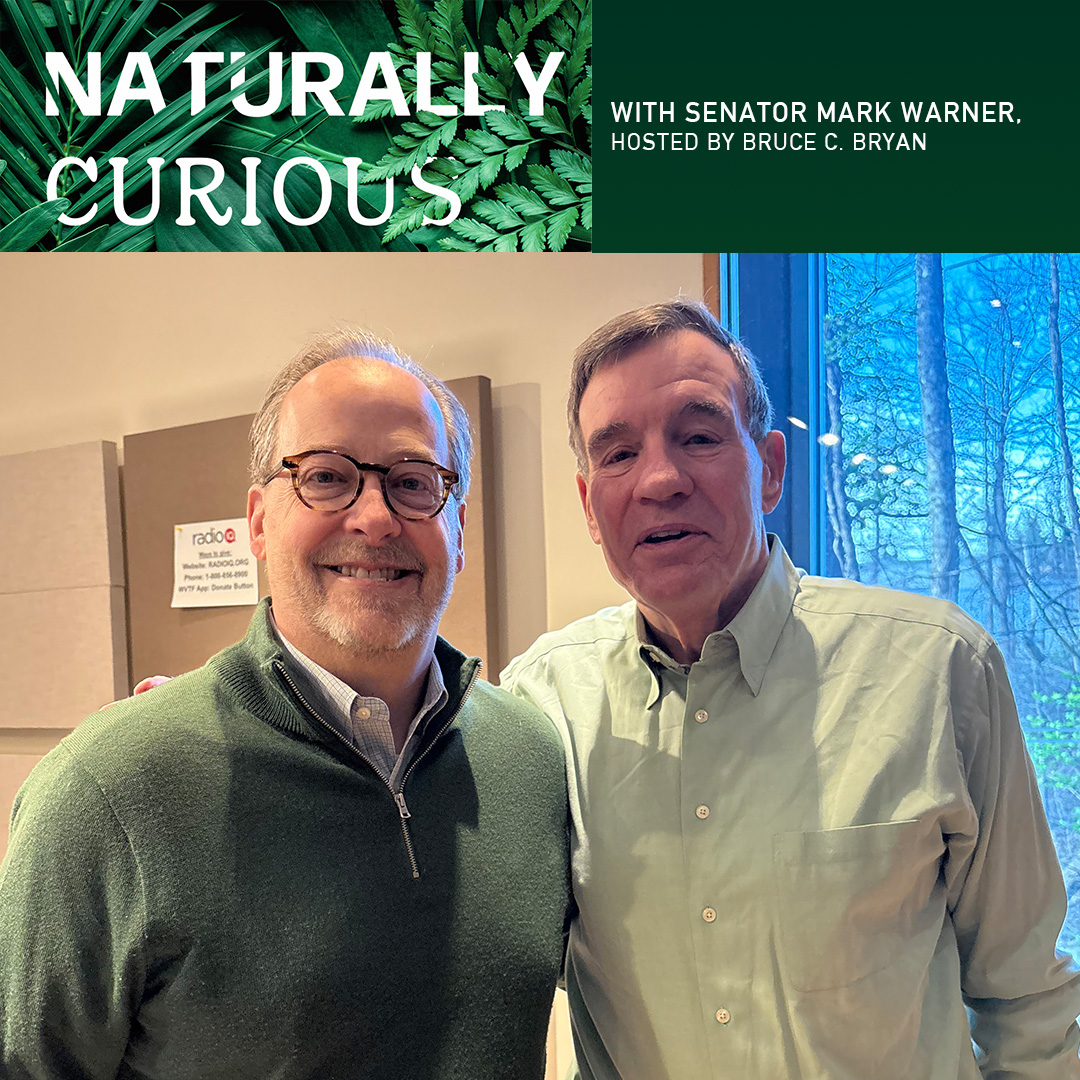
Warner Segment 1
Bruce C. Bryan: Welcome, Senator Mark Warner. So great of you to join us today.
Mark Warner: Bruce, thanks so much for having me.
Bruce C. Bryan: So I'm curious, how and when did you start to make the transition from a business person, and frankly, a successful business person to a politician? How did that process work?
Mark Warner: Well, you know, I'd always had the bug, um. I went to college at George Washington and University in DC and I worked on Capitol Hill all the four years. Uh, went to law school up at Harvard, got outta law school. And I, I still remember, as opposed to gonna working for a law firm, I worked for the Democratic National Committee for a big salary of $18,000 a year.
Now that was 1980, so it was a long time ago, but $18,000 a year was less than half of what my classmates were making. So I always had that in the back of my mind, uh, that I was interested in doing politics. My parents weren't political, you know, they were involved in the community, but. My dad was a Republican.
Bruce C. Bryan: We have that in common.
Mark Warner: Yeah. I was actually the Richard Nixon, surrogate in eighth grade. So I went after doing the politics right outta law school. I kind of realized that if I ever wanted to do politics myself, 'cause I'd been doing fundraising and I had no came from family with no money.
And I thought, man, if I ever, um. Want to try this, I wanna have a financial base. So went out and decided to become an entrepreneur. Failed miserably twice.
Bruce C. Bryan: Did you really? Wow!
Mark Warner: Yeah. First time in six weeks. Uh, I had a little energy startup company took me a little longer the second time, about six months.
So I was flat broke. Living outta my car, sleeping on my law school friend's couches who had gone on to more, lucrative career. And I got a third try and, and that was in the cell phone business back in 1982. Now that was very early on.
They all thought I was crazy. I was very fortunate to kind of hit that industry at the very beginning and. Did better than I could ever expected. We created a great partnership that we called Columbia Capital.
I'm really proud of the fact it's a venture capital fund, that it still exists. And what I was most proud of on the business side was, that we never had a document between the five partners. It was all based on trust,
Bruce C. Bryan: handshakes,
Mark Warner: handshake, and trust.
Bruce C. Bryan: This is impressive.
Mark Warner: Fast forward now to the late eighties. I got re-involved in Virginia politics. I got on Doug Wilder's campaign . So that got me back involved in politics. Now we're into the early nineties and I serve time as a Virginia State Democratic Party chair when the Democrats were kind of going down, uh, there were struggles then, right?
Yeah, and I, I came to this point in the early nineties and the business stuff was still going great. You know, started a family was, you know, living where I still live up in, in Alexandria and I thought, if I make. 10 x of what I made. Now will I be satisfied? And I kept thinking, you know, if I'm my deathbed, you know, I look back.
I say, you know, I never tried. So I thought, alright, I'm gonna go ahead and, and try to run. I was a little audacious.
Bruce C. Bryan: right, right. For the Senate,
Mark Warner: I straight for the United States Senate. Now part of that was because there weren't a lot of other folks that, that were willing to do it because I was, you know.
I was running at that point against a political icon,
Bruce C. Bryan: right?
Mark Warner: John Warner,
Bruce C. Bryan: who happened to have the same name,
Mark Warner: right? Same name. Wait, there was one funny thing,
Bruce D. Bryan: Last name.
Mark Warner: Remember Bruce on that campaign, we had a bumper strip that simply said, mark, not John, that I, honest to goodness, uh, one day in Danville, I was campaigning.
Somebody saw the bumper strip and said, is that a biblical reference? Um, obviously John won, uh, but it got. It was much, much closer than people anticipated. And two things happened. One was if I'd gotten beaten by a wider margin, I might have gotten it outta my system. It was so close that I thought, well, you know, I gotta stay in this.
And the other thing that was, Afterwards, we became friends and really good friends. He endorsed me later. I spoke at his funeral. And he really, in many ways was the kind of, uh, to me, epitomized. The kind of Virginia way.
He was a Republican. He cared deeply about,our military, been Secretary of the Navy, um, but he was a really classy guy.
Bruce C. Bryan: So, fast forward a few years later, you decided to run for governor. Was there a point where you thought, I really think I can win this thing?
Mark Warner: Yeah, I got into it . I think most candidates when they get in think they could win.
I actually thought I was gonna win in 96. I remember, um, John Warner had I think been very brave standing up against a fairly far right candidate in 1994 named Oliver North. Um, and, he had gotten a lot of Republicans. Upset with him for that. And I can remember in Northern Virginia, I kept saying to people, you know, if you like John Warner, thought he was brave, send him a thank you note, but don't vote for him.
You know? But, uh, you know, but he won. And, and then, you know, as I got into the gubernatorial race, um, I really was able to put together still the funnest race I've ever had an interesting coalition because I had a whole, Broad support from independents and Republicans as well as Democrats. At that point, there was not a single statewide elected Democrat.
I think the, the congressional delegation was like eight to three Republican. And you know, the governor, Lieutenant Governor, attorney General, both senators were Republican. Um. So, you know, it was a broad coalition and, and a that campaign was, I started here in southwest Virginia. I've started every campaign in Southwest Virginia.
And, , people still wrote about that campaign 'cause I sponsored a NASCAR truck. I got more publicity from the NASCAR truck, I remember Sports Illustrated, which was at that point still a big magazine, said, coming Signs of the Apocalypse, politicians, sponsors, nascar. And, you know, I sponsored it down in Martinsville for one Race, but I got credit for the whole time.
Had a Bluegrass song, uh, that called, um, Warner for Public Education. You know, it was like, it was a great song that. Actually occasionally in Roanoke, it was good enough song. People played it like on the real radio, on the radio, on the, on your paid radio. And um, yeah, about midway through that campaign thought I could win.
Although it was also 2001 was 9/11.
Bruce C. Bryan: Right.
Mark Warner: Uh, and I still have such huge memories of, it was a couple days before the big debate. Um. I can still, I'm sure all, most folks can remember where they were. I was getting a haircut 'cause the debate was coming and friend called and said, turn on the tv. And I did.
And obviously the debate got postponed and you know, still remember going to my campaign headquarters was right on the Alexandria Arlington line and military jets flying over and the young people on the campaign just terrified, that memory etched in my life forever is most folks. Well can remember where they were that day.
Bruce C. Bryan: Of course. That's Senator Mark Warner. I'm Bruce Bryan. This is naturally curious. I was wondering if you could compare some of the, the differences, maybe the similarities and differences between being a CEO, being the governor, and now of course being the senator.
Mark Warner: Well, as a CEO, I never had that much of a big operating role.
I mean, I co-founded the company became Nextel. I was on the board, but I didn't operate it as in, in my venture capital fund. We were really partners. I got, I actually had a extra point of equity, mostly because of.just Ego maybe on my end, but we were pretty, it was a pretty much equal partnership other than that.
And a lot of my role was, you know, which was really fun, you know. Picking a good idea, picking a good team, trying to give them the runway to do that As governor. Um, I tried to take those lessons, uh, over to the governorship where I was really, really proud of the, the team we put together. It was bipartisan. I had Republicans in my cabinet.
Bruce C. Bryan: Interesting.
Mark Warner: You know, at that point I also had a two to one Republican legislature. The whole idea was, so you had
to
Bruce C. Bryan: work with everybody.
Mark Warner: Yeah. You, you. To get things done.It was a great team of people and I still get together with them.
As governor though, I always use the analogy, you get to drive the bus, you may screw up, but you're driving the bus. As senator, I felt like I was told no, you. Young guy get to the back of the bus, shut up and, and you know,
Bruce C. Bryan: pay attention.
Mark Warner: Pay attention. And you know, I was, um, in my first year or two of Senator I was, uh, was not very good.
You know, I'd gotten, um, fights with the Democrats a lot of times 'cause I was so used to being bipartisan. And this is when, you know, right after Barack Obama had won. So, you know, the Democrats had a big majority and I was still trying to do. Work with my Republican friends and, uh, you know, ran afoul of, I still remember being pretty frustrated.
And the democratic leader at that point was Harry Reed. He's passed away now. He was a tough old bird and, you know, and he promised me getting on the finance committee and lied to me and I was angry, although it was such a blessing because. The default prize was he put me on the intelligence committee,
Bruce C. Bryan: right.
Mark Warner: Which is ended up being kind of the lane that I picked and allowed me to use my technology background. But it was a, it was a hard transition. And, you know, I finally decided, particularly near the end of my first term, you know, when I almost got beat, um, thaI was lucky enough to be a United States Senator.
I live close, you know, I, I live closer to the capitol and. Any other member, uh, in the house or the Senate combined. So that's a great benefit because you know, you know, your congressman living in Roanoke, you still gotta schlep to DC And whenever I would complain about the job, I'd think about my friend John Tester, who was the senator from Montana, who had two flights and then a two hour drive once he landed.
So, so anyway, it's um, you know, the Senate thing has been a learning process
Bruce C. Bryan: I bet. So you're still obviously a leader, but it's a different role. One of the things I was curious about is kind of your leadership principles. What, what, is there a way you'd describe yourself as a leader?
Mark Warner: Well, Iwhat I try to feel like as a leader, you gotta get stuff done.
You know, the thing that makes me a little crazy in politics especially, I can place like the Senate, some of the people who are the most well known. They never get anything done because all they do is criticize the other side. I always use the example, you know, if I'd been in business, if all I'd done is criticize, uh.
Competition, but never put out a good product. I wouldn't be in business very long, but there's a whole bunch of men and women I work with who you know, are the most prominent names in many times in the Senate, but they never get anything done because all they're known for is what they're against or how much they want to trash the other side.
Bruce C. Bryan: And you're behind the scenes in some ways working on getting things done.
Mark Warner: Yeah, well that's where I think that Bruce, I think that politics. Is half policy. You know what your ideas are and what you believe, but in terms of the actual workings. Of politics. The other part is relationships. You know, I learned when I was governor, uh, that if I couldn't build a really trusting relationship with the two to one, um, you know, Republican majority, I would've never gotten anything done.
Bruce C. Bryan: You couldn't accomplish
Mark Warner: Exactly. And, you know, so I've been part of. Every bipartisan gang that's existed in the Senate, um, uh, you know, it's kind
Bruce C. Bryan: it's kind of become your calling card, right? In some ways
Mark Warner: I've been blessed to have had some financial success.
Um, and so I would joke that, you know, Mitt Romney and I would buy the, buy the dinners for all, get every else get together. Like unfortunately MIT has left, so I'm still willing to buy the dinners. But, you know, and it's been a lot harder this last year because a lot of my Republican friends, um. I think they've been so afraid of going against President Trump that even though they will privately say, gosh, this is bad, or whatever, and but.
So far, at least the, they've not in my un massed, decided to kind of like, have a time to put the gangs back.
Bruce C. Bryan: And I actually absolutely do want to talk about that general topic, uh, when we come back. But before we go to this next break, I, I wanted to let you know I asked a few people, I know people that know you, uh, Senator, what words they used to describe you.
And here were some of the words I heard. Builder, visionary, engaged. Demanding of all, most of all himself. Does that match what you think of yourself?
Mark Warner: I'd be proud to have those words.
Bruce C.Bryan: Those are good words, right?
Mark Warner: Mean especially like at the, the one at the end. I'm, I'm a pretty demanding, but I, um. You know, I don't ask anybody that I'm working with to work harder than me.
Bruce C. Bryan: That's kind of a mark of a CEO. And just so you know, it was neither Ruth n nor Rachel that said that. Well, you've been listening to Naturally Curious. I'm Bruce Bryan, that Senator Mark Warner. And when we come back, we're gonna do some rapid fire questions and we're gonna talk about Yes, tuna Fish coming up soon after.
Warner Segment 2
Bruce C. Bryan: Welcome back to Naturally Curious. I'm Bruce Bryan. This is Senator Mark Warner. And, uh, Senator, I was curious if you could talk a little bit about Virginia. I know you're a huge fan of the Commonwealth, um, but maybe there are a couple hidden gems that people might not know that are listening. Any favorite kinda Yeah.
Mark Warner: Well, I, I'd say Breaks Park, um, down in far Southwest between Buchanan Dickinson and, you know, deepest Gorge, I think, uh, east of the Mississippi. Um, similar, uh. The thing close, close there is actually, uh, the Russell Fork River that they, they open the dams and you can, uh, do Whitewater in September and October.
And I'm not much of a whitewater person, but it's, I get, you know, it's a Class five rapids and went down and did that one time. That was cool. Um, you know, still in that area, the Crooked Road Music, heritage Trail that we put together when I was governor, those venues. Right. So we, there's a lot of places I still, you know, I got a farm in King George County on the Rappahannock, and you know, the whole.
River over the neck is kind of an undiscovered gem in many ways.
Bruce C. Bryan: Yeah. My brother lives over there. We go there a lot. How about places to eat? I mean, I don't want to like besiege these restaurants or you know, do you have a couple that you know, and I don't want to, you know, touch on the spot, but
Mark Warner: There was like one of my favorites.
Is Alban Barbecue in Fredericksburg.
Bruce C. Bryan: Okay.
Mark Warner: You know, it's a little tiny shack and it's, it's, uh, just great. Um, I like to eat and drink, so I've, you know, uh, I think actually Virginia wine has gotten better too. I, I've, I used to there that you enjoy, so, but I would probably pick as a, a top, uh, go-to place.
That would be Albans.
Bruce C. Bryan: So are there, um, any things your fellow senators may not know about Virginia? That you talk to them about?
Mark Warner: Well, I don't think they, I don't think they understand the diversity of Virginia often. Try to say that, you know. Virginia is like six or seven states.
Bruce C. Bryan: It really is. I
Mark Warner: mean, 'cause you know, Shenandoah Valley is very similar to um, you know, parts of Pennsylvania, you know, Southwest, you could be West Virginia or Kentucky.
South Side could feel some parts of South Side where we still got some cotton. You could feel like you're in Alabama, you know, uniquely the kind. Piedmont area. Richmond area is kind of uniquely Virginia, uh, Charlottesville. But you know, there's a lot of feel in Hampton Roads with the military similar to San Diego.
When I first got involved in politics, you know, the kind of, there was regional politics and then there was, you know, kind of African American and white.
But now, you know, we've got a large Latino community. We've got, you know, a really growing, uh, Asian American community. Um, you, we've got. Both large Jewish community and Muslim community. And so that kind of diversity from around the world. I mean, I gotten very involved in the issue this war in Sudan, which is just awful.
No good guys on either side. But we had a large Sudanese community and trying to see how some of these, um, communities where first generation Americans come in and, and is, is really. Is really pretty special. Matter of fact, anytime somebody gets really, really tired of American politics and you say, oh my God, things couldn't get any worse, go to a,.
Naturalization and, and swearing in certain where people become American citizens and hear people what they go through just to kind of take the oath to become an American. It's you, you suddenly feel like the differences we have don't really mount to hill of beans.
Bruce C. Bryan: It's inspiring. So speaking of inspiring, uh, we've worked really closely with your staff on the Virginia Women's Conference for over a decade now, and I'd love to talk about that work and what fueled you to start it and how it works and, and why it's important to you.
Mark Warner: Well, you know, it, it started because. One, I live in a family of all, of all women. You know, I've got a wife there is that and three daughters. So like, you know, empowering, you're the
Bruce C. Bryan: you're the minority there right?
Mark Warner: Yeah. I, you know, empowering women has always been something I've been part of. And I've got three great strong daughters who are now 31 to 36.
And you know, still remember like my youngest daughter when I was governor walking around Capital Square and with my wife, and she was asking, well, where's the statue of Rosa Parks? And my wife was smart enough. Lisa said, well, Rosa Parks wasn't from Virginia, but that conversation. Spurred us to, uh, uh, put a statue on Capital Square of Barbara Johns, the young African-American woman who led the walkout at Moton Moton High School in, in Prince Edward County.
That ultimately led to Brown versus Board of Education. So the women's conference, you know, a former congressman Jim Moran, had done some smaller version and I thought, can we do this statewide? You know. No politics, just,you know, women coming together, ability to network. And I appreciate very much, Bruce, you've helped on a lot of these conferences and it's, um, it's a very, very cool day.
We usually end up with, you know, between 600, 900 folks and it's, um, you know, I think the, the folks who come, come away with new friends and new ideas about how they can. Pursue their own careers and, and activities.
Bruce C. Bryan: And it's about taking things forward obviously. And so you're listening to Naturally Curious.
I'm Bruce Bryan. This is Senator Mark Warner. There's another senator in Virginia. Every state has two of them. Senator Tim Kain. And uh, I was curious about your relationship with him. It seems like you guys actually are pretty friendly.
Mark Warner: We none of this political baloney about, oh, my good friend Tim and I are actual friends.
And here's the, the, the. The coolest part, Tim and I met each other at Harvard Law School.
Mark Warner: And neither one of us were from we didn't meet at the library.
We met at a party and um, you know, he was then. Mayor, when I was a Democratic party chair, he was my lieutenant governor. We worked together. I mean, like, he's kind of like the he, he says it bestlu like he's the AM senator and I'm the PM senator. So he is, you know, up in the morning, I may be the last to leave the party.
Sometimes he is relentlessly optimistic. You know, sometimes to the point that makes me crazy. But, but one of,
Bruce C. Bryan: and you wait, I have to And you are demanding of all, most of all yourself. Yeah. So, so there's a balance there. Right.
Mark Warner: But the coolest thing, and I think it really, I, I believe it really serves the people of Virginia because we like each other and are not competitive.
We can kind of, like, if I'm in Southwest and he's in the valley, you know, we're not in this, we kind of divide up the state and, you know, in, in many ways it was. Trying to make sure our staffs realize, no, it doesn't matter who gets the name first, when we do announcements or projects, and I think that is,
Bruce C. Bryan: we're gonna work together.
Mark Warner: We've, it, it makes this job. He says it more articulately than me. He's a, he's a great, great speaker. You know, having somebody, a partner in this job. That has each other's back really makes it a lot more bearable.
Bruce C. Bryan: How about the other government leaders? Maybe not necessarily in Virginia, but other senators, other governors.
You talked about the bipartisan approach and collaboration. Are there people that are maybe on the other side of the aisle that you are able to still get along with them? Oh, absolutely. And work well with. Is it friendly behind the scenes?
Mark Warner: Oh yeah. Like, no, it's very, the vast majority of us in the center actually like each other.
And if you, you know, took a poll, I think you'd be. 95% agreement about who are the outliers on both sides.
Bruce C. Bryan: Gotcha.
Mark Warner: But I work really well with Susan Collins and Lisa Murkowski and Tom Tillis from North Carolina. Um, you, I, I work really well with John Corny, you know, who's in a tough primary right now. So, um, the relationships, I, I'm not sure I, the house seems crazy no matter which team's in charge, uh, but the Senate, there is still, the Senate's a little
Bruce C. Bryan: more confined, if you will, but, um.
I, I, I think one of the things that's people are curious about is how you maintain your countenance, if I could use that word, when you hear things that you so totally disagree with. And I, we don't mean to talk about a specific thing mm-hmm. But there have to be things that kind of, if I can use the word infuriate, you, how do you maintain your countenance even when you're frustrated about what you're hearing or seeing?
Mark Warner: it's hard sometimes, you know? Um, for the most part though, you, somebody dramatically disagrees with you. You can kind of leave it on the floor of the Senate, hopefully. I mean, I guess never having been a practicing lawyer. You know, you, you often hear about lawyers who fight like heck on the courtroom floor and then go have a beer afterwards.
I think you gotta bring some of that attitude or, uh, or you, you know what, , one of the things I always make the comment. US senate's a little bit like a high school you never graduate from. So just because somebody pisses you off in freshman year, you can't, to still, you can't keep it with you.
'cause you still can't, you can't, you don't get to choose who you have to do business with,
Bruce C. Bryan: right?
Mark Warner: So these men and women, they're gonna be there, you know? So don't get to such a point of a fight that you can't. Find some place, something in common with them for an issue later on down the path.
Bruce C. Bryan: So speaking of common ground, uh, I don't miss the COVID days, but I did go back and watch the video of you making the tuna fish sandwich and then the one with you and Kamala Harris making the tuna fish sandwich.
Um, tuna's a little controversial. Do you run into people that talk to you about tuna these days, or?
Mark Warner: Well, they still give me grief. I mean, um. The video, if you ever wanna waste two minutes of your life to never get back Google, you know, mark Warn or tuna fish. So how this came about was, it was early days of COVID, you know, and all of my colleagues, senators were like, here's my grandmother's, you know, chocolate chip cookie recipe or meatloaf recipe.
And I still remember, you know, Tim, he comes on and, you know, he, he's a great musician, plays harmonica and sings this heartfelt. Incredible song. And I said, oh, come on, everybody. Like, you know, let's lighten up a little. What am I supposed to do? So like, yeah, like, you know, my daughter, my youngest daughter who's much better with social media than me said, well, dad, let's you know, let's do something.
And so I made. What was, I thought was gonna be one of the grossest tuna fish, tuna melt sandwiches ever. Lots of mayo microwaved. It was pretty gross. And although candidly, I do like a lot more mayo, my daughter thinks it's daughters, think I'm crazy on that. And when the, when we put out the video, at first I thought, man, I thought this was kind of interesting.
Day or two, didn't do any. And then it just. Took off. And for a few days during COVID, I think I was on every national TV and every morning show, you know, like, here's this crazy senator making, and people kept saying, is it serious? I said, you know, I kind of not, didn't make fun about washing your hands.
Bruce C. Bryan: It was sort of serious.
Mark Warner: It was, it was, it was fun.
Bruce C. Bryan: You, you, you were so generous with your time and I really appreciate, uh, all the conversation that we had. And I, I do have a couple questions I wanna ask you. Um. For the online part of this. Sure. But Senator, thank you so much. Thank you, Bruce, for being my guest today and to listen back to the show, the full interview, and the links to learn more about Senator Warner Search Naturally curious@radioiq.org.
Naturally Curious was produced and edited by Big Jim Shively and recorded at W VTF Radio IQ Studios. I'm Bruce Bryan. Thanks for listening.
Bonus Content
Bruce C. Bryan: Senator, thanks again for sticking around. Um, I, I have so many questions I wanna ask you, and some of them are questions people ask me. Sure. I say, Hey, I'm gonna talk to the senator. What would you like to know? One of the things that people are curious about is how you handle the volume of information that must be coming at you.
I, I know you have people that help you, but, oh my goodness. It just seems like an enormous amount of information
Mark Warner: there is and, and you know, I've got great staff. Um. And I get a book every day that you, where every minute of the day is scheduled out and you know, you've got a briefing on every meeting. So I, you know, I obviously, I try to read a lot in many ways though, I'm, I'm a.
Auditory learner is as much as a reader. So I, I love bringing an expert and kind of going back and forth. Uh, and part of my, my challenge still with the job is, you know, I need to say no more often. I'm still pretty intellectually curious. So, um, uh, you know, I've spent a ton of time in the last couple years trying to learn about artificial intelligence, and boy, boy, you talk about something that's complicated, so, you know.
If I had more discipline to say, no, that may be, I should might help, that would help. But
Bruce C. Bryan: you were talking about artificial intelligence and I think so many leaders have just an innate emotional intelligence. And I talk a lot about that, but part of that's listening as a CEO and now as, as a, as a politician.
Um, how do you, how do you get in a place where you can hear what a, what regular people are having to say? It's gotta be hard 'cause you're surrounded by humans all the time.
Mark Warner: Yeah. That is, you know. Yeah, that was easier to do when I was governor because governor, you get to again, drive the bus so I could make the schedule so I could get around the commonwealth a lot more than I do as senator.
Um, you know, so you have to, you have to be affirmative about that. You can't just, you know, you almost have. Schedule time to get in community where you can listen. I try to do a lot of these listening sessions, um, around the state. I do worry at times there's a bit of self-selection, so anybody that's gonna come to a community leaders meeting, it's gonna be somebody that's may not be, yeah, may not be the folks who I really should actually be hearing all the time.
And I think it's an ongoing challenge and, and. You know, especially as we move now into, you know, the realm of social media, you, we have to all communicate differently. I still am trying to resist, well, I do lots of social media. I very much resist reading most of the comments. 'cause I think that puts you down a rabbit hole, whether they're positive or negative.
Bruce C. Bryan: Almost anything you do, 40 to 60% of the people are gonna disagree with it. Absolutely. So no matter what you do, and in that. Kind of light. Your family obviously has to deal with the notoriety and, and everybody wants a little something from you, I would imagine. So how have you modulated that with your, with your crew?
Mark Warner: Well, you know, it's, it's fasting. My wife Lisa, you know, she knew when we got married. We've married now 36 years. Um. Knew I was going to, this wouldn't have been her natural choice to go into,
Bruce C. Bryan: but she knew.
Mark Warner: So, but, and so we have the thing, you know, if I want her to come to an event, um, she'll come you, but it wouldn't be her first choice, right?
So I don't, you know, frankly, you. I don't want her a lot of times 'cause she will always end up with the craziest person at the event and, you know, but she was willing, she's a much better listener than me. So, um, and my three daughters, they've kind of grown up with this,
Bruce C. Bryan: so they're used
to
Mark Warner: it, so they expected it all the time.
I, you know, I've missed, you know, some soccer games along the way. Um, but they kind of expected, although it was interesting, none of my daughters. went to school in Virginia in college ing because I don't think they wanted to be the governor or the senator's daughter. And, um, and they, my, my youngest daughter actually, uh, the older two, they were in seventh and eighth grade when I was governor.
And they was like, hard time anytime for a girl at that point. But my youngest daughter kind of loved being governor 'cause we always had state troopers that could turn on the blue lights. And the thing that my, my daughter loved the most about being governor, and I say this from trepidation to acknowledge this.
We would get governor's cuts when we went to like Bush Gardens or any
Bruce C. Bryan: governor's cuts. Okay.
Mark Warner: And I can still remember like at at at Bush Garden one time, you know, it was a hot day and luckily it was early in the day. And you know, I tried to wear a baseball cap to. So people wouldn't, because you know, bringing up, you go up the exit and, and the poor young lady had said, we've got our governor here today.
But luckily it was early enough in the day, so cutting the line wasn't pissing people off that much. If I'd been doing that near the end of the day when the line was hours long, it might
Bruce C. Bryan: not have gone as well for you. Uh, as we kinda wrap up, I was wondering what part of your job senator brings you Joy.
Mark Warner: The part, this is where the governor's job, in a certain way feels better. The part that you can see a policy and then go out and see it affect people's lives. I so remember, you know, um. You know, you know, we have all the, in the final tests that you've gotta pass, you know, in, in high school. Um, and there was really controversy whether they're always gonna, you know, get rid of those tests or not.
And we kept 'em, and they're not perfect, but I can still remember saying, all right, we're gonna, we're kids who can't pass. You know, we're gonna give them extra tutoring. And I can remember going to one community and, you know, seeing the star player who'd been. You know, very discouraged. 'cause he'd not, he'd not, uh, passed the test, but because we went through his extra couple weeks in summer school, he passed and, you know, oh my gosh.
Bruce C. Bryan: you can remember that.
Mark Warner: Yeah, I can, I can remember that. I can remember the people that you touch where lives are changed because, you know. It was usually a messy path. There's no straight path to making a bill, um, a law. But when it does happen and you see how it affects people's lives, that's pretty cool.
Bruce C. Bryan: Well, Senator, I can say that you inspire people you don't ever see or meet, and I know that firsthand because I, I see the impact of the work that you're doing and that others are doing. Last question, tell me if you could, one of your proudest accomplishments of the last 17 years and then I'll let you off the, I think,
Mark Warner: no, I think the.
And it's not finished yet, but I've always felt that, you know, in an interconnected technology driven world, you shouldn't have to leave your hometown to find a work, a good job. And finally getting, you know, pretty much comprehensive broadband. And if we don't have it done by the next year in Virginia, it's not 'cause we don't have money.
We got plenty of money in the till. That's been pretty cool. And uh, probably the proudest, proudest single moment was back when I was governor again and we brought a company named CGI brought a bunch of jobs to Russell County that were tech jobs and I was at the Russell High School, the high school in, in Lebanon.
Um. And kid came up and said, you know, until this, I was thought I was gonna have to leave my town to get a good job. And I'll always remember that day.
Bruce C. Bryan: Senator, thank you so much for your time. Really appreciate it. And um, good luck in the coming days and weeks with all you have coming at you.
Mark Warner: Thank you, Bruce.