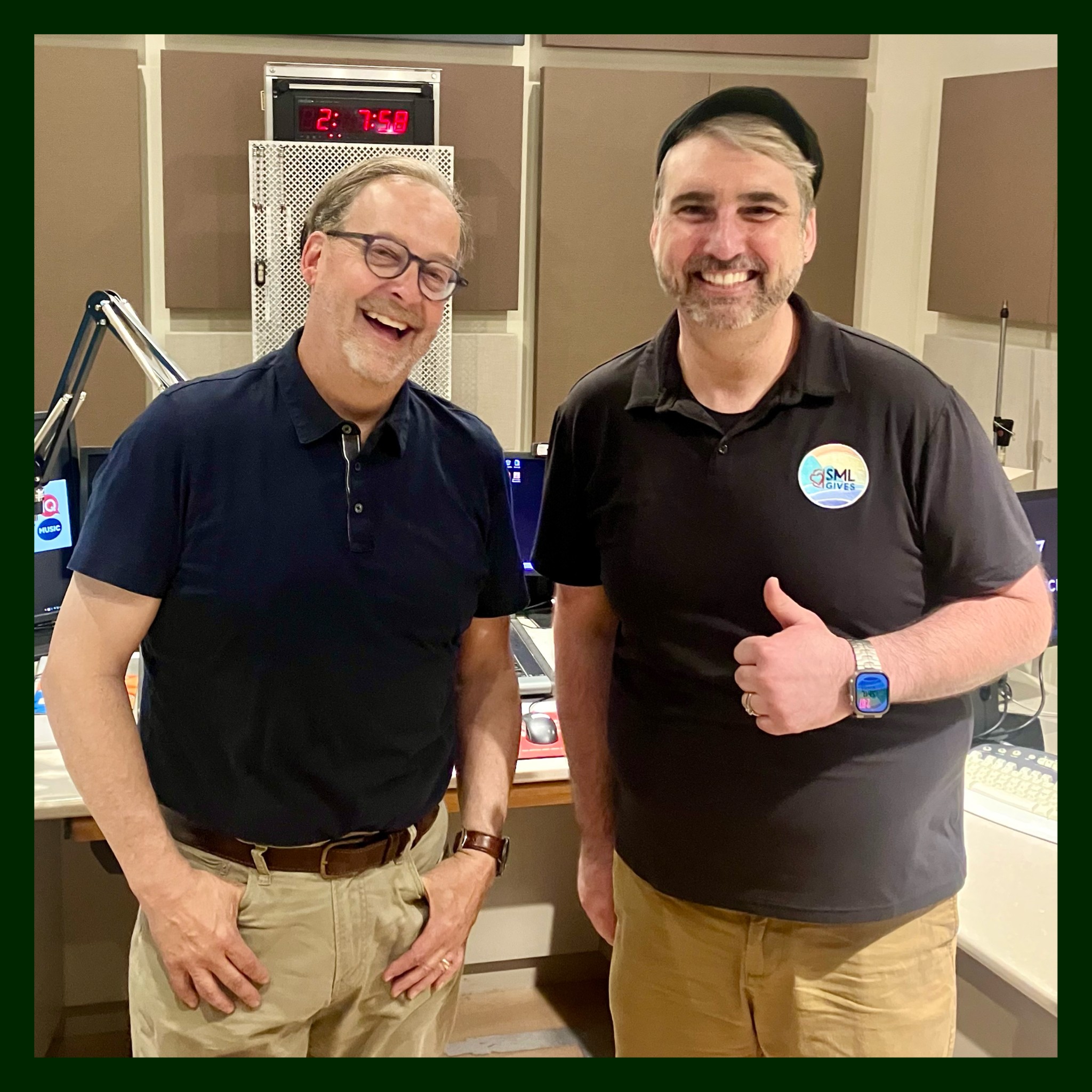
Bruce C. Bryan: My guest today on Naturally Curious is Joey Donovan. I'm your host, Bruce C. Bryant, and each week I work to bring you closer to interesting people from all over Virginia who have stories to tell or who bring value where they live. This week, we're gonna talk about one man's journey through some terribly difficult times, the lessons he's learned, and how he saw a need and then stepped in to do his part and to help.
We'll hear more about rural poverty and what his organization, SML Gives Incorporated, is doing to address hunger issues and making sure families are cared for in the best ways they can. We'll learn about the fast growth of his organization and how things are shaping up this summer and fall for them to grow even more.
My interview with SML Gives Inc. leader Joey Donovan is coming up next on today's episode of Naturally Curious.
Donovant Segment 1
Bruce C. Bryan: Thanks for being my guest on the show and, and welcome, Joey.
Joey Donovant: Oh, thank you for having me, Bruce.
Bruce C. Bryan: So sometimes we find our jobs, and sometimes our careers find us. You lead a nonprofit that has a focus that's of particular interest to you. How did the work get started?
Joey Donovant: Uh, it was very grassroots how I ended up into this position.
Uh, I have always been a, a giver since I was a child. I went to school to be a teacher, and I just kinda fell into nonprofit work as I was trying to get help for myself about 15 years ago, and it was just in the evolution of my life that I ended up in this role where I am at now.
Bruce C. Bryan: So it seems like the work is ingrained in you, like it's just kind of a, a, a part of you.
Um, do you find it sometimes hard to separate yourself from the work that SML Gives does?
Joey Donovant: Uh, it is extremely hard. In fact, there's no separation between me and the work that I do on a day-to-day basis. It's, it's a part of my life. It's a... It's not a job. It is... This is just my life.
Bruce C. Bryan: So when you talk about that work-life balance, it's all kind of one big soup it sounds like for you sometimes.
Yeah.
Joey Donovant: Work, life, it all comes together for me seven days a week, 24 hours a day. I, I... It's not a, a job where you punch a time clock and, and you go home and check out. The phone is always ringing. You're always on call, and there's, there's never a moment where you're not the executive director of a nonprofit.
Bruce C. Bryan: And I would imagine the need is always great, too. So for people that are not familiar with SML Gives, Inc., can you talk a little bit about what you all do?
Joey Donovant: Sure. SML Gives, Inc. is the brainchild of, of myself and a few of my neighbors. It was an idea, a movement. Uh, we wanted to do something for families in need that were suffering from hunger during COVID.
Everybody remembers what a challenging time COVID was. So we just started hosting fund drives around the holidays, and that was about six years ago, and six years later, we are now a fully operational nonprofit organization serving the Smith Mountain Lake region.
Bruce C. Bryan: So I talked to somebody about what you do and, and what they said was that you're incredibly dedicated and that the difference you make and have made in such a short time is amazing.
Um, it sounds like you have a lot of energy. Right?
Joey Donovant: Yes, I do have a lot of energy.
Bruce C. Bryan: So that translates to the work you're doing. Um, how do you... Where does that energy come from, Joey?
Joey Donovant: It's... The energy comes from making a difference and helping people help themselves and, and seeing a family, once struggling, become stable, successful, and then support you and others moving forward.
Bruce C. Bryan: Yeah, and I think part of what's interesting about that is what I've was told is that your energy level is actually infectious and, and I guess infectious could be a bad thing, but sometimes, in at least in this case, it sounds like it's a good thing. Can you feel that other people are feeding off of your energy sometimes?
Joey Donovant: I absolutely can. I've... I, I... It's not intentional. It's just me sharing my story and sharing the vision of, of SML Gives, Inc., and it's, it's not very hard to get a win and to get people to support the organization. Uh, it's like you said, I guess I've been, I've been told that my energy and the story is, it's catching.
Bruce C. Bryan: Well, you're listening to Naturally Curious. That's Joey Donovan. I'm Bruce Bryan, and we're talking about Smith Mountain Lake, or SML Gives, and we're talking about poverty and some of the ways that you help people, and kind of that infectious energy. I think that that's one of the things I've noticed even in our interview, that I, I...
There is a little-- There is an energy that's there, and I guess you probably need that in the work that you're doing, because you're facing a lot of hardships for a lot of people, right?
Joey Donovant: We are. It, it takes a lot of support to do what we do, and un- and unless you can clearly communicate that mission and what we're doing for people in the area that do need our services, you, you can't fundraise and you can't support a mission unless you can clearly communicate what you're doing and how you're improving the community.
Bruce C. Bryan: If you think about it, Joey, the nine years that you've been doing this, if you go back 10 or 15 years, could you see yourself then doing what you're doing now?
Joey Donovant: Where I'm at now is a far reach from where I was 15 years ago. At that time, I had been lost into a, a nasty cycle of addiction and every nasty thing that came with addiction is, is what I was experiencing.
So that rock bottom is, is where I was about 15 years ago. So no, no, no, I would not imagine I would be here today.
Bruce C. Bryan: Do you think that some of w- what you went through a decade and a half ago helped shape the kind of leader you are, but also the kind of work that you're doing? I, I feel like there has to be a connection there to how you're helping other people now.
Joey Donovant: It definitely is. It's, it's part of my why, of, of why I do this. There were resources and help for me when I was at the most lowest point in my life, and that's what I wanna be, not necessarily for people who need substance abuse treatment, but give back, pay it forward with other valuable things that can benefit the community.
Bruce C. Bryan: And you said that one of the things that really fuels you is when you see people that have been in a tough place that are now in a better spot and are helping other people. That, that has to be empowering for you as a leader and as a helper, right?
Joey Donovant: Oh, it's very empowering. There's-- You know you are a success and you know you've done a good job if the family you were helping is now thriving, they're sustainable, they have a great household with all the necessities and then some, and then they turn into supporters and volunteers and people who now support the work you're doing that once supported them.
Bruce C. Bryan: Yeah, and that's, that's that whole concept of paying it forward, obviously. Um, I think people might have a vision of poverty in a big city, right? Um, but rural poverty, poverty is a little bit different. Can, can you talk about how it manifests or what happens, um, with people that are in, in a less populated area that face some of the same poverty that somebody might face in a big city?
Absolutely. 'Cause you have a lot of rural, um, families that you're helping, right?
Joey Donovant: Rural poverty looks a lot different than urban poverty in, in big cities. Rural poverty could be-- it could look like No running water. It could be, uh, a drop cord from one neighbor's house to the next to share power. It could be the lack of fundamental appliances that we take for granted.
It could be, it could be anything from having to make a decision on buying diabetes medication or buying food for your family.
Bruce C. Bryan: Those are hard decisions people are making, and you're listening to Naturally Curious. I'm Bruce Bryan. This is Joey Donovan. We're talking about SML Gives and the work that you do to help deal with hunger issues, but also how that mixes in with poverty.
And, um, are there things that are the same? I guess people in a, in a populated area have to make some of those same kinds of decisions. So there's some things that are different and some things that are the same when you're talking about poverty, obviously.
Joey Donovant: In rural areas, the, the resources are more spread out.
That's right. So when you think of a city, you think of missions and you think of poo- food pantries, and like in Roanoke, there are, there's lots of resources to go to for help. But, but in rural areas, like the area that we are in with SML Gives Inc., it's an, not only an underserved area, but an unserved area.
Bruce C. Bryan: So there may be no services, right, without you there in some of these. So I, I guess one of the things in our listening area, which is, you know, Richmond to the Tennessee line pretty much and Danville to Staunton, it's a big area. It's a lot of rural, I mean, 25, 30, probably 40 counties, and I bet you 25 or 30 of those are rural counties.
Are there other organizations like yours that exist around or, or do you network with other organizations that might be-- have a similar focus, or do you feel like you kinda tackle this on your own?
Joey Donovant: No, we are a part of a larger network within the Smith Mountain Lake region of Bedford, Franklin, and Pennsylvania County.
Uh, we partner with o-other organizations. We actually... Our first physical presence was on the campus of Lake Christian Ministries, who is our largest or, or the biggest partnership that we have.
Bruce C. Bryan: Okay.
Joey Donovant: Um, we partner with all the local pantries and missions, and we also serve as a regional food bank. So we source in bulk, and we provide these resources at no cost to other pantries, in addition to our direct-to-neighbor services and food delivery.
So our mission and goal is to strengthen the hunger relief network around Smith Mountain Lake.
Bruce C. Bryan: And then do you get calls from other parts of the state where people are like, "Hey, I see you're doing this well. We wanna start this in Halifax County or in, you know, outside of Marion," or wherever it might be that, that people could be.
Do you ever get outreach from other parts of the state?
Joey Donovant: We get outreach from all over the country, and unfortunately, our, our scope, you have to limit to-
Bruce C. Bryan: But, I mean, are they asking you questions about how they can replicate what you're doing, or they're asking you to help them too? Which I'm-- there's no way you can do that.
Joey Donovant: No, it's, it's mostly asking for help. Gotcha. They, they find us online or social media, and- Gotcha ... they're calling asking for, for resources to help their mission.
Bruce C. Bryan: I mean, the need is so great and, and we're talking about the need and how SML Gives, Inc. is helping meet those needs. I'm Bruce Bryan. This is Naturally Curious.
That's Joey Donovan. And Joey, th-that has to be a little bit overwhelming when you see how great the need is, and you're one organization doing a ton of work. But sometimes does that get a little bit heart-wrenching when you just can't help somebody, either because they're too far away or y- you maybe don't have the resources to, to help?
Joey Donovant: It does get... It d- it is difficult, but when you're in a, a network of partnerships with partner organizations, there's always someone to call. There's someone that knows someone that has something that the neighbor you're serving needs. So we work together. We don't work in competition. That's good. We actually work in complement with each other.
Bruce C. Bryan: Yeah, and I, and I think that makes sense geographically, but it's gotta be sad when somebody calls you from Ohio and you're like, "I, I can't really help you." It sounds like transportation's also a, a, a challenge, i- i- if you're in that rural situation because if you're in a city you can perhaps walk to the mission or get to where the services are, and like you said, they're grouped together.
But they are probably pretty wor- pretty well spread out where y- where you are, right?
Joey Donovant: Absolutely. SML Gives, Inc., our first service was delivering food to mo- neighb- excuse me, neighbors that were immobile, shut in, and couldn't- Okay ... get to a pantry. That's how we got our start, and that grew to partnerships with other pantries and missions where we deliver the food to the neighbors they can't serve because of the lack of transportation.
Bruce C. Bryan: So I, I read recently that upwards of 60% of all Americans are relying on their next paycheck to meet their monthly, you know, financial obligations. Does that sound about right? Like, from... I know you're not necessarily an ec- e- a economist, but does that f- feel like what you see out in, in the counties that you serve?
Joey Donovant: It's, it's worse than that. They don't have enough money in their paycheck or income- Mm-hmm ... to even sustain
Bruce C. Bryan: their- With those checks, yeah ...
Joey Donovant: bills and expenses.
Bruce C. Bryan: Yeah. Well, I, I'm, I'm guessing that means that most of us are, are really probably pretty close, um, to being in severe challenges ourselves, and a few stacked-up challenges can lead to these kinds of situations, right, for people?
Joey Donovant: Absolutely. One missed paycheck or one missed day of work. Say a father gets a cold, gets the flu, and is out for a few days. That 24 hours of missing pay can spiral that family out of control and into a crisis.
Bruce C. Bryan: Well, when we come back, I'd like to talk more about your personal story, and then we'll wrap the next segment with details of some of the things that are happening this summer and fall with SML Gives.
Donovant Segment 2
Bruce C. Bryan: Well, welcome back Joey Donovan from SML Gives, Inc. When you reached out to me this spring, you shared some of your story. I was hoping you'd tell it to our listeners. I know you didn't always run a nonprofit, and you kind of alluded to it earlier. Would you talk a little bit more about your story, Joey?
Joey Donovant: Absolutely. Um, I had a normal childhood. I went to college, graduated with a degree in education, and the senior year in college, I fell off of an elliptical machine at the gym. I call it a sports injury 'cause it sounds more romantic and funny- ... and glamorous than just falling off while you're exercising.
But like so many people and so many others in the early 2000s, I was prescribed opiate pain medication, and dependence turned into addiction. Addiction turned into hunger, homelessness, incarceration, all these nasty things that come with addiction. And after I had succumbed to addiction, experienced it for about a decade, I sought the services through a nonprofit organization, and my life has never been the same.
Bruce C. Bryan: I appreciate you telling that story. I think it, it helps people to know that it's not all just sunshine and butterflies, but you're bringing goodness. But you went through some hard times before you experienced goodness, and that goodness that you described is now something that you're helping o-other people with.
W- what would you tell yourself 10 years ago or 20 years ago now if, if you were sharing what you now know?
Joey Donovant: That everything is, everything is your... I was going through everything for a reason. I, I bring such a, a unique experience of different things that could happen in your life to this role that I think makes me a uniquely qualified person to manage a, an organization.
Bruce C. Bryan: So you talk about the leadership position you're in, and you talked about your journey of how you got here and how you experienced some of these kind of, of support and help, and now how you provide it to other people. But, uh, have there been some surprise turns in, in your path?
Joey Donovant: Oh, goodness. There's always a surprise turn every day.
So I come with the heart and the, and the giving personality. I didn't come with the leadership skills and training. It's, it's, uh, I'm upskilling, and I'm upskilling as I go. I've got a lot of support, taking a lot of different trainings, and, uh, getting a lot of support from the community as I've fit into this role as executive director.
Bruce C. Bryan: So one of the questions I had was how have you been helped through the years, but it sounds like one of the ways you, you've been helped is in leadership development. Can you talk a little bit about what people are telling you or what you're learning or who's been helping you, that kind of stuff? 'Cause it sounds like there are a network of people helping you through your journey.
Joey Donovant: Absolutely. Uh, I'm so glad you asked that question. Thank you. Uh, we are a part of the SML Regional Chamber of Commerce, and I enrolled in their leadership academy this past year, and I got to meet this fantastic woman named Jen Rowland with Rowland Leadership Consulting. And as just a regular participant in this leadership program, she learned about SML Gives Inc.
And she sought me out after classes, wanted to learn more, and now she's our consultant and is my personal coach. She is trying to help me get this organization fully operational and taking what visionaries do and organize it into a, a operation.
Bruce C. Bryan: That sounds like might be alluding to, to, to the EOS system even.
I'm not sure about that. But it, it sounds like you've been getting help from other people. Does that help that you've received inspire you to help other people? A- and if so, how? Like-
Joey Donovant: Uh, well, it, it does. Uh, take for instance, uh, our board of directors. Each one of them come with a, a unique skill set and background, some from, uh, C-suite executive leadership to some with just, uh, with, with no leadership skills.
But each one of them coach me and help me make the decisions that will enable us to be a, a long-lasting organization, one that when you and I are not here anymore, it's still there and still helping neighbors around Smith Mountain Lake.
Bruce C. Bryan: So as you've been helped in leadership, do you find yourself then helping other leaders sometimes it sounds like?
Joey Donovant: Uh, I try to if I'm asked, but I'm still a young person and a, a young leader, so I'm really the one that's getting the help at this point. I hope there's a point in my life where I can be a coach and provide some, some guidance for another up-and-coming leader.
Bruce C. Bryan: Well, you're listening to Naturally Curious.
I'm Bruce Bryan, this is Joey Donovan, and we're talking about SML Gives, Inc. And as good as things are going, I can get the sense things are going well for you. It's been a fast shift growth over the last number of years. Um, there have to be some things that kinda scare you about where you sit right now.
Any leader of any organization, let alone a nonprofit, has to face some challenging times. What is something or what are some things that kinda scare you where you sit right now?
Joey Donovant: Uh, it, it does get scary. We have experienced such a phenomenal rate of growth in the past 12 months. Some of the fears I have is that the interest and the excitement about our organization might one day fizzle out.
Right now, we have an immense amount of support from the whole entire community, including the network of nonprofits, and it's, it's a big role to fill. We- we're trying to fill a gap that's not being currently served and trying to launch our food pantry in an area of the county where there are absolutely no resources for neighbors experiencing hunger.
Bruce C. Bryan: Yeah, and one of the things it, it reminds me of is the original Star Wars, like 50 years ago. "You're our only hope." And it feels like, is, is SML Gives the only hope for some people?
Joey Donovant: I would hope not, but unfortunately, the t- the truth is, in the area of the county where we are setting up our initial food pantry, there, there aren't any resources.
Before our pantry launches, the way we can get food to families who are immobile is taking it to them ourselves.
Bruce C. Bryan: Yeah. So, um, what needs to happen for these families to be able to break this cycle? You've seen and helped some families break it. What kinds of things happen to help them do that?
Joey Donovant: Well, first what you have to do for a family that's experiencing poverty and hunger is meet the immediate food need.
Before you can try to help stabilize that family with programs and other resources for jobs, upskilling to, to get another job, you've got to meet that immediate food need. If you can't... You can't think and go to a job training if you don't have breakfast. You're worried about food on the table for your family that evening, so food is that fundamental element where different services and other programs grow from.
Bruce C. Bryan: When, um, you think about, we were talking earlier, the help that's available in bigger population centers, um, are people able to kinda look past or ignore in, in the more, the less populated areas like where you are in Bedford and Hal, uh, and Pennsylvania and Franklin Counties, are they able sometimes to look past the, the food scarcity and the poverty issues that people face?
Um, or do you think people are aware of it, um, that you run into in the community?
Joey Donovant: It's, it's very easy to look past hunger around Smith Mountain Lake. In fact, the most common question I'm asked is, "Are there really people suffering from hunger and poverty around here?"
Bruce C. Bryan: Yeah, and that obviously compounds the problem, but it...
I bet like a lot of situations, once people that have resources see and hear that there's a need, you probably have a very generous community that steps in and tries to help.
Joey Donovant: Absolutely. That's how SML Gives Inc. came to be. It was a generous community that wanted to host a food drive.
Bruce C. Bryan: And from there, it's grown immensely, right?
Joey Donovant: It went from a food drive to in-person benefit a- year after year, raising $50,000 in one evening- Wow ... for the community. It was amazing.
Bruce C. Bryan: I'm Bruce Bryan. That's Joey Donvan. We're talking about SML Gives and hunger relief in more rural areas, and people may have been moved, Joey, by your story or by, or by what's happening with SML Gives.
Can you tell them if they wanna get involved, what are some ways they could potentially help?
Joey Donovant: Absolutely. Um, you can check us out online at smlgivesinc.org. We're on all social media challenges. We're getting ready to launch our first facility in Glade Hill. Uh, we need volunteers, food, sponsors. Uh, if you wanna help-
Bruce C. Bryan: There's ways to do it
Joey Donovant: there's ways to do it.
Bruce C. Bryan: I think you told me you have a couple of events coming up, um, here in the fall. Are there things happening ongoing or?
Joey Donovant: Oh, yes. We have a, a full social calendar for- Okay ... events that the public can, can come and support us and enjoy themselves. We are having the inaugural summer event called the SML Gives Tailgate at The Coves, presented by Tito's Handmade Vodka.
It is a elevated pre-concert chili tailgate leading up to the Marshall Tucker Band concert at The Coves.
Bruce C. Bryan: Okay.
Joey Donovant: We have a fully restored antique Harley-Davidson that was donated that is on the raffle block. The winner will be announced by the Marshall Tucker Band themselves on September the 4th. So you can go to our website and buy raffle tickets.
Go to covesmusic.com to buy a tailgate ticket. And then our tradition around the holidays is for our Christmas benefit. This year it's the SML Gives Holiday Gala Waterfront. It's gonna be at Waterfront Country Club on Saturday, December the 12th. We are so excited about these two big events this year. It gives the community a chance to support the community- Themselves
Bruce C. Bryan: So it's kinda wild because that's like Christmas in July.
So we get to talk about music, we get to talk about Christmas, we have holidays, fundraisers. But some of the things that are great about that is people can have fun and still find ways to give back through that. So I appreciate you telling the story and of what you're doing and also telling your story.
So Joey, thanks for being my guest on the show today.
Joey Donovant: Oh, thank you for having me, Bruce.
Bruce C. Bryan: Joey Donovan from SML Gives Inc. Again, thanks for being my guest on Naturally Curious this week. To listen back to the show, to hear the full interview, and links to learn more about Smith Mountain Lake, SML Gives, and the region Joey's team serves, search Naturally Curious at RadioIQ.org.
Naturally Curious was produced and edited, with a little extra work this week, by Big Jim Shively, with support from Sarah Hobbs and Nick Yee, and is recorded at WVTF Radio IQ Studios. I'm Bruce Bryan. Thank you for listening
Donovant Bonus Content
Bruce C. Bryan: Thanks for sticking around. A little bit more about you, Joey, in this segment. Um, I know your spirit is infectious, and I heard great things about you and the energy that you have, but how does this work not overwhelm you? Maybe even kinda feel like it drowns you, not to p- make a, a pun of the lake, but how does it not overwhelm you sometimes?
Joey Donovant: Well, to be honest, it does get overwhelming. This is a big role to fill, and, uh, the need is so immense in our region. It's, it's just some big shoes I'm, I'm, I'm trying to fill, and big commitments that I have to keep up with.
Bruce C. Bryan: Do you find ways to bring yourself relief, or what things do you do to redirect some of that negative energy when you're faced with it?
Joey Donovant: Honestly, I don't have time to dwell on the negative energy-
Bruce C. Bryan: So you're on to the next
Joey Donovant: thing ... I'm on to the next thing, and I'm on to the next family and the next crisis to try to stabilize.
Bruce C. Bryan: So do you get sad sometimes hearing these stories and learning how people got to where they are?
Joey Donovant: I do get sad, but it's my job to redirect them and get them focused on the positive and moving in a forward momentum and, and leave that, compartmentalize that, do what we have to do, get them up and running.
Bruce C. Bryan: Every person's story is different and every person is different, but the paths that people have gone through or how they've gotten to where they are, there probably are some through lines there, some similarities, right? So you kinda have a pattern or a way to deal with getting people back on track, I would think.
Joey Donovant: Actually, I draw on my own life experiences a lot in, in my day-to-day work, and I don't preach to anyone and I don't share what I've gone through with everyone, but I reach back on those experiences to help do my day-to-day job with getting people to not focus on their current situation in a negative way, focus on solutions.
Bruce C. Bryan: It's interesting, 'cause my next question that I was going to ask, I'm actually gonna read it 'cause it's just what you said. "Are you called to help by sharing your personal stories or insights?" There has to be a balance in that situation, right?
Joey Donovant: It does. I, I only talk about my personal story if it's a, if I, if it's applicable to that situation and conversation.
There's this... When this radio podcast comes out, there's gonna be a lot of people that turn their heads and go, "Err, what?" '
Bruce C. Bryan: Cause they didn't know all that story, right? Mm. Is that part of what you say- Correct ... what you're saying? So when you dream about what's next, Joe, you talked about this a little bit earlier in the interview about how, where you might want to go.
Where does your heart take you for SML Gives? Like, what, like, w- where do you see this going?
Joey Donovant: I see it moving in two different phases. One, expanding service area to include Martinsville and Henry County. There's a lot of need in northwest Henry County right now. There's a lot of gaps in service areas. But I also wanna grow in two different directions, expanding our service area to include Martinsville, Henry County, but also strengthening the Hunger Relief network that already exists by serving as a regional food bank for the Smith Mountain Lake region.
Bruce C. Bryan: So what might our listeners not really understand when it comes to some of these issues? What might be some things even this far into the interview that they might not just get?
Joey Donovant: That, that hunger is, it's almost unseen and unheard. You cannot look at someone and tell if they're experiencing hunger or not.
Bruce C. Bryan: Besides the geographical challenges where obviously you can't help people in, in Kentucky or in South Carolina, but besides those, are there still s- situations where you have to say no to people sometimes?
Joey Donovant: Unfortunately, there are situations, and they, they happen every day. We, we get phone calls and emails from, from neighbors all over the country, and they need services.
We can't help them per se with our resources, but what I do try to do is connect them with a local resource. I will spend our time and find- Try to ... a resource where they live and connect them that way. I just don't, we don't hand off anyone and say no and close the door. We always try to help and connect, and that's part of our mission is connect.
Bruce C. Bryan: But if they're in your service area, in your catchment area, you definitely can do something to help them it sounds like.
Joey Donovant: Well, it's, it's, it's like this. I got a call today and a, a family is experiencing the, the sudden loss of a young teenager, and they need help paying for the funeral. They're not going to take care of those arrangements until they have a certain dollar amount that...
What, what do we do? We're, we focus on hunger and poverty. Okay, that falls under poverty, right? Ish. So it's-
Bruce C. Bryan: Yeah ...
Joey Donovant: it's a, the, a delicate balance. And we are a nonprofit with a specific scope and have to stay in that scope. But so it is hard to say no. Yes, it is. And, and we do get calls for things that are way out of hunger.
Bruce C. Bryan: Right, I'm sure a wide range of calls. What are some things you wish you could do more of, Joey? Things that you'd love to be able to do more of, either as a person or as a nonprofit. It could be either way.
Joey Donovant: I wish I could say yes to more people-
Bruce C. Bryan: Yeah ...
Joey Donovant: and, and offer more to, to the residents that we serve.
Bruce C. Bryan: Well, Joe, you've offered a lot today. You've given your time and your heart, and you've shared your story, and I appreciate you doing all those things, so thanks again for being my guest on Naturally Curious.
Joey Donovant: Oh, it's been a pleasure, Bruce. Thank you for having me.