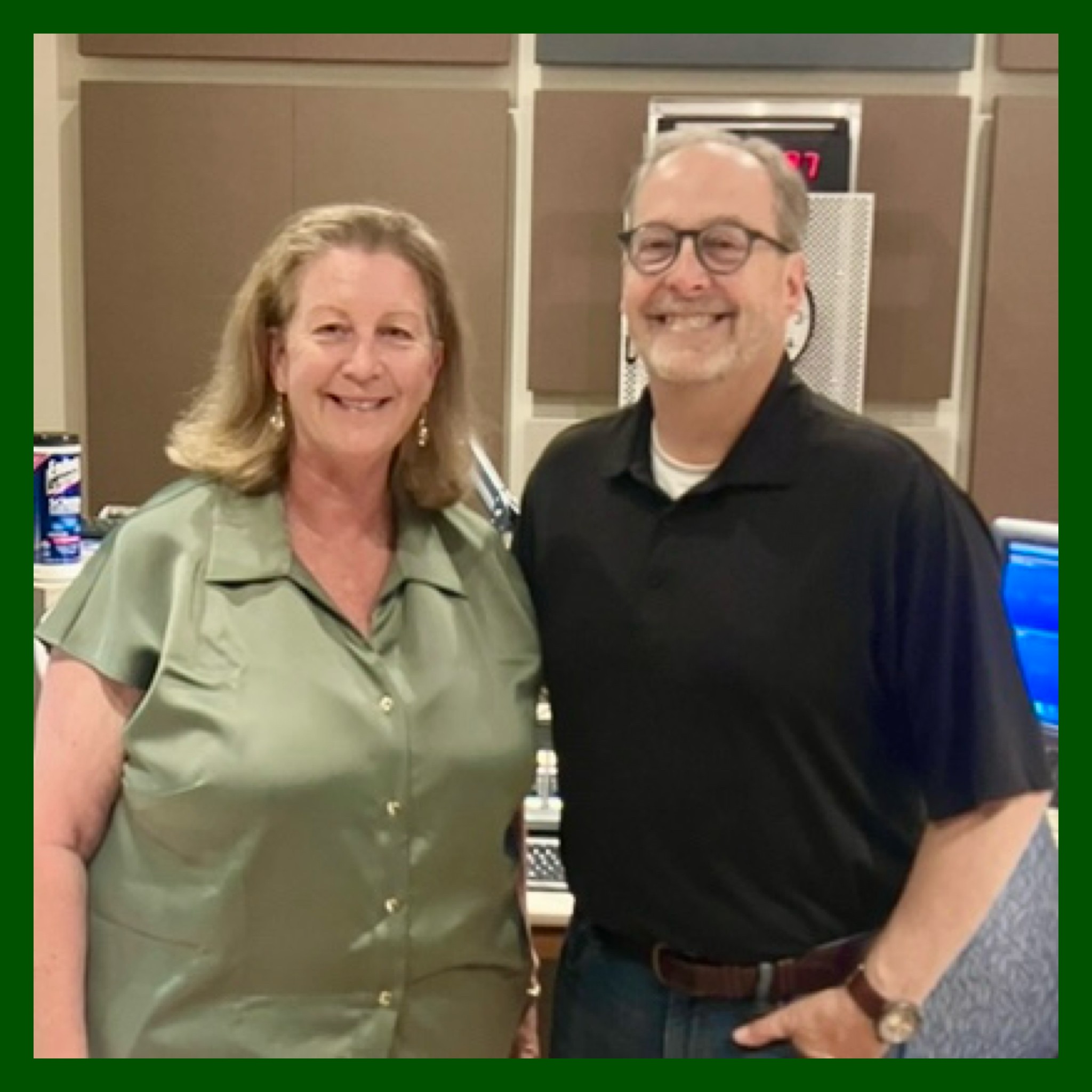
Bruce C. Bryan: My guest today on Naturally Curious is Jackie Sobieski. It's an interesting story when a person steps forward into a new role while they're currently running another business. Jackie is the executive director of the Botetourt County Chamber of Commerce and an owner at Virginia Mountain Vineyards.
We'll hear about the background of Virginia Mountain Vineyards and how Jackie came to acquire this business. Then we'll talk about the connection to the Chamber of Commerce. Beyond that, we'll have plenty to talk about, including business, development, estate wines, and of course, that building being constructed in her region.
All that and one person's journey through business. Join me for my conversation with Botetourt County's Jackie Sobieski coming up next on today's episode of Naturally Curious.
Sobieski Segment 1
Bruce C. Bryan: Jacqui Sobieski, thank you for being my guest on today's show, and welcome.
Jacqui Sobieski: Thank you, Bruce.
Bruce C. Bryan: So let's knock out the hard question first. When was the first time you had to say Botetourt out loud, and how did you do?
Jacqui Sobieski: Oh, terribly. Terribly. I just kept looking at the spelling. And, um, recently I was talking to someone over the phone from Washington, DC who pronounced it perfectly, and I- it stopped the conversation.
I said, "How did you do that?" He says, "I'm from there." I said, "You have to be to get that right." That,
Bruce C. Bryan: that's what I was gonna ask. Now it's natural, but you can always tell the Virginians from those who aren't from these parts, right?
Jacqui Sobieski: Absolutely, yes.
Bruce C. Bryan: So, so, uh, you've had to have had some fun with that. So, um, maybe...
I, I'm not gonna make this a history quiz, don't worry Jacqui, but maybe give our listeners, we have listeners from all over the state and actually all over the world, they may not know much about Botetourt and why it's spelled the way it is. Just a tiny bit of history about your special county.
Jacqui Sobieski: You know, it's interesting about that.
I, I actually do know a little bit about of it because my husband was so interested when we first moved here. And Botetourt, most people think it's a French word, but when Lord Botetourt came here, that's how he pronounced it. So he came with that pronunciation. Local people didn't alter it at all. Um, but it, it, its history's really rich.
It was a massive county going all the way to the Mississippi, consuming much of Ohio.
Bruce C. Bryan: Right. Wasn't it at first this enormous-
Jacqui Sobieski: Yes ...
Bruce C. Bryan: land mass?
Jacqui Sobieski: Yes. And so, you know, over time states got formed, and what I think is super cool is Fincastle, that town, that little town that we look at as a little town- Ran that whole county, as big as it was back in the day.
Bruce C. Bryan: Do you ever feel like going and doing, like, a land grab and taking other states back? Maybe, you know, the United States of Botetourt or anything like that?
Jacqui Sobieski: You know, all those states are beautiful. They really are. When you get traveling around and you get to see the different states, um, I certainly would be happy to have any and all that land.
Bruce C. Bryan: So give us the 30-second pitch, if you will, a- about your county. What do you tell people when it comes to Botetourt County?
Jacqui Sobieski: So the way I think about it is Botetourt has the best of everything right now. Now, we are going through a lot of changes, and change is both exhilarating and hard, and y- you're constantly on that rollercoaster, um, ride.
But from a business standpoint, we're seeing a lot of expansion, um, really up from the Roanoke area, and, um, all types of businesses. You know, people focus on the really big ones, but what's really telling to me is a lot of the small businesses that are coming and popping up, giving people there a lot more, um, options for shopping, a lot more business-to-business connection there.
So there's just a real vitality and energy in all of that. But with that not only comes change, but change doesn't happen smoothly. You know? It, it, people- Around
Bruce C. Bryan: these parts they call it fits and starts, right?
Jacqui Sobieski: Exactly. You know, you start to see traffic where you never had any. You start to, um, feel crowding in places that you were...
used to be open spaces. And I, I think that's the biggest challenge is how do we retain the character and culture of the county that we all love so much, but still get that strong economic base?
Bruce C. Bryan: Well, you're listening to Naturally Curious. I'm Bruce Bryan. My guest today is Jackie Sobieski. She's the executive director of the Botetourt County Chamber of Commerce.
And if you haven't been through Botetourt or spent time there lately, it seems like every time I go up there, there's something new being built. You have new homes, new subdivisions, new businesses, and like you were just saying, uh, all that contributes to a vibrant, growing area. But you have a mix, 'cause some people are happy about that, and they love the amenities, and other people are a little bit sad.
So you, you were talking about working your way through that.
Jacqui Sobieski: Yes. Um, I think housing, in particular, was a huge issue because you can attract these businesses, but if they don't have workers, and, and people don't want the long commutes, particularly in a rural area. And so I think seeing that additional housing going up is both a sort of a blessing and, and a curse to people.
But one thing I learned looking over, you know, the last 10, 20-year economic trend lines in Botetourt County is that when you don't have that kind of economic engine moving, um, the first companies to leave an area are the construction companies. So you see no housing built. You don't see apartments available.
You don't see, you know, those starter homes for young families. So you're naturally pushing- people out. They, they, they have to leave the county to even find a place to live. So I think it was very strategic to make some of those investments. But boy, it's beautiful land, and it's hard to see, um, what was once rolling hills now populated with housing and apartments.
Bruce C. Bryan: There are still rolling hills, but maybe not right near the main thoroughfare. And I, I noticed, um, not noticed, but I had an everything bagel recently from Donny D's. Those are pretty good.
Jacqui Sobieski: Oh, yeah.
Bruce C. Bryan: And you have a rooftop restaurant now in your area, right?
Jacqui Sobieski: Oh, yes. 1772 is the name of it, and it's in Fincastle.
And believe it or not, there's an airplane up there.
Bruce C. Bryan: Really? All right.
Jacqui Sobieski: So it's definitely... The food is great, and it's definitely become a place... Sometimes it's actually hard to get, get in there- Interesting ... get a reservation.
Bruce C. Bryan: I think the other thing that people may not be as aware of is the, the economic development that's happened with some of the big employers that have come to Botetourt.
And I think the region recruits, and we, we had Julia Boaz a few weeks ago, and the region recruits, but Botetourt's one of those places that has land available, and that's helped you all over the last decade, right?
Jacqui Sobieski: It absolutely has. And so that, you know, in any kind of, if you wanna call Roanoke a metropolitan area, the growth starts to move out, and I think Botetourt is a perfect example of that.
And that's why, um, the Roanoke Regional Partnership, their role is so strategic in partnering with all of us to look for those opportunities and help us prepare. But one thing I wanted to add, though, is the development we're seeing now isn't new. It's actually started through some strategic plans back in 1995.
So there were visionaries back then-
Bruce C. Bryan: 30 years ago.
Jacqui Sobieski: Exactly. And so some of the investments in sewer systems and manufacturing, um, infrastructure really was conceived of that long ago.
Bruce C. Bryan: And those can take a while to pay off. And speaking of payoffs, you're listening to Naturally Curious. I'm Bruce Bryan.
Jackie Sobieski is my guest today, and she has a lot of titles, but right now we're talking about her role as the Botetourt County Chamber of Commerce's executive director. There's a building happening up there that's been in the news a lot lately. Talk about that project, if you would.
Jacqui Sobieski: Yes. Um, and I think, um, the data center, uh, the Google data center that's being built is being built, um...
I don't think they've quite started yet. But it's planned to be built in the, um, area that was built for manufacturing companies. So it's not being placed- It's
Bruce C. Bryan: not in a residential area like some-
Jacqui Sobieski: That's right ...
Bruce C. Bryan: of those places in northern Virginia.
Jacqui Sobieski: Yes.
Bruce C. Bryan: So that's a positive.
Jacqui Sobieski: Yes. Although there are some adjacent properties that some of those residents aren't that happy about.
And I think there's, um... I'm seeing more and more at the national level stories about data center people, people's concerns. And I think on balance, um, you know, there's a lot of people with some very strong opinions about it. Um, one reason the chamber came out in support of it is because our job as a chamber is to be able to support business development.
Um, if we had seen compelling data or information that it was going to be detrimental locally, we certainly wouldn't have done that. But I think there's so much information flying about, and I also think that, um- We could all benefit from having, um, more research done. At the rate the data centers are going up nationally, that could be beneficial for communities like ours to feel a lot more comfortable than we are.
Bruce C. Bryan: What, what I hear you saying is they're still gathering information, and I think where a lot of people's discomfort might be is we're trying to make a, a, a decision like they made 30 years ago about development, not knowing maybe how it's gonna impact us in 30 years into the future, right? And that might be some of the discomfort and a little bit about what you're talking about, trying to gather information and gather data about data centers.
Jacqui Sobieski: Yeah, I think that's true. They, they, they just are coming up so fast around the country, and y- you know, I can understand it. People are uncertain about what that means and, and what they'll do to the local environment. Um, and I think it's just gonna take a lot of public and private partnership to ensure that we are actually implementing these in a safe and secure way.
Bruce C. Bryan: I think from the outside, one of the challenges is that these are not days where people are open to conversation and communication. It feels like people have chosen sides on anything, whether it's Wawa and Sheetz or... Which I'm a Wawa guy, by the way. So if there's... That's the real controversy 'cause the- Wawa's coming, right?
We're, we're building a Wawa. Got it, Don. I know. That's what I'm saying. I'm from outside Philadelphia. I'm a Wawa guy, so that's, that's controversy. But people really are drawing sides, and this is one that it's really... It's gotta be difficult for you to kinda balance as a business owner and a resident and being in charge of the chamber, trying to figure out how to navigate that.
It's probably a little bit challenging.
Jacqui Sobieski: It's definitely not clear-cut, but I did hear, um, and I, I wish I remembered where this quote came from. But I remember a gentleman saying, "You're either moving forward or you're moving backwards. There is no standing still." And so what that really tells me is that if you wanna move forward, we need to get active about shaping how we're gonna move forward, not just resisting not moving forward at all.
Because un- whether we like the data centers or not- Everybody's dependent upon them. Yeah, I mean, we're using- Every time
Bruce C. Bryan: you pull out your phone ... right, we're using the, the internet to
Jacqui Sobieski: get- Yes ...
Bruce C. Bryan: research done about data centers and using d- And, and it gets into a whole different conversation- Yes ... which frankly it might make sense for us to sit and have some time.
But in this one, I do kinda wanna keep it a little higher level with bottom top, beyond the wawa and the sheets and the other stuff. But it sounds like you're really encouraging people to do some the, of their own research and to check into some things on, on their own, and not just believe what they're hearing out there.
Jacqui Sobieski: I think so. And, and, you know, when people use the word research rather loosely these days, um, and I think there's a lot of people who go to Facebook and think that that is a research tool. If you wanna know how people feel about things, go to Facebook.
Jacqui Sobieski: If you wanna know real facts, you need other sources that can provide that information to you.
Bruce C. Bryan: Well, again, you're listening to Naturally Curious. I'm Bruce Bryan. This is Jackie Sobieski. And when we come back, we're gonna talk about how you landed this job, or did this job land you?
Sobieski Segment 2
Bruce C. Bryan: Welcome back, Jackie Sobieski. I think I heard the story, but tell me exactly how did a small business owner become the executive director of the Botetourt County Chamber of Commerce?
Jacqui Sobieski: So We bought Virginia Mountain Vineyards in 2018. I had never owned any kind of business before, let alone a small business.
And, you know, there were... You can see that there are a lot of struggles that small business people feel, particularly now, um, and so with, you know, a lot of the prices that are, that are going up, and a lot of small businesses operate very close to the margins. One of the mistakes I recognize that we made, um, when we first got here and were working our business, you're so focused on your business you forget how important networking is and getting out there, and how helpful other business and other business owners can be to you.
So, um, as w- we've had the vineyard and winery, um, for eight years, and this is late-breaking news. We are selling.
Bruce C. Bryan: Oh, that is l- We... You know, in, in the 20-some episodes Big Jim and I have done, we, we haven't... We've had a lot of newsmakers, but we haven't had a lot of breaking news.
Jacqui Sobieski: Breaking news,
Bruce C. Bryan: yes. So am I buying it, or do you have somebody else in mind?
Jacqui Sobieski: Our i- ideal buyer would be somebody who loves wine as much as I do and is willing to sort of carry on- Yes ... forward, um, making, you know, working to make great wine.
Bruce C. Bryan:You carried it on from somebody else, which I, I hope- Yes ... we get a chance to talk about. But-
Jacqui Sobieski: Yes ...
Bruce C. Bryan: so you, you bought the business eight years ago.
Jacqui Sobieski: Yes.
Bruce C. Bryan: And, um, how long have you been in the position at, at the, at the chamber now?
Jacqui Sobieski: Uh, six months.
Bruce C. Bryan: Okay. So very recent.
Jacqui Sobieski: Yes. And, um, I think it's, you know, certainly public knowledge the chamber had some problems, and, and I realize the problems they had, and my previous career prior to owning the winery gave me a skill set that I thought could be very valuable to them as they were trying to rebuild the chamber, um, get financial controls in place, um, rebuild the membership.
Uh, just a lot of sort of basic infrastructures for the chamber- As a- ... and give people hope.
Bruce C. Bryan: Right, that it's gonna get back on track. Absolutely. A- as a marketing person, I, I've paid a lot of attention to the dip, storytelling. So before something can come out and look great, you have to go through the dip, and the dip in this case was in the news, like you said.
There were some, some, some challenges, financial struggles, hardships brought on by the previous leaders. Did your past career... You said some of the things you'd done in your past career prepared you for this leadership position. I'm curious about that.
Jacqui Sobieski: Yeah. I was in financial services, so I saw crashes. I saw a lot of really tough times in the finance industry, and, um, often found myself in positions of, of leading large teams trying to, um, you know, mitigate issues, overcome results- do large-scale restatements.
And so I had a good understanding of just when you're coming out of a crisis, the types of things you need to focus on and people believing they can make it through. One of the untold stories, and, you know, this is like maybe a small story to people, but there's always heroes in these stories. And I tell you, there are heroes in the Bahama Chamber who led the chamber out of these problems.
And I had so much respect for them and thought I could lend my skill set to help them sort of turbocharge the chamber forward. So that's what I'm trying to do.
Bruce C. Bryan: Well, that-- and that's interesting. I took over a nonprofit organization 25-some years ago and found some financial irregularities and had to change executive directors, and that was a, a very challenging time 'cause you're not expecting that as a leader, a volunteer leader, which I'm sure most of your board is.
So they've been through some challenges. Um, this is "Naturally Curious." I'm Bruce Bryan. That's Jackie Sobieski. Um, Jackie, how do you keep all these business leaders happy, or at least some of them anyway?
Jacqui Sobieski: Um, I th-, I, I, I've been blessed that many of them have been very supportive about moving forward. I think one of the challenges, which is not unlike Botetourt County as a whole, is to transition the chamber from more of a, um, a more relaxed atmosphere into being more of a business-enabling chamber.
And that's, these new businesses that are moving in, that's their expectation.
Bruce C. Bryan: Right. That's the new level that-
Jacqui Sobieski: Yes ...
Bruce C. Bryan: is a baseline.
Jacqui Sobieski: Yes. And then when you look at the large percentage of small businesses we have, we, the chamber can be absolutely critical to making sure they've got a role in the game across the county, and we're very dedicated to that.
Bruce C. Bryan: As a owner of a small business, what are you looking for from your local chamber of commerce? Because anybody that's in industry anywhere in our listening area has a chamber of commerce. I'm just curious, as an owner, what you're looking for.
Jacqui Sobieski: So I found for myself, and this, in talking to other small business owners, it does seem to be a bit of a theme.
Um, you're so resource-constrained. Trying to find real information that gets you access to, um, other business opportunities, grant opportunities, all the things that larger businesses who have a team of people to be out there researching, you don't have that team. And every, every time you spend time doing that, you're taking away from your main business activities.
So it's a real, um, a real challenge for small businesses. So if the chamber can play a role in helping understand those needs and getting information and access to that information and synthesize it in a much easier, more consumable way for small businesses, I think that could be very impactful.
Bruce C. Bryan: Yeah, because nobody has time for that anymore.
Jacqui Sobieski: That's right.
Bruce C. Bryan: So are you happy as Virginia Mountain Vineyards with the work Jackie Sobieski is doing for the chamber?
Jacqui Sobieski: Um-
Bruce C. Bryan: Has anybody ever asked you that? It's a pretty good question, right?
Jacqui Sobieski: No. Yeah. It, it is. It's, you know, s- selling the, the vineyard and winery is so bittersweet for me, um, because although my husband's been a, a trooper, um, really trying to make great wine was really my dream.
And so- Doing the things I'm doing for the chamber are very easy and natural for me 'cause that w- w- what my career was for 30-some years. So it's sort of, it's sort of comfortable even though it's very demanding. It's like an extension of
Bruce C. Bryan: what you're doing.
Jacqui Sobieski: Yeah
Bruce C. Bryan: So...
Jacqui Sobieski: But, but making great wine was one of the most unique experiences of my life.
Bruce C. Bryan: So Jackie, I asked some people that know you pretty well to use some words to describe you, and some of the words I got back were sharp, thoughtful, and very grounded. I heard more of a sentence that you make people comfortable, and I'm just wondering how that, how that sits with you.
Jacqui Sobieski: Um, I'm, I'm happy to hear that because, uh, I don't think I naturally came to some of those adjectives-
Bruce C. Bryan: So some of those are things you've learned
Jacqui Sobieski: early in my career. Absolutely. The hard way. You know, I scraped the elbows and knees, um- If you wanna do great things, you almost never do them by yourself. You always do it with other people, as a team, as a group. And I learned that that's where I get my most satisfaction from, but I also learned I didn't have good skills at that when I was early in my career.
And so if I wanted to achieve that, I had to change, I had to understand that, and meet people where they are
Bruce C. Bryan: W- um, I think that's a fascinating answer, and some of those things you just said are on calendars that people hang on their walls. So I mean, I think to see that you've integrated that into your daily routine at work, and maybe in both your jobs, I think is, is a good thing for people to hear.
Uh, you are listening to Naturally Curious. I'm Bruce Bryan. This is Jacque Sobieski from Virginia Mountain Vineyards. So Jacque, tell us a little bit about what's going on this summer at the vineyard.
Jacqui Sobieski: Um, so as I mentioned, we are selling, so we don't have as many activities as we normally do. We had our Wine and Roses Festival in May, which was wonderful, and has become a, a well-loved event, um, throughout the county.
And so, um, you know, we frequently have music on Sunday afternoons.
Bruce C. Bryan: I wanna just... I've been there for- Yeah ... live music on a Sunday afternoon, and, uh, I think if you've made it this far into the interview, you can assume that Virginia Mountain Vineyards is in Botetourt County, so there's that. But talk about what it feels like out there on a Sunday afternoon.
Jacqui Sobieski: Well, one, one... I, I don't know that it's a secret, but, um, Roanoke has great musicians, and so there's, there's a lot. You have access to a lot of, of good music, and there is nothing more special on just a, a, a brilliant Sunday afternoon where you've got live music being played, and you've got the, the, the Blue Ridge Mountains, the view that, that we have out there.
And I've had so many people who tell me they come there to relax. It's their de-stressor, and you're, you feel close to nature. You're not far from Roanoke, but you feel like you're out in the middle of nowhere, and you're enjoying, you know, good wine, but the great music of some of the Roanoke regional musicians.
Bruce C. Bryan: It's a powerful combination. So Senator Warner, back in the early spring, said that Virginia wines are getting better and better reputation. Do you find that you have to educate or sell people on Virginia wines and, and even how about your own particular wine?
Jacqui Sobieski: Yeah. I think the wine, uh, the wines are definitely getting better and better in Virginia.
Um, so there's a lot of really excellent noteworthy wines. One of the things I think our industry in Virginia struggles from, um, is that in certain parts of the state they've become more tourist sites, so there's less focus on the quality of the wine and just attracting, you know, the busloads of people.
Um, and I, I think some areas aren't as focused on the quality of the wine. But there's definitely a large number of winemakers who have been focused on that, and it's been, it's really changed Virginia wines.
Bruce C. Bryan: Well, I have a lot of questions I wanna ask, so I'm hoping you'll stick around for the, uh, the bonus segment.
But as we wrap up, I was wondering if you might have something to share with people that they might be surprised to know about your wine.
Jacqui Sobieski: Oh. Um, what, what I get routinely, particularly from people from Northern Virginia or New York or more, more urban centers like that, is that they're very surprised that they're drinking a great glass of red wine.
Bruce C. Bryan: There you go. Jackie Sobieski from the Botetourt County Chamber of Commerce and Virginia Mountain Vineyard, thank you for being my guest on Naturally Curious this week. To listen back to the show, to hear the full interview, and links to learn more about wine, local wine, the Botetourt County Chamber of Commerce, or other topics that we covered, search Naturally Curious at radioiq.org.
Naturally Curious was produced and edited by Big Jim Shively and recorded at WVTF Radio IQ Studios. I'm Bruce Bryan. Thank you for listening.
Sobieski Bonus Content
Bruce C. Bryan: Well, thank you for sticking around, Jackie
Jacqui Sobieski: Oh, you're welcome, Bruce.
Bruce C. Bryan: So there's a little bit more about you during this segment, and I guess the first thing I wanted to know is do you ever Google Botetourt, your vineyard, or yourself? And if you do, like, what are you reading about yourselves these days?
Jacqui Sobieski: You know, that's a f- that's an interesting question. I don't do that. Um, I just... You know, I'm probably old enough where I'm just not, you know, one who's really looking-
Bruce C. Bryan: You're gonna carry on ...
Jacqui Sobieski: on social media. But I'm just... I feel like I'm a doer. So I, I always feel I'm doing rather than reflecting. Maybe that's good, maybe that's bad.
Bruce C. Bryan: Well, we, we can turn that into a therapy session- ... and dig more on that, or you can go as you drive away and think about that answer. But I am curious to hear a little bit more. You'd mentioned, uh, during the last segment that in 2018 you bought the vineyard, you and your husband, and you moved to Botetourt County to the greater Roanoke area.
And I was curious about how this area compares to with, w- with where you're from, and, uh, just talk a little bit about some of your early experiences with Body Torte. Is that what you said the first time?
Jacqui Sobieski: Bote- I, I kept- Bota Torte ... trying to say it with, uh, with a French accent, which- ... made it all the worse.
Um-
Bruce C. Bryan: There's nothing good about any of that. Where were you before Botetourt?
Jacqui Sobieski: So I've always lived prior almost in urban areas. Okay. Um, lived in the DC area, lived downtown Chicago for about 12 years. Um, I grew up military, so we lived all over- All over ... even in Europe for quite a number of years. So coming to Botetourt County was definitely a departure.
And when I first drove down with my brother, he's like, "Can you live way out here?" And, and I could see it all. I just said, "Absolutely. I cannot wait to get started."
Bruce C. Bryan: Was that a bit of a shock to your system, though, especially tho- those first couple days when there wasn't traffic noise and siren noises and city noises, but there were maybe creepy animal noises or quiet, or were you totally fine with it right from the beginning?
Jacqui Sobieski: I was generally fine with it right from the beginning because I'm one of those people when I get focused, I'm very focused. So I was immediately just into the task and into all of that. The one, one night that gave me pause, and I, I s- I immediately had the locks changed after this, and my husband hadn't moved down yet, so I was by myself on 91 acres.
I got up in the middle of the night to use the restroom, and it was very, very cold in the house. And I walked out into the living room area and realized a door was wide open. Oh. And all that, that, that's when I thought anything could have crawled in this house, and I don't even have any idea how to get it out.
Bruce C. Bryan: And what a strange comparison 'cause if that had happened in downtown Chicago or in DC versus here, you know, there's a whole lot of ways it could go. But at least a bear didn't come in there- That's right ... and, you know-
Jacqui Sobieski: Yes ...
Bruce C. Bryan: and make things happen, so. Or
Jacqui Sobieski: snakes. That's what
Bruce C. Bryan: I was always afraid of. Oh, yeah.
I'm not a big fan of those either. No. So I, I've gotten to talk A lot of food during the first, you know, 20 episodes or so of Naturally Curious. But this is my first chance, except for that passing mention Senator Warner had about, uh, wine, to really discuss wine, and I'm curious what you're hearing about your own wine.
Jacqui Sobieski: So o- one thing, one thing that, um, people who are used to drinking a lot of California wines or different wines from other places, Virginia wine is much more like French wines. Our soil similarities, and even if you go back to the, you know, your school days of learning about plate tectonics, you know, Europe was fused to the East Coast of the United States.
And so naturally our wines will drink differently. Our growing seasons are, are shorter than you might get out in California. Um, I, I was always interested in feedback. I wanted d- you know, to know the good, the bad, and the ugly. Um, the one thing I will say is I felt like early on I had some pretty good success, which encouraged me.
But I think some people ask me, "What made you think that you could make great wine?" And I, I said, "Well, I didn't know that I could, but I did know one thing. In my previous life, I had opportunity to drink great wine." Really great wine. And, uh, you know, that sounds sort of glib, but if you never tasted great wine, how do you even know what you're shooting for?
How do you even develop your own sense of what you're trying to produce?
Bruce C. Bryan: Yeah, you can't go back and do that high school- English question compare and contrast if you don't have anything to compare and contrast it to
Jacqui Sobieski: . Exactly. It's almost a bit random because when you're thinking about what you wanna make or, or, or the kind of wine you wanna make, you start studying tools and techniques that are going to create those features.
But if you don't know what that is-
Bruce C. Bryan: How it translates, then-
Jacqui Sobieski: Y- ...
Bruce C. Bryan: you're feeling around in the dark-
Jacqui Sobieski: That's
Bruce C. Bryan: right ... with an open door that a bear or snake might have gotten into.
Jacqui Sobieski:
Exactly.
Bruce C. Bryan: And we don't want any of that. So you have a mix of varietals. Is that what they're called, right, varietal? We
Jacqui Sobieski: do, yes.
Bruce C. Bryan: That, that you all, um, make.
Can you talk a little bit about them? By the way, I should stop you and say you're listening to, uh, Naturally Curious, and I'm Bruce Bryan. This is Jacque Sobieski. She's with Virginia Mountain Vineyards. So talk about, a little bit about the wines.
Jacqui Sobieski: So in our vineyard we have five varietals, which means five different types of grapes that we grow.
Um, Chardonnay, Traminette, and then three red grapes, Petit Verdot, which grows very well in Virginia, um, Merlot, and Cabernet Franc. So that's what g- we start with, and we actually, um, m- bottle all of those as varietals, but then we take those and create s- interesting blends- Blends ... both white and red blends.
Bruce C. Bryan: So what do you usually recommend to people that are coming out? 'Cause you probably have a couple go-tos.
Jacqui Sobieski: Yes. So this year, 2026, the first time, I'd never en- entered any of our wines in the Governor's Cup before, um, but we entered our, uh, Petit Verdot Reserve and our Chardonnay Reserve, and they both won silver medals.
Bruce C. Bryan: Congratulations.
Jacqui Sobieski: Thank you. Thank
Bruce C. Bryan: you. Is that... I don't know if that's breaking news, but that's the news I just heard, so good for you.
Jacqui Sobieski: Yes. Yes. Um, I, I, I didn't put our wines in the Governor's Cup before because I wanted to get them to the level where I felt like they should be competitive. So that was, that was exciting.
So those are naturally ones that I will point people to. Of course. Um, but people's tastes are very different. To be a, a really, uh, you can make great wine, but serving in the taste room is almost a whole different function. You really have to feel people out about what their palate likes.
Bruce C. Bryan: Right. It's like when you go to a restaurant and you ask a server, "What should I get?"
Well, their taste- It depends, yeah ... is totally different than yours. Right, it does. Right. It depends. D- and I, again, with the caveat that it depends and that it's just your opinion, are there other Virginia wines that you yourself like?
Jacqui Sobieski: Well, there is, um-
Bruce C. Bryan: And not to put you on the spot, can you m- maybe name one or two if you can even think of them?
Jacqui Sobieski: There's a winery, um, and this is very unusual. Pinot Noir does not grow well in Virginia. There's only three wineries that I even know that grow it. Akita Ridge, very small winery, um, produces a pinot noir that The Washington Post writes about.
Bruce C. Bryan: Big Jim and I are taking notes.
Jacqui Sobieski: Yeah. It's, it's... I was, I, I was at a festival with them, and they were right next to us, and you know, you be friendly with the other wineries.
Right. And they're like, "Oh, well, did you wanna taste our wine?" And I saw it was pinot noir, and I thought, "Ugh."
Bruce C. Bryan: No, thanks.
Jacqui Sobieski: No, I, I said, "Oh, okay," 'cause I was being polite, and I just was floored how good it was. Um, Veritas- Yes ... um, actually was
Bruce C. Bryan: recently- Up Charlottesville area ... purchased by- Up on the
Jacqui Sobieski: mountain. Yes.
Yeah. Is, is known for, for producing some very nice wines as well.
Bruce C. Bryan: Okay. Well, good. Thanks for the tips. So can you talk a little bit more about the process? 'Cause people drink wine, they might know how to open it, you know, but it takes a lot to get it from the vineyard to the, to the bottle with a cork in it.
Jacqui Sobieski: It does, and unfortunately, that's why we're selling. Um, the, the vineyard, it's all about the grapes. If you don't start with good grapes, you can't out-technique bad grapes. So we spend a lot of time focused on the care of the vines, how they're pruned, how they're renovated. It's a lot of
Bruce C. Bryan: work.
Jacqui Sobieski: It's an enormous amount of work.
Um, and the wine-making process, um, like I said, you sort of have to have a point of view. One of the things that, that significantly changed the quality of our reds was barrel quality, so.
Bruce C. Bryan: And is that something you've shifted over the last eight years-
Jacqui Sobieski: Yes ...
Bruce C. Bryan: Jackie?
Jacqui Sobieski: Yes.
Bruce C. Bryan: Interesting.
Jacqui Sobieski: Made a huge difference. Okay.
Um, the quality of that oak interact... 'Cause the red wines will stay in barrels for two years. So if you don't have the right quality barrels- Um, y- you know, they're just not going to have the effect on the tannin development that you really need in red wines.
Bruce C. Bryan: Interesting. Yeah, one of these days I might have to have the Brady Distillery folks in and talk to them about their barrels, because a lot of vineyards use bourbon barrels- Yes
to kind of keep their red wines, right?
Jacqui Sobieski: You're, you're hearing that more and more.
Bruce C. Bryan: Hmm.
Jacqui Sobieski: We set out to be sort of classical winemakers, so I never went down any of those paths, but I have tasted, um, other wineries that have, have produced some nice wines with that tannin.
Bruce C. Bryan: And Jackie, it sort of feels like you're alluding to the fact that not just your wine, but wines around Virginia might actually be getting even better.
Are you feeling that?
Jacqui Sobieski: Yes. I'm
Bruce C. Bryan: not putting words in your mouth then.
Jacqui Sobieski: Yes. The one thing I would say, um, is, you know, w- vineyard people, we're farmers, and you pay a lot of attention to the weather, and the weather feels more and more unpredictable, and so you're doing a lot of adjustments. You're getting too much rain.
You're not getting any rain, um, at the wrong times of the year, and so I think that is impacting, um, a lot of vineyards, and the recent frost.
Bruce C. Bryan: Yeah, that has to be kind of stressful because I run a business- Yep ... and I don't usually have to worry about the weather. You can't control the weather, but you definitely have to worry about it as a farmer, right?
Jacqui Sobieski: Yeah, and we had a little bit of dumb luck in that our vineyard, we're almost immune to frost, because we're about at 1,600 feet, and the cold air settles down in the valley. So we know of other farms, peaches, apples, whatever, they'll lose their entire crop, and we have no frost- Wow ... where we are.
Bruce C. Bryan: So I'm curious, do you drink beer or cocktails to get away from the work, or are you busy drinking your own wine or different kinds of wine yourself?
Jacqui Sobieski: That's such a great question. Um, so I do drink mostly my own wines, but somebody asked me an interesting question who knew me in my previous life. Back in the day. Yeah. And they said, "Do you still love wine as much as you used to?" And I thought about it a minute, and sadly enough, I thought, "I don't," because wine has been so much work.
It always was just relaxation, joy, and pleasure before, so- And
Bruce C. Bryan: now it might still be that. I'm thinking. But there's that hard work side, too.
Jacqui Sobieski: Well, I'm hoping it comes back,
Bruce C. Bryan: honestly. It comes back because you're comparing, right? Yeah. You're back to that essay question, compare and contrast. Mine's a little better.
Oh, my- I should go back and trim this, or I'm sure your brain and your- Yes ... husband's brains are always kinda going. Um, you mentioned wines that you like. Um, the ones that you recommend to other people, are those the kind that you gen- generally prefer? Or if you were going out to a restaurant and weren't gonna drink your own wine, is there a kind that you really like?
Jacqui Sobieski: Um, so I have a, a, a broad palate, um- You know, I, I like both reds and whites and different moods. Like, probably my favorite is our Chardonnay reserve, and I love Chardonnays. But I, I... The, the non-oaked Chardonnays are very fashionable today. I like the oaked Chardonnays.
Bruce C. Bryan: Gotcha.
Jacqui Sobieski: But, um, our Tremonet, that wine we drink at Thanksgiving every year because it pairs so beautifully with poultry and seafood dishes.
So, so it's just, to me it, a, a lot of times it's about the food combination, um, as to what I'll choose. And what,
Bruce C. Bryan: And what, and how you're feeling or-
Jacqui Sobieski: Yeah ...
Bruce C. Bryan: or what you're eating. Well, Jackie, as we wrap it up, I just wondered if you ever take the views out there on your 91 acres for granted?
Jacqui Sobieski: Yes and no. Um, yes, because, I mean, they're so staggeringly beautiful, and probably not a day goes by where I don't stop and am awed by that, especially now that we're selling and that I won't see it every day. But when I look around the winery, I see work. I
Bruce C. Bryan: see, it's just- There's no relief. It's-
Jacqui Sobieski: Exactly
Bruce C. Bryan: it's a mixed blessing, so to speak.
Jacqui Sobieski:It is. Yeah.
Bruce C. Bryan: The picture of bittersweet, which is sometimes a good way to describe, uh, a delicious wine every once in a while. Thank you for being my guest. It's been a lot of fun. I've enjoyed speaking with you. Uh, if people wanna get more information about your vineyard or about the Botetourt, uh, County Chamber, maybe throw out some, some ways for them to find you.
Jacqui Sobieski: So for the chamber, botetourtchamber.com is our website. You can go there, and that has all of our contact information. Um, for the winery, um, Virginia Mountain Vineyards, and I said, like I said, I yesterday started our auction sale. Um, so people can certainly go to land.com and look up information there. But we're still open weekends, and- Doing your thing
you know, people are coming out. Yeah, so.
Bruce C. Bryan: Well, it's great to get to know you a little bit, and thank you for sharing your story.
Jacqui Sobieski: Absolutely. Thank you.