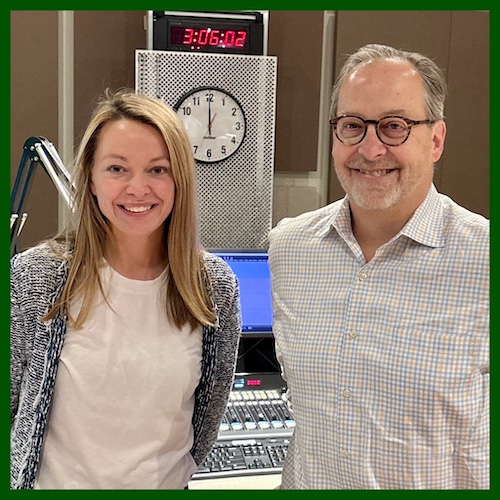
Bruce C. Bryan: My guest today on Naturally Curious is Isabelle Thornton. She's a force in the housing arena and has done transformational work in the city of Roanoke, but with a model that appears to be transferable to other regions and communities. As the Trinity Commons project that Restoration Housing is doing reaches the headlines and other work has been established, it's the perfect time to learn more about this community leader and to hear how she got to where she is and what's next.
Restoration Housing has a plan to continue addressing affordable housing options. Today, we'll hear more about them and how all of this fits together. Each community has organizations working on solutions and ways they are addressing these challenges. Today, we'll talk with one individual with affordable housing and building restoration.
I'm interested to talk why these solutions make so much sense and how Restoration Housing puts them all together. Join me for my conversation with Restoration Housing's Isabelle Thornton, coming up next on Naturally Curious.
Thornton Segment 1
Bruce C. Bryan: Isabelle Thornton from Restoration Housing. Thanks for being my guest on the show today.
Isabel Thornton: Thanks for having me.
Bruce C. Bryan: I have perhaps the hardest question I've ever asked anybody. My brain is a little bit mixed up and twisted. How do you, or how many times a day do you say Restoration Hardware instead of-
Restoration Housing?
Isabel Thornton: I definitely don't say it anymore, but I think, um, it was, it was a, an easy mistake to make in the beginning. It was a fear by some friends of mine that that would be a- an issue people would have. And I think it w- it was m- maybe more so in the beginning than- But
Bruce C. Bryan: now you're
Isabel Thornton: good. Yeah, I think we're good now.
So you
Bruce C. Bryan: can sympathize with me- Yes ... and today making sure I don't mess that up. Yes. So if I do, just say, "Hey, Bruce, it's Restoration Housing." So I just wanna tell you, your reputation- Mm-hmm ... reputation precedes you. Mm-hmm. I often like to ask people, um, who know my guests to describe them to me before the interview, and Isabelle, you got some glowing praise.
Mercy, people like you. Um, I've heard your heart is huge. And people said you're a problem solver and a world-class humanitarian. So, do any of those things resonate with you?
Isabel Thornton: It's lovely to hear things like that, um, because, uh, I do think I, I do this work out of, um, a personal, um, passion and care and interest for Roanoke. And, um, and so to see that that's recognized is, is really nice to hear. Yeah.
Bruce C. Bryan: So we've talked about affordable housing on this show in other episodes, and I know it's an, um, an enormous problem.
Mm-hmm. Does it ever get kind of difficult when you know that you're working on such a big problem in a limited place? Does that question make sense?
Isabel Thornton: Absolutely. I feel like, um, if I feel imposter syndrome, it's typically around the idea that our projects are not going to be solving the issue because we're doing such small projects, and we do one a year.
We typically do a house, sometimes a larger house with a couple to four units, um, and our biggest project now is 15 units, but they're just a drop in the bucket to what the need is.
Bruce C. Bryan: A big problem there, right?
Isabel Thornton: Yeah. And, and I spend a lot of time with much larger affordable housing developers trying to learn from them and, um, and, uh, I'm on a board of one and, and I see what they're doing where they're doing projects that are hundreds of units.
And so I do... Where I kind of question myself the most is we're doing these teeny, tiny little things and are they really making a difference when you know, uh, for instance, our need locally, you know, we have a 4,000-plus wait list for, uh, affordable housing vouchers. That's the local need alone, and that's a problem throughout the country.
So it doesn't feel like we're solving the crisis, but we're, we're doing these, you know, minimal efforts. If I look at it through that lens, it can be overwhelming. But if I look at it through the lens of it's also, uh, reinvestment, preservation, restoration of older historic structures, it's not just the affordable housing, um, then I feel like we have a bigger impact and a bigger story to tell.
Bruce C. Bryan: We are listening to Naturally Curious. I'm Bruce Bryan. This is Isabelle Thornton from Restoration Housing, and we're talking about the affordable housing crisis. And e- one of the themes that c- kind of runs through Naturally Curious and the guests I speak with is even people that feel like they're doing little things, those little things do add up, and there's a, a power of compounding work that happens with that.
Uh, you may not be exactly an expert in this, but can you kind of describe on a macro level the affordable housing crisis and just talk about that if you would?
Isabel Thornton: Sure. I think it's happening all throughout the country. I don't know about outside of the US to say specifically, but I listen and read, you know, enough national news to know that it's a big issue everywhere.
And I was just listening to Ezra Klein's podcast this morning. He interviewed the five gubernatorial candidates in California, and they were all debating about... The only topic they were debating about was affordable housing, and it was so fascinating to me to listen to their different perspectives of how to solve the crisis in what I think is perhaps the most, if not the second most difficult state to build affordable housing in.
I'd say probably the most difficult. And, um, I studied in, uh, I studied graduate, um, I did my graduate studies in California, so I can speak to it a little bit. They're just entirely different issues, but they're still the same issue where there's not enough affordable housing. In California, you have these cities with just insane rental markets.
If you're talking about San Francisco and San Jose and Los Angeles, it's nothing like what we're dealing with in Roanoke. Um, and so They, they have the same concern that we need more housing, we need more market rate housing in order to then also have more affordable housing. You ease the pressure of a market if you just have more housing stock, period.
So they want all of it, more market rate and affordable.
Bruce C. Bryan: Both and,
Isabel Thornton: right? Yeah. And, and I'm hearing the same things in Roanoke. Roanoke leaders want more market and affordable. They want all of it. They wanna ease our market as well. We just have a really different market. We don't have exponential growth.
We're not dealing with, um, you know, market rate housing that is 200% of the area median income, which is what you're seeing in Northern Virginia. So we're, we're really in a different kind of version of the same problem, and what I think our version is that we don't have enough affordable housing, um, for very low income and low income families especially, um, families that are living at poverty level, that are living...
We see a lot of the need with people making between 50 and 60% of the area median income. We're also seeing a lot of, uh, need for more elderly affordable housing, that elderly homelessness is on the rise, and that's happening here and throughout the country. Um, but one of the things that we wanted to respond to with our preservation side of what we do is that there's a lot of...
In Roanoke, there is a lot of affordable housing that's substandard. Um, you see maybe less of that in cities with such a strong market that they don't really have a lot of vacant housing stock. But in Roanoke, we have- There is vacant housing stock ... yeah, there's a lot of vacant housing stock. And- And so we're trying to kind of deal with both the blight and the issues that come from vacant housing stock and trying to change that while also giving a higher standard of living for affordable housing.
I believe that it should be, um, that people should have extremely high standards of living, even if it is for people that make very little.
Bruce C. Bryan: So in, in many cases, when you take a blighted property and turn it into a home, you've kind of, um, accomplished multiple goals with the same project, and that's a big part of your vision, right?
Isabel Thornton: Mm-hmm. Yeah. So I think that we have a, a different version of the same problem. It's a problem everywhere, and it's, to me, fascinating that you have this debate happening, you know- at the gubernatorial level that it's only about affordable housing, and you just hear about it over and over. And many of the stories here on this station are about affordable housing.
It's everywhere. The need I think, um, is maybe a separate conversation about what you can do to solve the problem because there's so many different ways to go about it depending on the locality that you're in. So in California, they have very specific environmental reviews that are tangling things up and specific issues related to their taxing, their property taxing system.
Here, I would say the things that we could do to improve the n- amount of housing stock we have, you know, go back to simple things like, uh, zoning reform. Not simple things, actually. Zoning reform is the opposite of simple. E- simple, but not
Bruce C. Bryan: easy. Exactly. But
Isabel Thornton: it, it is
Bruce C. Bryan: simple, but
Isabel Thornton: it's not easy, right? It can be.
It can be simple. Um, zoning reform and, um, things like what we've done locally, establish a land bank that helps, um, mission-minded or nonprofit developers create affordable housing and helps with their acquisition costs. That's been huge for us locally. I can't express enough what a big deal that is that our locality created a land bank.
Um, and then there's just, there are a lot of different things that can be done that are probably more, uh, Roanoke specific or Virginia specific.
Bruce C. Bryan: You're listening to Naturally Curious. I'm Bruce Bryan. This is Isabelle Thornton with Restoration Housing. And, um, what I understand is you really are, one of the things I heard was you're a real vision setter.
How do you see things working with Restoration Housing into the future and, and how would you like them to be?
Isabel Thornton: Um, I have a, um, intention to, to very slowly grow. Um, and that sometimes intention with, I think, like I said, the need. The need locally is quite strong. There are so many-
Bruce C. Bryan: So it's almost like no matter what you're doing-
Isabel Thornton: Yeah
Bruce C. Bryan: it's not enough to address- Exactly ... everything you'd like to do or
Isabel Thornton: be able- Exactly ... to
Bruce C. Bryan: do, right?
Isabel Thornton: And I do like to, um, I like to meditate and get very creative in my mind about how a project could come about. You know, what needs to be done, what hurdles need to be jumped over, and what funding do we need to try to get?
And all of those things are a- actually really fun curiosity and creative- As you- ... projects for me ...
Bruce C. Bryan: process
Isabel Thornton: that. Yeah. But I have to slow myself down and say, what, what's actually good for the organization and for me personally? Um, and to be completely frank, I created this business so that I could raise a family and do it in a way that worked on my own terms.
I don't think many women work the way that they could because traditional jobs don't really allow them to have the flexibility that they need. So I created a business so that I could have inherent flexibility and raise my family, and doing that means I have to be very, um, very strategic in the way that we grow.
Bruce C. Bryan: To get out of hand
I don't, I don't want this to be- an overwhelming- Yeah. Yeah. And I think, um, I've actually ended up sort of by default, uh, hiring many people that also want that flexibility, that want that work-life balance, and doing one project a year really works well for us. So in terms of a vision, um, I love the idea of just continuing to do one project a year that serves Roanoke's most vulnerable populations, and that changes...
The meaning changes every year. You know, one year it's elderly homeless, and the year before that it was pregnant and postpartum women with substance use disorder. So we're always trying to see what the greatest need is and how we can fix that from a housing- And then
Bruce C. Bryan: tackle that as- Yeah ... you go. Mm-hmm.
It seemed like the first decade was a lot of restoration of housing projects. Let's talk, if we could, about the power of restoring versus tearing down.
Isabel Thornton: Oh, wow. Yeah. Um, I, I go back and forth a little bit on this. I am As a developer, I see the need to make a project make sense from basic economic standpoint, and some buildings, if they can't have a, um, a true function in, in meaning that if you adaptively reuse them in some way and you can't find a meaningful function for them, I'm probably not gonna be standing out with a picket trying to prevent a bulldozer the way that many preservationists are.
So I would say I'm a preservationist with a lowercase P in that sense that I really want restoration projects to come from, um, a, a useful and practical purpose first. And so I'm... But I'm also, I am often the person that will try to find a really creative solution to make one work where people will say, "We should bulldoze this."
And we've had a few projects. In fact, the first couple projects we did, um, Villa Heights and 820 Dale Avenue in Southeast Roanoke were both recommended to us by structural engineers to tear down. Hey, get rid of these. Yeah.
Bruce C. Bryan: But you, you made it work.
Isabel Thornton: Yeah, but really- W- ... because we could understand the economics of how we could- You could
we could pay for the restoration and then make them functional from an operational standpoint.
Bruce C. Bryan: So when we come back to Naturally Curious, we're gonna talk about the Trinity Commons project and a bunch of other questions that I have. So we'll be back with Isabelle Thornton after this break.
Thornton Segment 2
Bruce C. Bryan: Welcome back Isabelle Thornton. Glad you're on the show with us today. Um, it's one thing to restore a house, uh, but how did your work with an old Methodist church in the old sw- southwest neighborhood of Roanoke compare with the other work you've done? Was it really, really different?
Isabel Thornton: Yes, it was, um It was very challenging for us in many ways.
One side of that challenge, of course, is that it's a totally different building type, and, um, it's an adaptive reuse project, which means you're taking a, a, a, an, a historic building and completely configuring the use, reconfiguring the use in a way that we never do with our houses. We actually keep the floor plan pretty true to what the original floor plan was with our, with our house rehabs.
Um, and then the other side is it was quite large for us. It's 15 units, which for us is much bigger than anything we've come near before. So we're, um, increasing the size of our rental inventory. We had to grow our staff. We put an on-site resident manager's offices, office there. And then the costs for the rehab were significant.
Much more su- Yeah ... uh, substantial, right. Um, you know, a little over $3 million for all of the costs, uh, hard and soft combined. Um, and we raised all of that actually with a combination of tax credits and, uh, fundraising altogether. So there's no debt on that project, and that took us over a year to fundraise for.
Bruce C. Bryan: That's amazing. Mm-hmm. And, um, Restoration Housing is a non-profit, right?
Isabel Thornton: It is, yes.
Bruce C. Bryan: So wh- when you're able to do that, that just gives you more resources to do more good work, right?
Isabel Thornton: Absolutely. I think there are a lot of great developers in Roanoke that are doing affordable housing projects worth mentioning.
I think Brent Cochran's work at Belmont Baptist, um, that's affordable housing as well, but he's a market... I mean, he's a , but he's doing great things with affordable housing. Um, John Garland also- Sure ... has great affordable units. So there's, there's ways to do it as a for-profit, but non-profit status gives us access to a lot of grants that, that really help us.
Bruce C. Bryan: So one of the things that, um, I think about frequently with this show is that, you know, of course, we have listeners because of po- the power of podcasts all- Mm-hmm ... and the internet all over the world, but our, our main listenership is to the Tennessee line, and these are challenges that every one of these communities, rural and- Mm-hmm
more urban, are facing. There's a twist to this one in that senior housing's also kinda scary because- Mm-hmm ... they have special needs, and those demands seem like they would make the work harder. Was that the case?
Isabel Thornton: Uh, maybe a little bit. We, um, we definitely were considerate of ways that our tenants could age in place.
So it's considered independent living. If someone has, um, needs where they can't live independently, then they wouldn't be able to stay there long term. But the ways that I think... You know, I did study this, um... When I worked with another nonprofit in Christiansburg, we did a whole study on how people can age in place that was paid for through, I think it was Blacksburg had some kind of grant or something that, um- Helped fund this design study.
So a lot of the features that came from that inspired me, and that was, you know, 12 or 13 years ago. And just making sure that the entire building is technically accessible. So the entire building is accessible. There are three ADA units. So we didn't have any ADA requirements, but we wanted to make sure that we had several ADA units.
Uh, all the units have, um, they have the ability for grab bars to be added later. We put studs in, you know, specific locations so that you can add grab bars if we need them, but we don't have them in every unit. They all have showers with a low-grade entry. The three units are roll-in, that are ADA. Um, but they all have, um...
I think there was just many pieces of this project that sort of ushered us towards doing elderly, and one of those pieces was the location of the church. It's really close to a lot of amenities downtown, but it's also in a quiet neighborhood. It's, like, right on the border of Old Southwest and downtown.
So you can get to a lot of amenities if you don't have a car, which only a few of the tenants do, and then you can easily be in this quiet neighborhood at the same time. So there, there are ways that elderly housing, I think, um, it, it just sort of made more sense once we visited the building and started to think about the feasibility of it.
Um, we also were seeing data locally about the need for more elderly affordable housing. So all these sort of fated pieces came together.
Bruce C. Bryan: Made it all fit together.
Isabel Thornton: Yeah.
Bruce C. Bryan: How long did the project take?
Isabel Thornton: Uh, three years from the beginning of the, our first discussion with the original church, Trinity United Methodist Church, which has since now combined congregations with Green Memorial downtown.
Um, we started talking to them in 2023.
Bruce C. Bryan: So it seemed to me that no matter how much you do, there's always more to be done-
Isabel Thornton: Yes
Bruce C. Bryan: How do you balance that never-ending need with caring for yourself personally? You talked a, a little bit about that in the first segment.
Isabel Thornton: Whew. How long do you have?
Bruce C. Bryan: Well, you know, we got about- Yeah ... six minutes in this segment. We can keep going after that.
Isabel Thornton: I, I mean, I do. I have four children, so I want to be present for them more than anything, and I don't take my work home with me. I don't do work when I get home. I don't do it late at night. I don't check my email. I, um- I discourage my employees from doing those things, and I can't, can't control it if they do anyway.
But, um, I don't, I don't believe in bringing home work. Uh, and of course, there are, there are, are emergencies and certain things that are outliers, but typically, I really do compartmentalize my life, and, and I can be fully present with them. Um, I, I do a lot of work before they wake up in the morning to calm my nervous system.
So I do a lot of... I mean, this is just, it sounds not like anybody in a wellness podcast. But I do, you know, I do- That's
Bruce C. Bryan: how we're brand- Big Jim and I are gonna so, start a wellness podcast efter this one.
Isabel Thornton: start- Yeah. ...
Isabel Thornton: so. I, I do breathwork and meditation. I drink my tea and slowly make lunches and do things that are all by myself with very quiet time because I, I am an introvert, and I need to have quiet time.
Um, I also work remotely two days a week so that I can be away from a lot of interactions-
Bruce C. Bryan: All the activity
Isabel Thornton:... and I can really focus on projects that need focus. Um, I am... I don't know. I, I try to move my body once a day, whether it's a long walk, we live on a farm, or exercising. Uh, I notice a huge difference if I don't.
And, um, I try to get a lot of sleep, but I don't. I probably get about seven hours of sleep. So that's a good- That's, that- ... normal amount.
Bruce C. Bryan: That could be a lot, though-
Isabel Thornton: Yeah ... in a lot of cases. I don't know. I'm curious what your other -
Bruce C. Bryan: Well,
Isabel Thornton: I don't- ... work-life balance answers are on that point.
Bruce C. Bryan: Well, well, I don't know that anybody has it mastered, but it sounds like you've got a, a really good running start.
And people are clearly inspired by your ability to be an exceptional mom and- Mm-hmm ... run a, a growing and fast-paced nonprofit. Mm-hmm. One person said that she's able to make being a working mother look easy. You probably shrug that off, but, um, I, it is what- Mm-hmm ... people were saying. Mm-hmm. So I think that was really interesting.
Mm-hmm. Um, people say that you show up for them. Mm-hmm. Um, is that an important trait for you?
Isabel Thornton: Yes. I do think it's important. I, I hope that there... I, uh, the busier that I can be, sometimes I'm sure I drop the ball on that. And recently, I would say in the last month with Trinity finishing, I'm sure I did not show up to a few things.
But, um, I do, I do think that if I... I find it to be a sort of, um A, a quality I don't like in other people if they are too busy for, you know, their community- Mm-hmm ... or for mentorship or for, um, you know, relationships that don't necessarily have a transactional value. And so I try to be the opposite of that if I can.
Bruce C. Bryan: So who shows up for you as well?
Isabel Thornton: I've had several very important mentors throughout my career. One of them, the first one that comes to mind is Jonica Casper. He's, uh, retired now, but he started, uh, Community Housing Partners down in Christiansburg, the group that I mentioned that I worked with. I started there as a little VISTA many years ago.
For people that don't know what VISTA is, it's like the Peace Corps, but locally. And, um, I worked in their architectural studio doing historic tax credit applications for them, and he just really helped, um, I think usher me into, uh, an understanding of, um, affordable housing outside of just the design and historic architecture side of where I was working.
He was very open to talking about this larger organizational mindset that you have to have if you're going to do this work on your own, which at, I think at one point he knew I was gonna leave. I was starting a family, and I didn't wanna commute down to Christiansburg and- I started my nonprofit, and, uh, just over the years, it's been 12 years now, he's been very instrumental in showing up for me and coming to walk with me or give me advice.
Uh, Joyce Sylvester Johnson, who is the retired director of the Rescue Mission, um, I think saw a similarity. She's always loved real estate, you know, and she always wanted to see-
Bruce C. Bryan: You get to kind of dabble in real estate- Yeah ... but also helping- Mm-hmm ... other people, so that's kind of neat.
Isabel Thornton: She, I think, yeah, she really wanted to see Southeast receive reinvestment because Southeast has suffered from decades of disinvestment, largely because of loss of industry and redlining and factors that took place before the Rescue Mission was even there. And sometimes the Rescue Mission was, um, I, I've heard people accuse it of being the source of the problems in Southeast with disinvestment, and I would argue that's not the case.
I think service providers everywhere throughout Roanoke do an amazing job and are not the source of the problem. They're a, they're a, an aid to fixing it. And she was really interested in how we could, and I say we, she meant, you know, how she could or how my organization could help revitalize Southeast.
And she was a great mentor when I was first starting out. We hadn't worked in Southeast yet, and now we've done, I think, six projects there. So she, she really helped me feel confident going into this neighborhood that had never, that I-
Bruce C. Bryan: That you could do something and make a difference
Isabel Thornton: . Yeah. Yeah. Um, so there have been many versions like that. They are, you know, people that just, like a teacher shows that they believe in you, it can really... And then my husband, I would say, is probably the first and foremost. He and I, I remember we talked about this nonprofit, um, on our honeymoon, , we were talking about how I could do what I love doing, which is affordable housing development.
I was doing this at Community Housing Partners. But on a smaller scale that worked with having a, an, a family and, um- And he said, "Why don't you start your own nonprofit?" And I mean, it was-
Bruce C. Bryan: Here we are.
Isabel Thornton: Yeah. And you really, I mean, you really do need a partner to support something like that. That's right.
Because it was very it'd never been done. This no- this type of nonprofit wasn't something we could say, "Look at this and how they did it." It had to kind of be completely created from scratch and-
Bruce C. Bryan: Building it as you go.
Isabel Thornton: Yeah.
Bruce C. Bryan: Well, Isabelle Thornton, you're the ex- as you know, the executive director of Restoration Housing, and I thank you for being my guest on Naturally Curious this week.
Mm-hmm. To listen back to the show, to hear the full interview, and links to learn more about fixing up old homes, affordable housing, or leadership, search Naturally Curious at radioiq.org. Naturally Curious was produced and edited by Big Jim Shively and recorded at WVTF Radio IQ Studios. I'm Bruce Bryan.
Thank you for listening
Thornton Bonus Content
Bruce C. Bryan: Isabelle Thornton, thanks for being my guest and sticking around for the bonus coverage. A little bit more about you in this segment. Uh, I know a lot of the projects you do are big homes, and many of them are in neighborhoods that have seen better days. Um, I know as parents we're not supposed to have favorite children-
but do you have a favorite restoration project?
Isabel Thornton: Oh. Um Gosh. There are... I probably have a favorite, uh, actual house because it's just so beautiful in its own way. And it was? Villa Heights. Yes. Uh, yes. It's a great place. It's just a stunning house that you can't, um, you can't look at all the others and not just zero in on that one because it's this stunning, you know, uh, multi-story porch, uh, antebellum kind of looking house.
It actually had the porch added in the 19-teens or '20s, I think, but it was built in the early 1800s. It was one of Roanoke's earliest houses and earliest landowners. But the actual rehab may not be my favorite project necessarily. Right. Like, some of the other projects might have had different, um... Like, there's one that we, uh, the one that comes to mind that just had some of the biggest complications that people were saying we needed to tear down, needed so much work, that it really was such a puzzle to figure out and find the right funding and get creative and do multi-stages of, uh, rehab, multi-phases.
It, that one was probably the more interesting one to do. So there's kind of-
Bruce C. Bryan: So you
Isabel Thornton: have a
Bruce C. Bryan: couple different
Isabel Thornton: favorites ... couple different babies. You're allowed to do that. Just like your kids. That's right. You like them
Bruce C. Bryan: for
Isabel Thornton: different things.
Bruce C. Bryan: For different reasons. Yes. So would this work in the Villes? You know- Mm-hmm
like Danville- Mm-hmm ... Martinsville, Charlottesville. Yes. This kind of work can be done
Isabel Thornton: anywhere, right? I think, I think it works well in areas that have more vacancy and blight.
Bruce C. Bryan: Okay.
Isabel Thornton: Because we're using historic tax credits are our main source. We do combine them with other large construction grants and smaller foundation gifts, but historic tax credits are our main source, and with tax credits, you really need a project to need a lot of work.
So you want low acquisition costs, high rehab costs to make them make sense to an investor that's buying your credits. And if you have a building that is, uh, on the market and a fairly high acquisition cost 'cause it's not in bad shape, it's really not a good contender. And Charlottesville doesn't strike me as the best place for finding a lot of, um- So some of the Villes
Bruce C. Bryan: maybe, but maybe
Isabel Thornton: not that Ville.
Yeah. Yeah, so I think Danville, Martinsville, definitely other parts of Appalachia. I've worked on a lot of historic tax credit projects that were before I started Restoration Housing, or even in the beginning, I was doing consulting for some groups in deep Southwest Virginia and West Virginia, um, Kentucky, and they...
I think you, you see this in areas that have had a loss of industry. Um, so where there's a loss of industry, there's gonna be a lot of vacancy and blight, and that's where I think the model works really well.
Bruce C. Bryan: So I was gonna ask you what the secret sauce is, but I think you just told me- Yeah ... what it was, historic tax credits.
Mm-hmm. And those are available in a, a lot of different places. So let's talk about old homes for a second. Mm-hmm. On TV, they fix them up in, like, 22 or 44 minutes. Is that how it works in real life, too?
Isabel Thornton: Uh, I mean- No, not at all. I think anyone that's worked on their own home will also agree, not at all. Um, you know, our projects need a ton of work, but if you're even doing, you're flipping a home or doing your own home rehab, you know that a contractor's time is everything, and how much time they devote to your project de- tells you how long it takes.
So if you have a contractor with availability, it can take probably, these houses, as little as six months. But we're usually sharing our contractor with a big rehab of a building downtown. Um, our contractor does not work with my husband, but he's worked with John Garland or Bill Chapman and a lot of the developers doing rehabs, uh, downtown still that, um, he's doing our little houses kind of on the side.
So- So you gotta, you get squeezed in
Isabel Thornton: in. We get squeezed in. Get, get 'em done. Yeah. So a
Isabel Thornton: is- But he's so good- ... that's why you're doing it ... and he's so competent, and he is so, um, just honest and believes in our mission. That really helps, so we'll work with him as much as possible, and that, this, under, you know, our typical model of a older home that needs a ton of work, I'd say it's about nine months.
But if you were doing it with just, like, complete focus and no one else, uh, sharing his time, I'd say six months. Yeah.
Bruce C. Bryan: So do you and your husband and, and kids drive around looking at old- ... or run-down or forgotten properties? Is that a habit for you?
Isabel Thornton: I do drive around looking for boarded-up houses. I think those tend to be the ones that, um, are outside of, um- The market that maybe other people who might wanna do a, a flip or, um, try to lease something out, uh, as is, you know, usually the boarded-up houses are not gonna be of interest to anybody else on that point.
So we're, we're looking for those houses that need the most work and are outside of anyone else's market. Exactly. I don't typically take my kids- but I have taken them through neighborhoods. I try to tell, I try to teach them about why we're doing this, why these neighborhoods need reinvestment.
We drive around and we talk about the history of the neighborhood and maybe what has happened in the last 100 years to change it from being the place where everybody spent a lot of time and energy and money to a place where you don't see that anymore.
Bruce C. Bryan: So I have so many questions I planned to ask you, and this was not one of them, but in the answer you just gave me, it got me thinking, are there people that are, quote, against what you're doing because they're seeing it as, um, maybe making it-
Isabel Thornton: Gentrification?
Bruce C. Bryan: Yeah, gentrification- Yeah ... or making it harder for people that already live in that neighborhood to stay in that neighborhood? So do you get pressure that way or not very often 'cause of the-type of work you're doing? No, I
Isabel Thornton: No, I haven't yet ...
Isabel Thornton: Not yet. I mean, we really, because we keep our rent so low, we're really hoping to have the best possible outcome where- So-
you're not pushing people out.
Bruce C. Bryan: Yeah. We're typ- You're help- giving them an opportunity. Um- Yeah ... more like Habitat for Humanity might be- Yeah ... a different, different but like that.
Isabel Thornton: Yeah. So we're really trying to match, if we are, um, you know, we're advertising a rental property, our rents are gonna be comparable to what most of the rents already are in the neighborhood.
Sometimes they're lower, or sometimes they're right at that same level of what's already there. It's just a much higher quality product, we think, than a lot of what affordable housing might already be in that neighborhood. So we're not skyrocketing rents and putting in market rate that would maybe fall under that.
Bruce C. Bryan: So you, Isabelle, must be able to kind of dream the conclusion before it actually happens. Um, kind of curious what that's like. Is it hard to get some of the late to the party people to understand and catch up with where your head is?
Isabel Thornton: It was much harder in the beginning, I think. Yeah.
I think we've really benefited from now great marketing and exposure. My colleague, Mary Beth Mills, is wonderful at marketing what we do. She runs all of our events. Our fundraising events, our digital media and, uh, social media and everything, that we've, we've now been able to, I think, get enough awareness that, um...
In the beginning, we had people that couldn't envision what I was trying to describe and thought we were going to bring down the neighborhood by adding in rental housing, um, and now see what our products look like- Now they're more comfortable ... or the end product looks like. But another thing that I think has shifted, we're- we've been around 12 years.
When I first started, all the conversations about affordability and housing were about homeownership when I started. The city of Roanoke was just trying to see more affordable homeownership. They, you know, that's Habitat, that's emergency home repairs through Renovation Alliance, which are homeowner-occupied housing.
But yours are rental properties. Ours are rental. And, and I kept arguing that we need more rental, that there is a market for rental. There are people that don't want to own a home or can't own a home. Um, and if you look at the neighborhoods where we're working, they have really high rental rates. So Southeast had, like, a 68% rental, and I said, "Why is, what's wrong with rental?
Why can't we push for more- Build it up ... affordable rental?" And I've seen that conversation shift dramatically in the last 12 years, not by our doing, but by, I think, a national conversation about needing affordable rental housing just as much as homeownership. The two things play well in concert together, um, having both.
And the stigma has dramatically gone down on rental housing. So we did get more pushback on that in the beginning and less so now. I think people seem less scared of rental housing being in, um, traditional neighborhoods. They don't see it as necessarily a bad thing if you have someone who's, uh, a good landlord and putting real money into the property.
You're, you're raising property values. It's, y- you're putting-
Bruce C. Bryan: It's not the opposite.
Isabel Thornton: Yeah, yeah.
Bruce C. Bryan: So most people are visionary with things or with people. It sounds like from what I've heard and from our conversation today, you're both. Is that true? And tell me a little bit more about that.
Isabel Thornton: Oh, gosh. I, I don't know how I'm a visionary with people.
Is that what you mean?
Bruce C. Bryan: Yeah.
Isabel Thornton: I don't know. Um-
Bruce C. Bryan: Where you can see where they could go or where they could be, maybe even before they can see that in themselves.
Isabel Thornton: Oh, you mean, uh, like tenants. Yeah.
Bruce C. Bryan: Um, maybe employees- Oh, yeah ... or board members or, you know, people that you interact with.
Isabel Thornton: Mm-hmm. M- maybe. I think, um, I feel, I'd like to think I have an intuition about what our organization is lacking and what, you know, we can, what we need to find to help us- To get there.
Yeah. Um, but that's still, I don't know, it feels kind of transactional. So- I don't know. I, I- I
Bruce C. Bryan: seriously have s- oh, go ahead. I'm sorry.
Isabel Thornton: I don't know. I mean, I, I, I'm interested in, um- Yeah, I think, I think I get what you're saying. I think i- in many ways, I, when I think about the organization, I'm thinking about it in, um, long-term ways that are not always about our next project, but about- Mm-hmm
community partners and board members and, um, relationships and committees, and there's a lot of pieces to doing what we do that it really isn't about-
Bruce C. Bryan: That's what I was saying ... yeah, yeah You're the visionary with things.
Isabel Thornton: Yeah. So, but, but it's- But, but I think that maybe doesn't come naturally to me. I think-
that I, um, that something like, for instance, when I said Jonica was a mentor, somebody that, um, has imparted wisdom to me about how to really think about running an organization broadly. You have to be really high-level thinking, and it's not just about the, the projects. It's about, um, partnerships and, um, and people, like you said.
And, uh, and, and I think, um- He's just probably, if I could get if- give him credit for anything that has really been important to me, it's culture and how to create culture that is, um, something that you're really, really proud of and I've tried to do that. We're tiny, though. I mean, we're five employees, but I've really tried to cultivate a culture- And they're hundreds,
Bruce C. Bryan: I think, right?
Isabel Thornton: Yeah, they're... Yes. Yeah. They're definitely hundreds. And so but they still have such a great culture at the organization he started, and I'm so amazed by that. So I aspire to that because I think culture is, is really everything. At the end of the day, if you're starting a business or running a business, you know, how do your employees, do they feel safe and comfortable sharing their ideas and being, you know, in, um, a- in tension sometimes with what your ideas are and, you know, not holding a lot of ego in those conversations.
Um, I think having a culture that very strongly emphasizes family and personal life over job is actually really important to me and one that I've tried to cultivate and I hope that I can do that and have done that.
Bruce C. Bryan: Well, I mean, it sounds like- Mm-hmm ... that is it- Mm-hmm ... and remains a priority for you.
Mm-hmm. I do have a couple quick questions. A little more rapid fire. Mm-hmm. Southern California. Yeah. That's a huge shift. Yeah. Did you really go out there just to look at Craftsman houses?
Isabel Thornton: Um, I- So I went out there with my parents when I was a teenager. My dad loves architectural history. That's a big part of my story, obviously, too.
My mom is a, studied art history, and they both love traveling around looking at beautiful things, and we studied Craftsman home-
Bruce C. Bryan" There you go ...- So I wasn't too far off the mark.
Isabel Thorton: my dad, my Yeah, we went and, and visited all the Greene and Greene Craftsman, they're called, uh, ultimate bungalows, giant bungalows in Pasadena when I was at a very formidable age.
My dad probably would regret that because I- ... left to go to- Ended up going to USC. Yeah.
Bruce C. Bryan: But then you came
Isabel Thornton: back. But, um- ... I did go out there. At the time, I thought it was fascinating and beautiful. I never thought I would go back. Um, but then when I applied to grad schools, there were only a specific number of preservation-focused programs, and theirs was new and interesting, and I just thought I'd apply, and I got a scholarship, so I wasn't even gonna visit it, but because of the scholarship, I said, "Okay, I'll go and just check it out," and who doesn't wanna go check out LA?
And man, it was just super cool. It was unlike anything that I had experienced. At UVA, we studied classical architecture. The most modern thing we studied was the Chicago School and everything, you know, east of, you know- It just, we stopped. We didn't go- Right ... past the Rockies or anywhere near California.
And there's so much that came out of California. There is, it's, California has its own California school of modernism that I hadn't really experienced, and I got to experience there that was just incredibly unique. And, um, I fell in love with, uh, the, I think just the, all the different... There's 72, you know, mu- municipalities in Los Angeles.
It's just-
Bruce C. Bryan: And they all do their thing.
Isabel Thornton: Like, yeah. The, the diversity there of experience, it's a never ending. And so I did, I ended up writing my thesis, my master's thesis on miniature, like, uh, bungalow courts in Pasadena. So it kind of circled back all the way to, to that interest.
Bruce C. Bryan: So, um, is your house in perfect shape?
Are you like- ... the painter in the unpainted house?
Isabel Thornton: Our house, I think is... So the, okay, so the funny thing about our house is that Lucas and I both met because we were interested, and I was interested in historic preservation, and he was doing that in Roanoke, and I was here home on winter break. Um, and we love historic buildings.
We love older buildings. But we live in a new construction house. So we did, um, we live on his family farm, and as our family was growing, we, we were living in a log cabin from the 1800s originally, and we lived there for three years, uh, which was perfect for our whole, you know, our businesses and how we like to, to love architecture and older buildings.
But then, uh, when we grew to a certain size family, we needed to, to grow the house, so we, we built a house that looks old but is new. But is new. It does look old, and it is in good shape. Uh, Lucas is incredibly handy, and what a lot of people don't know about him is that he, you know, growing up on a farm, did a lot of construction himself, so he understands construction better than any developer I know.
And he does... He, he rehabbed the log cabin with his dad that we lived in, and-
Bruce C. Bryan: Wow ...
Isabel Thornton: he's really handy, so any issues that we have with our house are pretty quickly fixed.
Bruce C. Bryan: Well, you might have to be my first return guest- ... 'cause there's a whole bunch of stuff we didn't get to. Yeah. And I really enjoyed our time together today. Thanks for being my guest on Nationally Curious.
Isabel Thornton: Thanks for having me. Yeah, thanks.