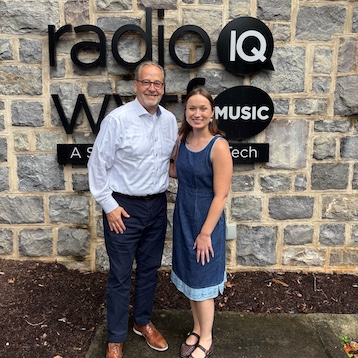
Mamon Segment 1
Bruce C. Bryan: Grace Mammen, thank you for being my guest on the show today, and welcome.
Grace Mamon: Thank you for having me.
Bruce C. Bryan: So what's happening in Danville, Virginia?
Grace Mamon: A lot is happening in Danville. I always tell people if you haven't been in a while, you should come back and visit. A lot of people I think have an outdated perception of Danville, and I've been there just about four years, and even in that time it has changed so much.
So I can imagine like 10, 15 years ago it was a very different place than it was, or than it is now. Um, you know, it was a big industry town. The industries eventually left and there was a period of economic decline, but probably since 2011 or so they've been kind of building to try and get some momentum back economically and that's had ripple effects out across the city, across the county.
So, um, a lot is going on there as far as revitalization, as far as economic development. There's a casino there now. So I always advocate for Danville and tell people to come, 'cause sometimes I'll say that's where I am and people will be like, "Ugh, like what are, what are you doing in Danville? There's nothing there."
And I'm like, "Well, you haven't been recently if you think that." I'm gonna
Bruce C. Bryan: pretend that I know, but I think that it was primarily textile. It was. Right? Yeah. And was it tobacco and textile or just textile?
Grace Mamon: Tobacco and textile. The main textile, uh, like economic engine was Dan River Fabrics, Dan River Mill, and they had mill buildings all across the city.
There was like 14,000 employees that all got laid off when that closed. So yeah, that was, that was the big one, and hasn't been for a while. But, uh, Danville's kind of trying to reinvent itself and have a new identity in advanced manufacturing, workforce development, those sorts of things.
Bruce C. Bryan: Yeah, and obviously you're a reporter- Mm-hmm
which we're gonna talk about later, so your job is to ki- kind of observe, and you've been observing for four years and, and you alluded to it, but I think it's almost been a- Uh, catapulting growth in the last 18 months or- Yeah ... I don't know, 30 months. When you got there, was it different than what you've seen in the last few years?
Or w- could you already tell there was some momentum there?
Grace Mamon: There's definitely been momentum since I got there. I would say in the past two years or so, kind of l- everything is coming to fruition, it seems like. Not that there's no work left to be done, because there is, but I think, like, a lot of the efforts and a lot of the work I was writing about when I first got to Danville, I'm now starting to s- to write about the payoff and to see that happen.
So I'm thinking specifically of, like, large industrial sites that for, you know, a decade or so, the work was to prepare the site for development, get infrastructure out there, grade it, all of that, and I wrote a lot about that process. And recently, I guess since late 2024, we've seen a lot of economic ev- development announcements come through of companies, manufacturers locating on those sites and starting construction, and eventually they're gonna have a facility and create a lot of jobs.
So I've been writing kind of lately about the fruits of that labor, I guess. Yeah,
Bruce C. Bryan: it's interesting because you're doing a great job setting me up for my questions later on- ... because those are things that I definitely wanna ask you more about. Ab- about may- almost 20 years ago now, I spent a fair amount of time in Danville, and it's been a while since I've been back, probably like a lot of people.
Momentum is so easy to see when it's there, but it's really hard to get. And I would imagine up until when you got there four years ago, there was that momentum building and, and now things are actually happening it sounds like.
Grace Mamon: Right.
Bruce C. Bryan: Yeah.
Grace Mamon: Yeah. And I think I like what you said about it's easy to see once you get there, because I think for a long time, and th- probably this is still the case to some extent, there were a lot of naysayers and a lot of people who were like, "You know, why is the city prioritizing this?"
Um, you know, when they revitalized their downtown, which was a bunch of empty storefronts at one point, the city actually bought those buildings, a lot of the time at above market price, and fixed them up and marketed them to developers. And so many people in Danville were like, "You could be spending money on education, on crime prevention, on road resurfacing.
Like, why are you buying these buildings for more than they're worth?" But, um, I guess kinda the mindset was that we have to invest in ourselves if other people are going to invest in us, and that has really catalyzed the entire revitalization of downtown, because a lot of those buildings now do have tenants and were marketed to developers successfully.
And so I, I'm sure there still are some naysayers, but I hear a lot more lately that people are actually, like, seeing things happen and taking pride in their community for maybe the first time in a long time.
Bruce C. Bryan: Well, you're listening to Naturally Curious. I'm Bruce Bryan. I'm in the studio with Grace Mamman, and Grace is a beat reporter for The Cardinal news, uh, media outlet, which we're also...
I keep teasing people, our listeners, we're gonna talk about all that stuff. Don't worry, we're gonna get to all of it. But had you spent any time in Southside before you took this position, or was- did you kinda go in and go, "I wanna work for this outlet. I wanna go where I can go, and this is what I'm gonna do"?
How did, how did that all transpire?
Grace Mamon: Yeah, the second one. So I had been to Danville one time before I moved there, and it was after I was already considering the job, and I was down there looking for housing. But before that, I had never once been. Um, I had never really been to much of the Southside region.
And when I was in college at Washington and Lee, um, I had worked with a lot of the folks who, uh, started Cardinal when I had a, um, internship with the Roanoke Times. A lot of our editors and, and, um, executive staff are former Roanoke Times reporters. Um, so I- they reached out to me when I was a senior just about some freelance work.
I already knew them. So I started freelancing for Cardinal, uh, towards the end of my senior year. And then as I was getting close to graduating, they had the Danville position come up. Um, and so- Sounds perfect, right? Yeah. So I applied, and I got it, and I moved down there. Didn't know a single person when I moved down there, which, um, was good and bad because as a reporter, you get- that's an opportunity to, like, just ask people, like, "Tell me everything.
I don't know anything about this place." Right. "So give me the entire story." So, um, you know, now it's been four years. I've built a lot of those sources and, and folks that I talk to all the time.
Bruce C. Bryan: And everybody would see you and say, "Off the record, Grace," and then they'd tell you. But sometimes- Yeah ... they would tell you on the record.
So not making this a geography quiz, but what is Southside Virginia? Like, can you tell, uh, our listeners what that is?
Grace Mamon: Yeah. Probably there are different definitions of, like, the exact parameters. For me, I cover the city of Danville, Pittsylvania County. Occasionally, I'll cover things in Halifax County, um, which is just to the east of Pittsylvania.
Um, we have a reporter in Martinsville now, so I don't do too much over there, which is just to the west of Pittsylvania, but it's, you know, all touching the North Carolina border. I'm like five minutes from the North Carolina border in Danville, so it's the, the southern part of southwest and Southside Virginia.
Bruce C. Bryan: Have you uncovered stories in your region that end up being of statewide interest?
Grace Mamon: Oh, that's a good question. Um, yeah, and I think kind of Cardinal's shtick is to do local reporting with broader impact. So a lot of the times I'm writing about something locally, but I'm looking at other localities to see has this happened there, um, could it happen there?
You know, if it did already happen, what did they learn from it, what came out of it, and applying that to what's going on in Danville. So I can't think of something like that immediately comes to mind as far as like a statewide impact, but we are... We do kind of try to have a bird's-eye view of local issues and see how it connects out, because we do have readership across the state.
Even though we only cover South West and South Side, there are folks in Northern Virginia and Hampton Roads and wherever else that are reading Cardinal for their, for their news about Virginia.
Bruce C. Bryan: Well, many of our listeners know I'm based in Roanoke, but most of what I know about Danville is coming from things I hear and from the things you write.
Mm-hmm. So y- you're, I don't know if you're an expert. I think you would say, you know, you probably are, or if you aren't, you have become one. But I'm curious, every town's really still the same and people are still people. How long are you the new person? Are you still the new person in Danville?
Grace Mamon: Uh, yeah, e- especially- Four years later
because Danville, I was surprised when I moved there to learn that, like, Danville and Pittsburgh, Pennsylvania, almost everybody I met had either lived there their entire life or, like, moved away for college and came back. So, so many people have been there so long. And so even though it's been four years for me, like, that feels like a long time, I f- I still feel- You are the new
like that's new, yeah, and there's still a lot more for me to learn because people who have been there forever and know everything, you know, I'm not that person yet, so.
Bruce C. Bryan: Right. You're still learning it in some ways and you're reporting on things you're still learning about. Um, but are you starting to see people who are also like you, not from the area, or is it- Yes.
Yeah, right? So you start to have those conversations. I see that in Roanoke. Yeah. I've had meetings recently where nobody was from this town, and I bet you're s- gonna start to see more of that.
Grace Mamon: Yeah, especially recently. Like, when I first moved there, I didn't hardly know anybody else my age. I think the demographics skew older.
But since I've been there, um, I've met a lot of people who have moved to the area for work, um, who are, who are younger. My sister moved there after I did, so, like, we're there together. So it's taken some time, but I, I think that that, that is starting to happen.
Bruce C. Bryan: Okay, I want a yes or no answer. Is all of this casino-driven?
Grace Mamon: No. I- That's actually an easy answer.
Bruce C. Bryan: I think that that is the case, but I was curious about that. Have you been to the casino, and do you ever just go there and people-watch?
Grace Mamon: Yeah, I haven't been in a while, but maybe last fall or the fall before. Um, you know, they have a big, like, Caesars Sports Book area for sports betting, but basically it's just a bunch of big TVs.
So, like, when NFL playoffs were going on, it was a fun spot to go and, like, watch a football game. I don't gamble, but it's, it's a at- fun atmosphere. Um-
Bruce C. Bryan: I would imagine reporters are probably not the best gamblers- ... because the last thing the publication wants is, you know, you having to write a story about...
So anyway, that's a whole nother episode.
Grace Mamon: Well, yeah. And- Danville's a small town, so someone that I talk to for work could see me there. That would not be a good look.
Bruce C. Bryan: Yeah, not a good thing. Look, people, if you see Grace at the casino, she's just doing research. That's right. Okay? So that is Grace Maham, and she's with Cardinal News.
I'm Bruce Bryan. You're listening to Naturally Curious. So tell me more about what you're seeing down there. I know hotels and restaurants and retail. You said they fixed up that downtown area. Mm-hmm. Um, what's going in there? What's, what's cooking?
Grace Mamon: Yeah, hotels are big. There's been a lot of hotel construction recently, um, both boutique hotels, like in the downtown area, and then branded hotels a little bit outside of downtown.
Um, and then of course Caesars does have a, a big hotel attached to, um, their property as well. So we've seen a lot of that recently. I, uh, it's kind of, um, reactive I guess. Like lodging demand has been increasing for a while, and so they're kinda trying to catch up with, um, construction of new hotels. So that's definitely a big one.
There's a couple new restaurants that have opened recently. A lot of the downtown is restaurants and storefronts, um, like s- small local businesses. Um, there's a brand-new riverfront park downtown right on the Dan River. Um, that's an amenity that, that didn't exist before, was that sort of space in the downtown area.
So lots of stuff like that in, in Danville proper in the downtown.
Bruce C. Bryan: So that must mean housing is coming soon- Mm-hmm ... or has already happened. Will affordable housing be an issue there as it, uh, soon as it is in so many other places?
Grace Mamon: Yeah, it already is an issue, and I think again, a little bit of like reactivity there.
We're starting to see new home construction, but for a long time demand was just building up, um, which, you know, some people are surprised about because Danville's always been a small town. But lately with all of the economic growth and the new an- announcements about manufacturers locating there, bringing, you know, thousands of workers, those people need places to live.
Of course the casino employs 1,500 people I think. Those people need places to live if they're coming into the area. So, um, the city is trying to play catch-up a little bit when it comes to housing, and especially affordable housing. Um, I think before a couple years ago, the most recent like subdivision that was built was like f- 1970 or something crazy.
Wow, so 50, 60 years ago. Like it had been- Yeah ... years and years since there had been like new single-family home construction.
Bruce C. Bryan: And, and that makes a lot of sense. But so it's moving more towards being a city- Mm-hmm ... a small city versus a large town, right?
Grace Mamon: Right. Yeah, yeah. And there's more like multifamily housing coming as well downtown, and I think, um, lately, you know, city leaders, economic development folks are kind of treating it as a pillar of economic development.
You can't hope to bring jobs into an area and not have the housing to support it. So I think those ripple effects of the growth are, you know, Danville's really trying to anticipate those and keep up with those and, and is doing the best it can with that.
Bruce C. Bryan: Yeah, and they go hand-in-hand obviously. Mm-hmm. So when we come back, I'd like to talk about economic development and some of those bigger deals that you were just talking with me about.
And also I'd like to talk about your journalism background and how you see things happening in South Side.
Mamon Segment 2
Bruce C. Bryan: Welcome back, Grace Mammon from Cardinal News. So economic development is huge. Talk about some of the major announcements that you've reported on, especially I think in the last year, year and a half, right?
Grace Mamon: Yeah. So the most recent one that's not officially official yet, right? There's been no formal announcement, but there, um, has been public information about this moving forward.
It is a stack infrastructure project. That's the developer. They're based in Colorado, and they're a data center developer. And so they are looking at the Southern Virginia Megasite at Berry Hill, which is the largest industrial park in Virginia, one of the largest on the East Coast or Southeast United States, I guess.
And, um, they are looking to build... It's a almost 3,000 acres of land. They're looking to build an AI data center, which is, uh, up to a $100 billion investment- Wow ... could create 2,500 jobs. It's a huge project. And so, um, especially after all of the to-do about data center tax exemptions in the general assembly session this past year, they're now moving forward with that project.
So we're just kind of waiting on an announcement, um, for that one. But that would be the second big project at Berry Hill, which is a, a industrial site that the city and county jointly own, and they've been working i- I think since 2008 to get that ready for development. So, you know, it almost 20 years now, and now we're kind of starting to see the payoff.
Starting to
Bruce C. Bryan: see the... Yeah. Right. And that's one of the things that leaders get in trouble for is, "Why are you doing this?" Exactly. But then now you see why 20 years later. Was the other one battery-related, I want to say?
Grace Mamon: Yes. Yeah. That was a
Bruce C. Bryan: big announcement, right?
Grace Mamon: That was the very first one that came to Berry Hill, and so that was a huge deal after al- you know, all those years of work.
It was MicroPorous, which is Tennessee-based lithium ion battery separator manufacturer. And so that was, um, at that point, that was the largest economic development announcement in Southside history. I think it was 1.3 billion in investment and about 2,000 jobs.
Bruce C. Bryan: Did you have that on your bingo card at Washington and Lee when you were in college?
Grace Mamon: No. '
Bruce C. Bryan: Cause you said all those words together in a row very well.
Grace Mamon: Thank you. I write them so often. That's how I know those numbers too- Yeah ... is I write them so often.
Bruce C. Bryan: And then you have to refer back to them in other articles too. Mm-hmm. Yep. So let me look that number up again. No, it's, it's right here in your head.
Yeah, I've got it
Grace Mamon: now.
Bruce C. Bryan: You, you know it. You're the expert. We just, we learned that. Um, is this transformation, and I think I'm talking more about not just economic development, but all the things that you've been talking about in the first segment and in this segment. Is it transformation you can actually see and experience if you're a resident?
And, and if so, tell us a little bit more about that.
Grace Mamon: Yeah, that's a good question. Um- I think my best answer would be if not yet, then eventually, especially when it comes to building housing, um, new people moving into town. There's, um, been, like, workforce development programs that are either continuing or emerging to, like, uh, make sure that locals are eligible to be hired for all of these jobs, um, train our local workforce.
If the casino is considered economic development, then I think that that is visible at this point beyond just the property because, um, the city has generated millions and millions in revenue from its local performance agreement with Caesars, and that money is being spent on quality of life amenities, um, repaving roads that needed it, um, going into local parks, all sorts of things like that that are, that are starting to happen with the casino revenue.
Bruce C. Bryan: Right. And that's kind- and not just casino, but the economic development revenue is just starting-
Grace Mamon: Right ...
Bruce C. Bryan: to roll in. So there are always downsides. What are the downsides that you can see or forecast or start to think? Are there any?
Grace Mamon: Yeah, so I think I have two answers to that. The first is maybe just keeping up with the growth.
I mean, these are huge announcements that have either already happened or are coming, and Danville has always been a smaller city, so especially, I mean, I keep talking about housing, but especially with housing and with, um, other amenities and other, um, like, core services, keeping up with the growth is, is could be a challenge.
Um, I think it might already be, and so that's, there's a lot of work going into that and making sure that the city and county can anticipate the growth and r- react and respond to it. The second, I think especially more so in Pennsylvania County than in Danville, is a concern about, you know, the rural agricultural identity and kind of cultural fabric of the county.
It has always been an agricultural community, um, and especially with talk of data centers. This happened a few years ago with talk of solar farms. There are a lot of residents who are concerned about, like, what do we want to be and what are we becoming? Does this fit with who we are? Like, do we want this here?
Those sorts of questions.
Bruce C. Bryan: What price progress, obviously,
Grace Mamon: right?
Bruce C. Bryan: Right. So who are some of the people that, um, by the way, you're listening to Naturally Curious. I'm Bruce Bryan. This is Grace Mahon. I'm having so much fun talking to you that I forgot to reintroduce each, each other. Um- But who are some of the people that you've interviewed who've impressed you, Grace?
Grace Mamon: Oh, okay, so switching gears from, like, economic development, one of my favorite stories that I've written, uh, um, or I guess series of stories, 'cause I've done a lot at this point, is about the civil rights movement in Danville back in 1963, which, um, I was not familiar with. I think a lot of people, even if they grew up locally, were not familiar with because it didn't receive, um, correct or adequate media attention at the time.
It was kinda tried to, tried to downplay it. But as far as, like, intensity, it was on the same level as Birmingham, which I think much more pe- many more people are familiar with. So, um, in reporting about that, kind of for the first time, 60-some years later, a big comprehensive report of that movement, I was able to talk to a lot of the folks who were participants back in 1963, and they were teenagers at the time because there would've been, like, consequences for Black adults who participated.
They might've lost their job. So a lot of the protesters were teenage kids, and now 60-some years later, they're in their 70s and 80s, and I got to sit down with a lot of them, which was really remarkable. Um, they had great stories to tell, and I think some of them are only now later in their life starting to talk about it.
It was, um, it was pretty brutal, and it was very painful, I think, for a lot of them to talk about for a long time, so that I was really honored that they trusted me with their stories. I got to tell their stories. And I did have to gain that trust a little bit. I had to go through, um, a local Black historian and genealogist who knows, like, all the elders in the community and grew up in Danville's, uh, historically Black neighborhood.
So she, she and I met, and, and she kind of vouched for me and got me in with a lot of these people, which was incredible.
Bruce C. Bryan: And you said, "This is a story I wanna help tell."
Grace Mamon: Yes.
Bruce C. Bryan: Right?
Grace Mamon: Yeah.
Bruce C. Bryan: Wow, that, that had to have been- Heartbreaking and powerful at the same time, right?
Grace Mamon: It was, yeah. And it was, um, it was just such a humbling experience, especially because, you know, I'm not a native.
Um, uh, like, you know, I'm a transplant to Danville. I'm a young white girl. I'm talking to these older folks in the Black community about some of the most, like, memorable and traumatic, perhaps, moments of their lives, and telling a story that really hadn't been told in Danville. I think, uh, a historic marker about the civil rights movement only went up in, like, the 2000s.
So it was really just unacknowledged for a long time by the city in any meaningful way, even by, like, institutional historians locally. And so it was really humbling and, and such an honor to be able to tell those stories.
Bruce C. Bryan: Are there stories you wanna tell still? Not, not trying to get you to give me- Mm.
any breaking news- ... or give leads to the competitors who might be listening in down there. But what are some things that you're excited about covering- Yeah ... in the future?
Grace Mamon: Always. I have a running list of stuff that I want to get to. Um, and a lot of them are bigger projects that sometimes, like, get, get pushed back if I'm working on a lot of breaking news or a lot of, like, quicker turn stories.
So, um, when it comes to the civil rights movement, I want to continue to keep reporting on that since it was so underreported for so long. I've done a couple big projects on it at this point, but I think there are so many more angles that I could dive into. Um, I love doing deeper dives on things, right?
So, like, everybody gets the news about, if we're going back to economic development, like, a big company that's coming in. But I love going behind the scenes, being like, "Okay, how did this deal happen? What did the city and county have to do to make this area, um, you know, viable for this kind of project?" I love doing those sorts of, like, a peek behind the curtain.
So stuff like that is always on my list. Even if it's something I've already written about, I wanna go back and go behind the scenes.
Bruce C. Bryan: Grace, I was hoping you could explain to our listeners what it means to be a beat reporter.
Grace Mamon: Yeah. So that is-- I don't know if that's, like, industry lingo, but, um, a journalist's beat is basically what they cover.
And so oftentimes that's a subject-related beat, like someone might cover education or technology or healthcare, and that is their beat within their area. Cardinal, because we cover such a large swath of the state, we have both subject beat reporters and geographical beat reporters. So we do have someone who covers education and healthcare and business and politics, and then we have other folks who cover a specific area.
So I'm one of those. And that's what you do. I cover-- Yeah, I cover Danville, Pennsylvania. We have folks in Roanoke, Martinsville, Bristol. Um, so we have a mix, kind of, of both types of beats.
Bruce C. Bryan: And would you cross paths with the other reporters, like, if they're an education reporter? Or do you-- Even if it's a story in Danville that goes into education, do you get to keep telling it?
How does that work?
Grace Mamon: Yeah, it, it depends on the story. We do a lot of both. Um, so sometimes, you know, there's a university in, in Danville, Averett University, and so sometimes I'll write about that. Sometimes our education reporter will write about that. Sometimes we'll do a joint byline, and we'll both write about it.
So it kinda just depends. Um, but there is a little bit of, like, cross territory, I guess. So we, you know, as those stories comes up, comes up, we figure how to do that, and sometimes it just depends on who has the space in their schedule, honestly.
Bruce C. Bryan: So do people avoid you in Danville because they don't wanna talk to you or know you're gonna ask them for a quote?
Grace Mamon: I don't think so. If they do, I'm not aware of it. But, um, something I-- that I've been surprised, or maybe not surprised is the right word. Something that I've been impressed with since moving to Southside is everyone is so friendly. And so I see people all the time that I interview for work, and everyone's always really kind.
Um, and I think I have decent relationships with most of my sources, so people are, are usually not avoiding me, I hope.
Bruce C. Bryan: But even a kind soul like you has to have, uh, irritated some people- ... over the years by writing pieces that you've written, yes?
Grace Mamon: Yeah, yeah. I mean, not all news is good news, especially for, for a city or a government, so.
Bruce C. Bryan: So what's it like doing a story where you know there's a good chance people will not be happy about what you write?
Grace Mamon: Hmm. Yeah, usually they know that too. You know, if it's, like, a, a, a story about someone making an error or something, you know, at the city level. Yeah, I can't think of an example of that happening.
But usually they're aware that that's, you know, that's on them, and I'm going in to tell the story and inform the public. I'm just doing my job the way they're doing their job. And so I think, you know, always being professional and polite in interviews, even if it's a difficult subject, and just saying, "Look, I wanna give you a chance to tell me your side.
Let people know, you know, what-- where you're coming from with, with this difficult topic," so.
Bruce C. Bryan: Well, this has been a fascinating interview, and people are gonna have to stick around for the bonus content 'cause I have some questions I didn't get to in this segment and some more after that. So Grace Mahon, thank you for being a guest and being my guest on Naturally Curious this week.
To listen back to the show, to hear the full interview and links to learn more about Danville and the work being done by Cardinal News, search Naturally Curious at radioiq.org. This program is also available on Apple Music, Spotify, or wherever you download your podcasts. Naturally Curious is produced and edited by Big Jim Shively with support from Sarah Hobbs and Nick Yee, and is recorded at WVTF Radio IQ Studios.
I'm Bruce Bryan. Thank you for listening
Mamon Bonus Content
Bruce C. Bryan: Thanks for sticking around, Grace. A little bit more about your work, Cardinal News, and, and about you. Do people respect your media outlet?
Grace Mamon: Yeah, and good question because I think, you know, when you're studying to be a journalist and you're preparing to go into that field, I think you're, you prepare for the fact that they might not.
Um, I think it has worked to my advantage being in a small town where people were really hungry for in-depth, big-picture news that they hadn't been getting for a while, which is not a knock to the local outlets there because they're doing a great job, but they cover a lot of stuff that's happening in the city on the daily basis.
And local newspapers just don't have the bandwidth, you know, speaking generally, to do the bigger picture stuff that they used to do. So I think people were really excited to have me and have Cardinal there and be able to do some of that work. And, um, I think that we have a, a good reputation largely because of a lot of our, uh, founding editors who have just been journalists in Virginia for so long, that it kind of, kind of, uh, trickles down to me, which is nice.
Bruce C. Bryan: In other parts of the territory that Cardinal News covers, there are legacy media outlets that are still doing their thing. I used to do some work with the Danville Register Bee- Mm-hmm ... that you kind of alluded to. Do you run into their reporters or the TV people or local radio? Yeah. Are you running into some of these folks?
Grace Mamon: Yeah, yeah. So The Register Bee has one reporter right now, who- Wow ... I don't know when he sleeps. Like, he does all of his coverage. He does great coverage. But it's just him. And I think there's one or two local TV station reporters. And so every once in a while there's a big, um, event, you know, and we'll all be there together or something, something big usually is what I see them at or a ribbon cutting or a groundbreaking, those sorts of events.
So yeah, we do run into each other.
Bruce C. Bryan: So your team at Cardinal News is growing, some would say growing fast. Um, how's it working in that environment and, and what do you love about working there?
Grace Mamon: Yeah. Um, it's an interesting environment just because we're so spread out. So there's not, like, a central newsroom to go into, which is honestly, you know, I don't really know what I'm missing there because I went to college during the pandemic, and all my internships were during the pandemic.
And since working, I've been in kind of, like... I guess it's remote. I don't know how to describe it because I am going to things in person and talking to people in person in Danville, but as far as, like, with my coworkers, we're hardly ever all in the same space. So it's kind of a weird in-between, you know, hybrid work from home, in-person situation.
Um, but the growth has really helped that because I feel like we do have, like, ev- even if there's not a newsroom building that we all go to every day, there's a newsroom energy because we have, um, a bigger staff now, and we, we all meet, um, in the mornings to kind of go over everybody's plan for the day.
And so that has a newsroom feel, I guess. Um, as we've expanded, that's gotten easier.
Bruce C. Bryan: Is it around a dozen reporters now, or is it more than that?
Grace Mamon: Um, I think we have nine or 10. Okay. And I should know exactly, but That's all right. Around that. We're adding people all the time. Yeah. We
Bruce C. Bryan: don't count Tad. Yeah.
You know, a couple of those other people. Who knows? Did you, uh, always want to be a journalist, Grace?
Grace Mamon: I always wanted to be a writer. I think when I was in kindergarten, I, it was when I fell in love with writing and I wanted to be an author. I wanted to be a novelist. And as I grew up and studied both English and journalism, um, I, I leaned towards journalism.
And I still love the same things about it, the storytelling and, um, you know, creating, creating something to give to readers that they can, you know, understand.
Bruce C. Bryan: How have your skills as a journalist evolved over the last four years?
Grace Mamon: Oh, man, the best, like, experience is practice, right? So, like, I went to school for journalism and did a lot of, um, classes and, and exams and all that stuff.
But actually being, you know, a journalist, um, as a career, just every story I write, I feel like I, I kinda hone my skills a little bit.
Bruce C. Bryan: And do you read other journalists with a little bit of jealousy- ... a little bit of, like, how did they do that
Grace Mamon: jealousy? Yeah, sometimes. And sometimes especially when it's, like, a story that I also wrote, I'm like, "Oh, where did they get that?"
Like, "I didn't get that information," that little tidbit or something like that.
Bruce C. Bryan: So what publications or what writers inspire you, Grace?
Grace Mamon: Oh, man. Um-
Oh, I don't know. I'm drawing a blank. I, I read a lot, so as far as, like, writers that inspire me- Or
Bruce C. Bryan: publications.
Grace Mamon: Yeah, publications. Um I l- I love, like, a podcast, which is what we're doing right now. You know, I don't always have time to sit down and read the news, so I love listening to, like, an NPR podcast.
I think they do great journalism, and, uh, that's, that's usually how I consume, like, outside of local news, that's how I consume news. Well, you know- So I'm inspired by them. ...
Bruce C. Bryan: Big Jim and I would love to have you- Yeah ... you know, in the fold as a regular listener. Right. So feel free. Um-
Grace Mamon: Absolutely.
Bruce C. Bryan: I've spoken to a lot of other reporters and love to hear about your pastime and your process.
How many stories do you produce in a week usually?
Grace Mamon: Um, usually I, I'd say on average one or two. And- Maybe three. Um, depends on the week.
Bruce C. Bryan: And, uh, how many do you have working at any one time in any kind of system or process? Mm,
Grace Mamon: five to 10. Like, I have bigger stories on the back burner- Mm-hmm ... and then I have, like, several stories a week that I'm kinda, I'm simultaneously working on a lot at the same time.
Bruce C. Bryan: And that's pretty consistent with what I hear from other people. So what happens then if there's, quote, "breaking news" or something unexpected that bubbles up fast? How, how does that work?
Grace Mamon: Yeah. Yeah, you gotta make time in your schedule, and sometimes it's really inconvenient, but that's, that's what has to be addressed in the moment.
So, you know, something else that I'm working on, even if it's on deadline, has just kinda gotta wait for a second, and then I'll get back to it.
Bruce C. Bryan: So Grace, other reporters from this region have turned some of their big or favorite stories into books. And I heard a little glint and saw it in your eye about some of the interviews that you've done.
Is that something you'd like to do sometime?
Grace Mamon: I would love to. I don't even know, like, how or where to start, but I would love to. And I was listening to, um, your other episode with Emily, and she was talking about her book based on, you know, stuff that she's reported on, and I immediately thought of the civil rights, um, coverage that I've mentioned, and I would love to be able to turn that into a book.
So- So maybe one day.
Bruce C. Bryan: I, I know you're not an artist per se. You're a journalist. But I love to ask artists this question, and in a way you're creating something. How do you know when your article is done? Is it deadline, I gotta have it done, so I'm hitting send?
Grace Mamon: Yeah, and I think for, like, I don't, I don't know if I'd say I'm a, a perfectionist, but I like to take a lot of pride in my work obviously.
A lot of people do. And so I don't know that it's ever done. You know, there's always probably something I could reword or a sentence I could re- write, but when it's, when it's deadline, it's deadline, and it's good to go. So luckily I have my editors kinda if something's really off they'll, they'll help me out with that or-
Bruce C. Bryan: Editors are great at
Grace Mamon: that, right?
Yeah, exactly.
Bruce C. Bryan: So when you go back and read your articles, do you ever wish you'd done or written something different?
Grace Mamon: Sometimes. Usually I'm, um, usually I'm happy with them. I'll go back and I'll read- Yeah ... and be like, "Well, that was good." Yeah, that's pretty good. Yeah.
Bruce C. Bryan: I, I like to write also, and that's when I go back and read I'm like, "Hey, that's pretty good.
That's not bad."
Grace Mamon: Yeah, especially a draft. Like, if I'm, like, slogging through a draft and I don't think it's good, I come back the next day- Set it aside, yeah ... and read it, and I'm like, "Wait, that's not, that's decent actually."
Bruce C. Bryan: I can, I can work with this one. Yeah. Right? So I think you said it earlier, but you do live in the Danville area, right?
Mm-hmm. So what do you enjoy about your area, again, besides blackjack, right? Right. What, besides that, what do you love about the- Right ... area you live?
Grace Mamon: Well, I'm from Fredericksburg originally, and so I love kind of the slower pace of life in Danville. Um, I get where I'm going on time. I don't hit crazy traffic.
Like, every time I go home to see my parents in Fredericksburg, there's new lanes on the- I-95 and there's new entertain- I don't know how to get around. So I love just kind of like the slower, more rural, um, pace of life, even though there is l- a lot going on there, as we've talked about. But it feels like a small town, and it feels, um, you know, like, like that sort of atmosphere.
Bruce C. Bryan: So any favorite spots or places or traditions that you've kinda locked on to here in the last couple years?
Grace Mamon: Yeah. I love the Riverwalk Trail, which Danville is on, on the Dan River. Um, and so there's like a 13-mile paved walking trail, and I used to live right next to it. Like, I could walk out of my apartment and get on the Riverwalk Trail, and I spent a lot, a lot of time doing that, especially before I met people in Danville.
I would walk a lot on the Riverwalk, and it's beautiful. And, um, that's one of my favorite things to do.
Bruce C. Bryan: Now she walks on the Riverwalk and listens to Naturally Curious. I
Grace Mamon: will.
Bruce C. Bryan: That's not- I
Grace Mamon: actually will.
Bruce C. Bryan: Yeah. Yeah. So, uh, okay, I have to ask this question. How did I do? And what questions should I have asked you that I didn't ask you?
'Cause you've... You know, I mean, you had to have been ready. You're a reporter. What was I supposed to ask you I didn't ask you?
Grace Mamon: Um...
Bruce C. Bryan: I did okay, then.
Grace Mamon: Yeah, you did okay. Honestly, nothing, nothing huge comes to mind, you know? So
Bruce C. Bryan: thumbs up. Anything else you wanna tell us about Danville or about your work as a journalist?
Grace Mamon: Just come visit, especially if you've never- Come visit ... been there or you haven't been there in a long time. I think you'll be surprised. There you go. Um, and about my work, um, read Cardinal. So it's, it's all free online. There's no paywall, no subscription, so read anytime.
Bruce C. Bryan: So the folks at Cardinal and the economic development people are gonna be happy when they hear this podcast.
Grace, I really appreciate you being my guest on the show. I hope you'll come back sometime.
Grace Mamon: Yeah. Thank you.