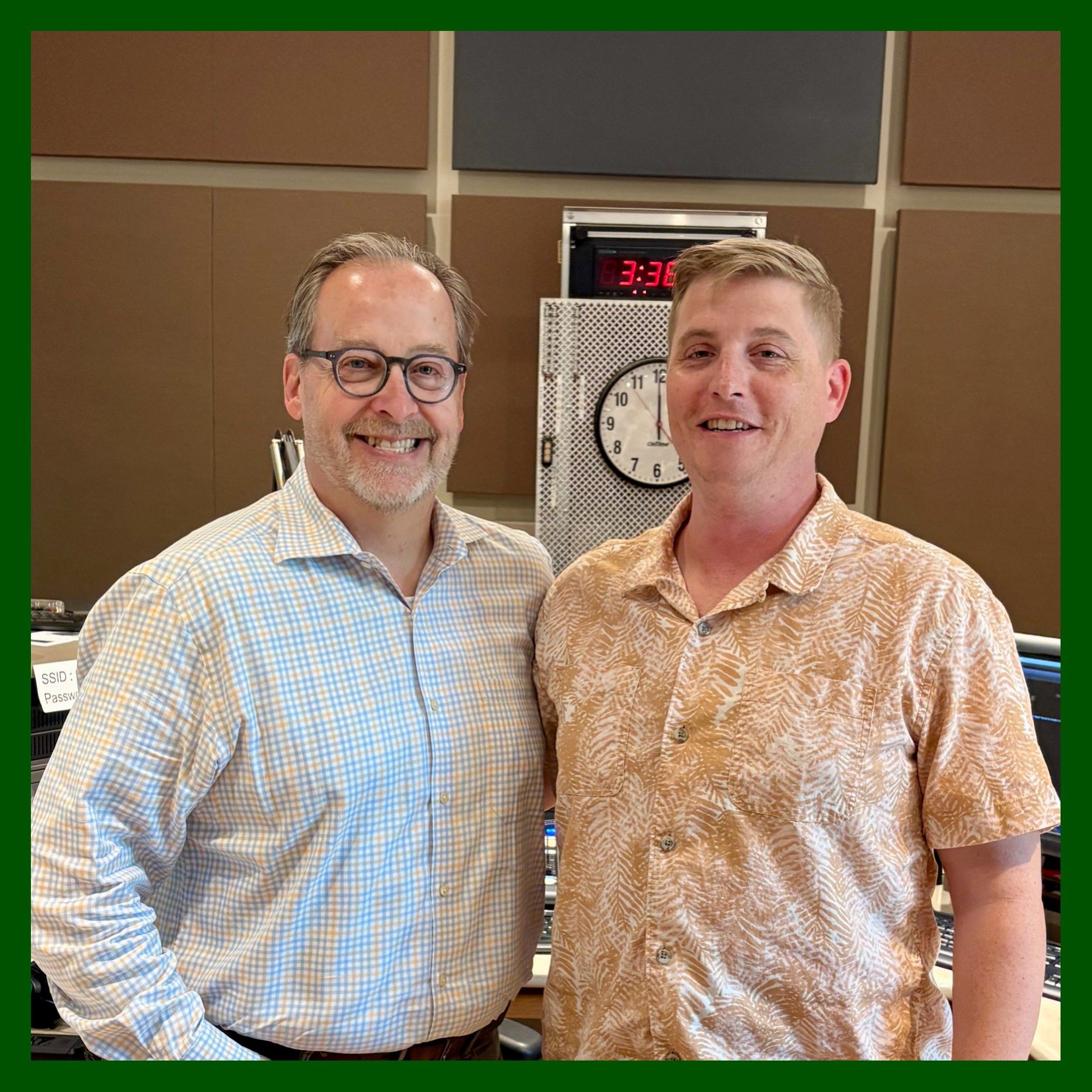
Bruce C. Bryan: My guest today on Naturally Curious is a fishmonger. That means he sources fresh seafood from the catchers and brings it back to markets in Southwestern Virginia. Charlie Counts has a winding path to his current business, and today we'll talk about how he advanced his life work from the mountains of Southwestern Virginia to being a man who's all about the coast.
Charlie's day job is moving the catch of the day to the markets in greater Roanoke and beyond. That means he's traveled a lot of back roads from here to the beaches and bays. He's turned the Intercoastal Waterway into his own economic boom. It's hard work, deeply connected to relationships, and it's a business he's grown over the last fifteen-plus years.
Let's hear his story, learn about seafood, and find out how this work has evolved through the years as we get to know Charlie Counts and the work he does. This interview is coming up next on today's episode of Naturally Curious.
Counts Segment 1
Bruce C. Bryan: Thank you for being my guest on the show, Charlie. Charlie Counts is here with us today, and welcome.
Charlie Counts: Thanks for having me, Bruce.
Bruce C. Bryan: Okay. So what exactly is a fishmonger, and do people ever call you that?
Charlie Counts: A lot of people do call me that. A fishmonger is just someone who, deals in the way of fish. You know, uh, somebody who usually filets it and stuff, even though I don't do that part.
I'm, um, a purveyor of a good, and I'm a purveyor of fish.
Bruce C. Bryan: So what's behind what you actually do professionally? Like, how do the pieces fit together?
Charlie Counts: So the name of the business is Local Seafood Delivery, and so that's basically what I do, is I go to the coast personally to pick up the fresh seafood every week, make a special trip down there, come back the exact same day.
I mean, it's as fresh as you can get. And then we deliver it to farmers markets around the area to where people can come pick it up the very next day.
Bruce C. Bryan: And you say you do that every week, but it is somewhat seasonal. Like, you- you're not doing that trip in January, right?
Charlie Counts: That's exactly right. Or do you? Okay.
We just got off our big, winter break, so we're coming back April through the end of October every week.
Bruce C. Bryan: Okay. So you're there, three-quarters, two-thirds of the year.
Charlie Counts: And we do the holidays, yeah.
Bruce C. Bryan: Right. Most of the year. And then do you go to Florida in the winter and grab fish from there- That's-
or not? You just lay low. Retire
Charlie Counts: Retire to my Bahama island, uh- That's
Bruce C. Bryan: right ... no, that's
Charlie Counts: what everybody says.
Bruce C. Bryan: Yeah. I'm sure they think that, right? So what drives you with this work and how does it work for you personally? You know, I mean, it seems like, I mean, you're on the road a day a week, or is it two days?
Do you go down and back? A
Charlie Counts: day a week. Usually I'll do it all in one day. Yeah.
Bruce C. Bryan: That's a long day.
Charlie Counts: That is a long trip, and, that's our motto is we make the trip for you.
Bruce C. Bryan: So you don't have to.
Charlie Counts: So you don't have to.
Bruce C. Bryan: So just kinda paint the picture for our listeners. As a fishmonger, you're getting up at- What time in the morning to hit the road?
Charlie Counts: Usually not that crazy. Over the years... I've been doing this 16 years, and over the years I've left at different times just depending on what was happening in my life and kinda how the schedule was with the boats at the dock. These days, we're leaving about 8:00 in the morning, getting back about 8:00 or 9:00 at night.
It's a full day, you know?
Bruce C. Bryan: A- and do you go to the same exact places, or do you rotate it a little bit?
Charlie Counts: Yeah, I go to the same place every week. So, and that's gonna be... I mean, that's the key part of what I do is, is the relationship that I have with these guys down at Surf City Crab down in North Carolina at the seafood market-
Bruce C. Bryan: They know you.
You know
Charlie Counts: them ... it's that relationship. Yeah, I could go... I mean, Baltimore is an hour closer each way, but I go all the way, an extra drive, just because of the relationship I have with these guys down there.
Bruce C. Bryan: And do they know that? I mean, is that part of it?
Charlie Counts: Absolutely, yeah. They know that. That's part of the whole thing.
You know, we know we can trust them. We know the transparency of where it's coming from. They know they can depend on me to come down there, and if the boat catches a bunch of grouper, we can sell that grouper for the fishermen.
Bruce C. Bryan: And do they catch different things at different times, or is it pretty much you know what you're gonna get when you go down there each week?
Charlie Counts: We send out an email as a forecast of what we get. So we kind of try to predict and have orders in before the stuff's even landed. So, you know, we just kind of- So you know what you
Bruce C. Bryan: wanna go get and bring back- Yeah ...
Charlie Counts: a lot of times. And that's the, unpredictable part about it, is sometimes they just don't catch them, you know?
That's why they call it fishing and not catching.
Bruce C. Bryan: That's right. But- That's right. That's awesome ...
Charlie Counts: if, but if it's landed, we'll have it, you know. So some of it is unpredictable. Some of it's seasonal. There are certain seasons, and highly regulated,
Bruce C. Bryan: right, of what you can and cannot as a fisherperson-
Charlie Counts: Yeah.
Yeah, the United States fisheries are some of the most regulated in the world, which means the stuff's sustainable. You know where it's coming from and, and what it is.
Bruce C. Bryan: Well, you're listening to Naturally Curious. I'm Bruce Bryan, your host. With me in the studio today is Charlie Counts from Local Seafood Delivery, and we're talking about the trip down to the Carolina coast and of course the trip back, 'cause it doesn't do you any good to make the trip down without coming back.
Do you ever go down there for fun? Or are you, like, so tired of going there for work you go somewhere else?
Charlie Counts: Yeah, I, I do go down there a couple times a year with the family. We try to get at least a trip or two, and, and then that way I can kill two birds or catch one fish on-
Bruce C. Bryan: On- ... two
Charlie Counts: fish on
Bruce C. Bryan: one hook
two fish on one line. That, that's
Charlie Counts: the
Bruce C. Bryan: thing, yeah. That's it. That's good. That works.
Charlie Counts: So we k- kinda tie 'em in together sometimes.
Bruce C. Bryan: So, Charlie, if you've been doing this for 16 years, you probably started out with Waze, and now you can use any of the map things. Do you take the same route in the car every time, or do you vary it?
Or do you depend on what the traffic or the time of year or time of day?
Charlie Counts: Some of that does, yeah. A lot of times I'll end up getting stuck in Raleigh traffic at rush hour, you know, coming back on I-40, which, .. usually I do take the same route, and, uh, it, that way it's predictable. You know, it's almost like the back of my hand.
But over the years I've varied it. At this point, we've learned every little back road and trick there is, and I think we got it down pat. This is the best route we've ever had.
Bruce C. Bryan: Okay, so
Charlie Counts: you- And we always say the trip ain't getting no shorter.
Bruce C. Bryan: It's gonna be the trip, right? I used to drive a lot to northwest Ohio, and it was eight and a half hours almost every single time, whether I sped or went slow- Right
or stopped or didn't stop. It was like it's always the same. That's right. Is it about five and a half, six hours?
Charlie Counts: It's about five and a half each way.
Bruce C. Bryan: Okay.
Charlie Counts: Mm-hmm.
Bruce C. Bryan: Yeah. Give or take. So you grew up on a farm, right? Tell me about that.
Charlie Counts: I did, yeah. I grew up on an old tobacco farm, down near Saltville, Virginia, in Abingdon area.
We did that up until I was in high school, and then the government had a big, government buyout, you know, in the late '90s, early 2000s, and w- they basically paid us-
Bruce C. Bryan: To not do it anymore
Charlie Counts: ... to not do it for 10 years. You know, like 40% of what we would've got. So we got out of the tobacco and started... Still had all the farmland, you know, so we started raising Black Angus cattle, and that will eventually lead to how I got into the seafood, believe it or not.
Bruce C. Bryan: I was just gonna ask, how does a person get from far southwestern Virginia to being an expert in all things seafood?
Charlie Counts: Yeah, I grew up eating fish sticks, you know? It's not like we- ... really knew much about anything, you know? It's not like this was in my blood or something, but long story short, as a family, we always used to vacation at Topsail Island and, and go to this fish market that I still go to today, and that's where I first got to know him when I was a little kid.
So we kinda knew about it from just being on family vacations, right? On vacation. And we made friends with him over the years, and, I could tell you the story of how it happened- Let's do it ... how it went from the cow to the fish.
Bruce C. Bryan: So- The cow to the fish. So- That, that could be the subtitle of this one.
Yeah, I, I mean, I think we want... You've gotten this far into the story- ... you wanna hear Charlie tell the
Charlie Counts: story. So we're raising the Black Angus cattle, and, I had just graduated from Roanoke College with a business degree and was looking for a job. This was 2010, you know, by- Great economic- ... by this time had run-
Bruce C. Bryan: times. Things are awesome.
Charlie Counts: Terrible, terrible times. You know? So I can't find a job, you know, this business degree isn't really panning out like I thought it would and, that's what you do from Southwest Virginia. If you got a brain, you try to get off to college. It's your only opportunity to kinda get off the farm and build something, you know?
So anyway, even that didn't pan out. So we go down to the beach as a family for a little beach vacation at the time. And at the time, my dad's selling our Black Angus cattle to this restaurant that Barbara Kingsolver had opened back there with her husband, Steve Hopp. And-
Bruce C. Bryan: Wait, the writer?
Charlie Counts: The writer.
Well, yeah, she's our neighbor, and we grew up with them and-
Bruce C. Bryan: Okay ...
Charlie Counts: and knew them.
Bruce C. Bryan: So when you go back to your family and you talk about it, the guest on the show the week before you was the writer Martin Clark. While he might not be a Barbara Kingsolver, I've read a, a couple- Yeah ... of her books, but yeah, that, that's interesting.
So she's your neighbor, so she opened a restaurant down there, and you're taking the Angus-
Charlie Counts: That's right, yeah. We're selling the Black Angus cattle to the restaurant, and, uh, you know, they were really adamant about doing local stuff. They didn't even put lemons in the water at first 'cause, uh, they didn't come local, and people did not like that.
You know? That they couldn't even get a lemon with their water. But my mother was a schoolteacher. She was, uh, waiting tables during the summer there, and my brother was washing dishes there. We were kinda just all involved with this restaurant that had opened back there called The Harvest Table. And it was at that time, you know, I'd graduated from college, we go down to the beach, and just on a whim, it was kinda my dad's idea to put a little cooler together of some seafood, like with some grouper and local shrimp and crab meat, and just bring it back to The Harvest Table, you know?
I didn't think much of it at the time, but they ended up putting it on the menu. Over the weekend it sells out. It was a huge hit. People start clamoring for more. They're like, "Oh, is this a new thing? Like you're gonna start having local seafood here?" And they're like, "Well, not really. It was just our beef guy that went down to the beach kind of brought something back."
And that's when the light bulb went off for me. "
Bruce C. Bryan: Hey, wait a second. I can move
Charlie Counts: fish-" I could go back- "... here" ... down to the coast. I could do that. I could go back down. So it started off with that, and I started going out and cold calling restaurants, and it started off like that as a wholesale just to restaurants.
Bruce C. Bryan: Well, you're listening to Naturally Curious. I'm Bruce Bryan, this is Charlie Counts, and we're talking about local seafood delivery, his business, which he started n- nearly 16 years ago. And like a lot of people, myself included, it starts with knocking on doors and trying to grow. But you, you grew it, sorry to use this word, organically, right?
Door to door.
Charlie Counts: Yeah. I literally would cold call, you know, restaurants, try not to go in when they're too busy, put on my little suit and tie and bring 'em out. You know, I started out of the back of a car. I asked my dad if I could borrow his car. So I, I started out of a four-door Mitsubishi Diamante, which they don't even make anymore 'cause they were such good cars.
They wouldn't break down, and people wouldn't need another one, so they sto- But anyway, uh, s- did that for about six months until we got, you know ... That was not enough room, so we went out and got the first truck. But yeah, I remember, uh, when I first started, I- cold calling restaurants, knocking on their back door in a suit and tie and bringing them out to the car and, and opening up the door and showing them seafood on ice.
I mean, they really went out on a limb for me at first. A lot of folks like Stevens, which isn't even here anymore, but, uh-
Bruce C. Bryan: Oh, a restaurant in Roanoke.
Charlie Counts: A restaurant in Roanoke.
Bruce C. Bryan: Sorry. So you had mostly in restaurants in this area? I remember that restaurant,
Charlie Counts: yeah. Yeah, we started off just, uh, restaurants around here.
A lot of them aren't even here anymore, you know? Like-
Bruce C. Bryan: And then it grew into the farmers markets.
Charlie Counts: Then, yeah, I
Bruce C. Bryan: eventually made the grown- And then people started buying it di- directly from you.
Charlie Counts: That's right. Consumers started buying it directly from you. That's right. We made our public debut the next year in 2011, and we s- built a website w- Which was one of the first ones around that I can remember where you could order it online, you know, while the fish was still in the water, and then we'd bring it up here.
So that really helps having that model.
Bruce C. Bryan: So fish, seafood obviously, but also did you do shellfish or is it a mix
Charlie Counts: that you bring back? Mm-hmm. Yeah, yeah. You can do, uh... We've got shrimp. I feel like Forrest Gump here. You can do pineapple shrimp. Uh, no, we've got shrimp, scallops, crab meat, you know, all, all kinds of shellfish.
Bruce C. Bryan: And y- you said it's from a market. Are there different fishermen and fisherwomen that bring it to the market? Or are they all part of the same company, and they just send different people out? Help us understand how that works.
Charlie Counts: Yeah. So there's a few boats that come in directly to the market that's on a dock there in the Intracoastal Waterway, and then there's also boats that come into, like, Sneads Ferry, which is, like, 20 minutes up the road, and Wilmington, which is 30 minutes down the road.
So s- the seafood comes in, you know, in these coastal areas within about an hour from the dock, and then eventually it all consolidates there, where they'll cut and filet it, and that's where I pick it up.
Bruce C. Bryan: So do you end up having to, forgive the use of this word, but negotiate with the, with the market people there to g- to get deals, or do they give you good deals 'cause you've been going there for 16 years?
Charlie Counts: It... The price isn't as negotiable as the amount c- 'cause there's other wholesalers and suppliers doing what I do. And they're
Bruce C. Bryan: wrestling, trying to get
Charlie Counts: that. And, and they want the... Yeah, so a boat comes in with 100 pounds of grouper, and there's five guys that want 20 pounds of, you know, or 50 pounds a piece.
You know, that ain't gonna add up. That's not
Bruce C. Bryan: gonna work.
Charlie Counts: So then they have to s- yeah, so you, you try to curry favor and do what you can. They are supposed to be evenly splitting it, but I always think there's something nice I could do to curry some favor, right,
Bruce C. Bryan: somehow. So you work those relationships- You gotta work those gears, you know?
just like any other business, right? That's right. Well, are the other, um, mongers coming from Maryland or Kentucky or West Virginia? Are they all... Like, what, do w- And you see the same people every week, I would guess, right?
Charlie Counts: Mm-hmm. Yeah, and we're all friends. I just saw Hillbilly and Shrimp Guy down there yesterday.
Bruce C. Bryan: You call him Hillbilly and Shrimp Guy?
Charlie Counts: That's the name of his business, is Hillbilly Seafood and Shrimp Guy Seafood. Yeah, that's-
Bruce C. Bryan: So he's not delivering to New York City. He's
Charlie Counts: l- No, they're both North Carolina guys, and I think there's a South Carolina guy, and, uh, I'm the only one from Virginia that comes all the way down there.
I think I've got the furthest trip.
Bruce C. Bryan: Okay. Well, when we come back on Naturally Curious, we're gonna hear more from Charlie Counts on the fishmonger world and the Roanoke food scene, and a few other interesting things happening here on Naturally Curious.
Counts Segment 2
Bruce C. Bryan: Welcome back to Naturally Curious. I'm Bruce Bryan. In the studio with me today is Charlie Counts. I'm gonna admit, you're the first fishmonger I've ever interviewed.
Charlie Counts: I feel the honor. It's time to meet your monger.
Bruce C. Bryan: That's awesome. That's- See, we're writing ad copy- Oh ... as we sit here. That's pretty good. We
Charlie Counts: thought about putting it on the back of the shirt, but I w-
Bruce C. Bryan: That's not bad.
Do you do this work, Charlie, for individuals or for businesses or both?
Charlie Counts: A little bit of both. It's mostly individuals now. On the farmers market is mainly what we do because that business has just picked up so much, especially since COVID. Even though the business did start off as a just re- Restaurant business
straight to restaurants and wholesale.
Bruce C. Bryan: And not to make it too much about economics, but it's probably just a little bit more profitable to go right to the consumer for everybody.
Charlie Counts: Yeah, it is. It's a higher margin for that. And-
Bruce C. Bryan: Do you get calls from restaurants or other places saying, "Man, I really need X, Y, or Z"?
Or they know you go down there once a week and they say, "Can you do me a, a large and take care of this special order?" Or does that not ever happen?
Charlie Counts: Sometimes, yeah. Yeah, definitely. We've, um... We used to deal with restaurants a lot more. After COVID, a lot of them shut down, and just a lot of things changed w- with their business dynamics and things.
But if anybody ever reaches out to me, we'd definitely do that. You do
Bruce C. Bryan: what you can. Mm-hmm, for sure. Right? That's part of growing a business- Absolutely ... doing what you can. So what are considered quote big orders? You know, like, "Oh, I got a big order." Is it a lot of, smaller orders or do you get some really big orders?
Charlie Counts: Uh, a little bit of both. Some people order over $100 worth of seafood which I think is a lot. To me, anything over $100 is-
Bruce C. Bryan: At one, like for a week or for a long time? Or- For
Charlie Counts: a
Bruce C. Bryan: week ... you can't t- Wow, that is.
Charlie Counts: Yeah. And it's usually like, you know, somebody with a family of four to six or something, you know.
I mean-
Bruce C. Bryan: Or they're having a party
Charlie Counts: or something ... you could gobble that up quick. Right. Yeah, or having a party which makes us look good, you know, when people have our fish at parties. We love that.
Bruce C. Bryan: That's word of mouth, right? It's easily the best advertisement. Which is one of the ways the company grows.
That's right. And is it cool for people to buy it from the market and buy their fish from the fishmonger at the market? That's gotta be kind of a status thing, right?
Come on ... it's
Charlie Counts: definitely an experience thing- Okay ... for sure. I think if people like the experience, I do, too, you know? Of that-
Bruce C. Bryan: So do people have very specific tastes or requests or must-haves?
You know what I mean by that? Like, "I gotta have the shrimp, Brian. I need the-"
Charlie Counts: For sure. Yeah. I've got, our crab meat girl, the lady that always gets crab meat or, the person that always gets scallops even though they don't like them but their husband loves them, you know, or just- So
Bruce C. Bryan: they get them every week.
Yeah, yeah.
Charlie Counts: And they
Bruce C. Bryan: can.
Charlie Counts: We definitely have, yeah, people that stick with the one thing, you know, they'll order the same thing all the... Yeah, for sure. You like what you like is what I always say.
Bruce C. Bryan: Well put. So tell us more about that. Tell us about some of the people. You don't have to give their names.
Oh. But you said you had c- you had crab meat girl. Yeah. And then you have the wo- We're not gonna call her that. I know that didn't sound right, but that's okay. I mean, what's- Well, people
Charlie Counts: call me fish guy, you know.
Bruce C. Bryan: Fish guy. It's like, you just- Fish monger. It's an
Charlie Counts: easy
Bruce C. Bryan: shortcut. So without giving their names, like, c- do you...
can you picture certain customers and people that you know have those specific taste things they love?
Charlie Counts: Yeah. A lot of times, I know what they want, when they walk up. Exactly, you know?
Bruce C. Bryan: I- Here you go, Mr. Smith. Here you go. Here you go, Mrs. Jones. We know what
Charlie Counts: you were here to look for.
We
Bruce C. Bryan: know. That's right. How far away do people come to get the seafood you bring back?
Charlie Counts: All the way from, Rocky Mount and Daleville, Troutville, and all the way from Blacksburg. 45 minutes we've had people come.
Bruce C. Bryan: Okay. Well, you're listening to Naturally Curious. I'm Bruce Bryan. My guest today is Charlie Counts.
Charlie's with a company that he started 16 or so years ago called Local Seafood Delivery, which the name describes exactly what it does. They take seafood from the Carolina coast. You even said where it was. I don't believe in cutting out the middleman, but somebody could drive down there and can they buy it direct if they really, really wanted to drive 10 and a half hours a day?
Oh, absolutely.
Charlie Counts: They
Bruce C. Bryan: could do it. Absolutely. They- Yeah. You don't wanna do that. They- But you could.
Charlie Counts: They could, and they'll realize how, how hard it is.
Bruce C. Bryan: Why you don't wanna do it. They'll realize why.
Charlie Counts: That's
Bruce C. Bryan: exactly right. So basically you are bringing it back from North Carolina- Yeah ... back to Roanoke to them.
When you started, there were people that were serving your seafood at local restaurants. Did you ever go out as a diner and enjoy your own seafood or impress a friend or a girl or anything like that?
Charlie Counts: Yeah, absolutely. Yeah. One time- Smart man ... I, I can remember specifically one time, this was years ago, we brought back some live soft shell crabs when they had first hit season to the River and Rail.
I dropped them off at the back door and went around the front with my girlfriend and sat down and ate them.
Bruce C. Bryan: Okay. That is awesome. As soon as I dropped
Charlie Counts: them
Bruce C. Bryan: off. That's a great story.
Charlie Counts: So they were really good and fresh.
Bruce C. Bryan: That's a great story. And when... In the day when there was the seafood in the restaurants more, did you take pride in, "Hey, that's our grouper," or, "That's our-" shrimp or whatever it was?
Charlie Counts: For sure, yeah. Even though I knew I wasn't cooking it and doing all that pretty stuff that they do to it, th- they're really the ones that make us look good, you know? But it was like a little point of pride, you know, I had to- But
Bruce C. Bryan: sometimes do they put your names on the menu?
Charlie Counts: They would, yeah, and I always like that, you know, when they mention the local purveyors, for sure.
Bruce C. Bryan: But man, they say farm to table, those farm to table restaurants, but it, could be sea to table or dock to table, right? Do you feel [00:05:00] discriminated against by that?
Charlie Counts: Not at all. No, not at all.
Bruce C. Bryan: Whatever you wanna say, we'll take.
Charlie Counts: Dock to door I think was one-
Bruce C. Bryan: Okay, that's not bad ... somebody came up
Charlie Counts: with one
Bruce C. Bryan: time.
See, you've... I mean, we've got marketing things peppered throughout this interview. For sure. It might be a good backup career. I'm a little concerned about my side business, you know- ... when I'm doing radio. You might, might have it in for me.
Charlie Counts: We're coming for you, Bruce.
Bruce C. Bryan: That's right. Do you have any helpers or freelancers or employees, Charlie, or is it you and your truck?
Charlie Counts: Uh, f- for, it was me and my truck for a long time and, uh, after COVID, things picked up even more. So for the last few years we've had a good crew of some folks that I can really depend on, that help me out packing the seafood and selling it at the market.
Bruce C. Bryan: So they'll pack it, somebody helps you pack it in North Carolina, and somebody else helps you sell it or, or-
Charlie Counts: Yes
Bruce C. Bryan: display it at the markets?
Charlie Counts: Th- yeah, that's right. Yeah, they do the fileting down at the dock, you know, at their certified processing facility down there. They've got all the accoutrements that you need and, uh, all the ice especially. And then up here I've got a great team of folks around here that have been helping me out.
Bruce C. Bryan: You mentioned ice. Obviously nobody wants to bring seafood without ice, um, and it has to be on the ice, but ballpark, how much ice do you buy each week?
Charlie Counts: A lot more than I do fish. Like there's... I haul around way more ice than I do seafood it's like a three or four to one pound ratio, I feel like.
Bruce C. Bryan: Okay A
Charlie Counts: three to four ratio.
Bruce C. Bryan: So do you go to, like, a ice wholesaler? Or, like, where does one go to get that much ice?
Charlie Counts: The seafood market
Bruce C. Bryan: that- I'm, I'm, by the way- Yeah ... I'm not trying to steal your company secrets. No, not at all. I'm just, as the show says, naturally curious about this.
Charlie Counts: Of course. Yeah, no, not at all. You should be. I like it.
Bruce C. Bryan: So, so where does the ice come from?
Charlie Counts: The ice comes directly from where I get the seafood. They coincidentally also-
Bruce C. Bryan: Shocking ...
Charlie Counts: make... Well, some seafood markets don't make as much ice as they do.
Bruce C. Bryan: They
Charlie Counts: make a lot of ice. They, they specifically make the ice for the boats that go out in these huge vats. So they've got, like, a tractor trailer sized place for it, and, like, a whole room full of it.
I mean, it's just
Bruce C. Bryan: a- And all you need is a little bit of ice for your truck. Right. So compared to the boats, no big deal.
Charlie Counts: Yeah.
Bruce C. Bryan: Do people that you know that have nextdoor neighbors they don't like, do they ask you to take the ice and dump it on their nextdoor neighbor's yard? Or, like, what do you do with the ice?
Charlie Counts: It could be a good emulsifier with that shrimp juice and those- That's right ... shrimp heads in there. Could be pretty powerful.
Bruce C. Bryan: Depends on how you feel about those neighbors, right?
Charlie Counts: That's right. Yeah. No, we usually just dump out the little that we have. I mean, it's, it's not a crazy amount. It goes. You know, but they do call me Charlie Two Scoops down at the coast, 'cause I always want that second scoop of ice.
Bruce C. Bryan: Okay. So I do get a lot. Better safe than sorry. That's
Charlie Counts: right. We've
Bruce C. Bryan: got a
Charlie Counts: ton of it.
Bruce C. Bryan: So, so, you go down and you're wrestling for quantity with fish with the other mongers, and you're bringing the fish back to people that you know want it. Sometimes, I mean, it's any kind of business, there's gonna be sometimes where you have too much fish and sometimes where you have not enough fish.
Obviously, it's better to run out, but nobody likes to run out. What do you do if you haven't sold all the fish? Do you like, donate it? Like, what happens next?
Charlie Counts: Yeah, inventory control is a huge factor- I bet ... in this business, especially when you're dealing with a perishable product for three days, you know, that you have to sell it.
Bruce C. Bryan: Wait, that's the saying. I've been dying to use it. After three days, fish and family both stink.
Charlie Counts: Is that right? I don't know.
Bruce C. Bryan: You never heard that?
Charlie Counts: I haven't heard that
Bruce C. Bryan: one. Okay. Sorry. I can't
Charlie Counts: believe I haven't heard that one.
Bruce C. Bryan: Well, wait, real quick, let me just reintroduce you. Charlie Counts, Local Seafood Delivery.
I'm Bruce Bryan, Naturally Curious, and we're talking about three-day-old fish. Go. Sorry. I just had to do that, Charlie. Anyway, w- what do you do when you have... The inventory control- Right ... is huge in what you do.
Charlie Counts: Most of the time we sell out before we have- Okay, good ... are stuck with too much extra. I feel better now.
So we'll... That website that we have where people can order online, that's how we help gauge demand and get the right amount of each fish, you know. And, uh, so that helps gauge the demand a lot right there, the website and the ordering.
Bruce C. Bryan: So these other mongers are there with you down in Carolina on the docks.
I'm guessing you stubbed your toe a few times and messed up a few times, and then you learned some things. Are the other mongers the people that taught you stuff, or did you just learn school of hard knocks ways? Or how did you figure out how to do this as you grew it, I mean- S- ... you know, developed it?
Charlie Counts: Some of it was I, I would watch the other people that were doing it down there when I first started, and I would kinda copy what they did, but better. And then I would notice that they were copying the things that I had done. So we were both just like- Everybody's
Bruce C. Bryan: competing ...
Charlie Counts: uh, getting ideas from each other.
And we never, like, took it personally. It's not like-
Bruce C. Bryan: Yeah ...
Charlie Counts: some infringement of some type. It's just, um-
Bruce C. Bryan: Ooh, I can do that better.
Charlie Counts: Yeah, almost like taking ideas like it's a compliment, you
Bruce C. Bryan: know? That's the Roanoke College way. Go Maroons, right? That's where you learn that stuff.
Charlie Counts: Yeah.
Bruce C. Bryan: Well, we're getting to the end of the, regular segment.
But I was just curious, do people ask you how to do this, and do they wanna learn how to do it? And, and what would you do if there's somebody in Roanoke that wanted to learn how to do this? Would you be open to helping somebody else go in your, path at some point, or how does that work?
Charlie Counts: Yeah, we,
There were some folks that have came in and tried to do it over the years, you know, that have done that trip and started little seafood delivery businesses and, um, you know, we try to work with them if we can. You know, a lot of them folks just aren't around anymore that used to do it. So yeah, it's kind of a dying thing that a lot of people just don't really wanna get into, to be honest with you.
But stay in school, kids. Learn to code is what I tell them.
Bruce C. Bryan: That's great. Yeah. Mamas don't let your babies grow up to be fishmongers. That's right. So one last question: What type of seafood do you like best?
Charlie Counts: I love the crab cakes. They call me Crab Cake Charlie, my family does. You
Bruce C. Bryan: got a lot of names. Okay.
Charlie Counts: There's a lot of nicknames. That's the family one.
Bruce C. Bryan: Well, Charlie, I've really appreciated you being on the show. Thank you. Charlie Counts, thanks for being my guest on Naturally Curious this week. To listen back to the show, to hear the full interview, and links to learn more about him and his fish business, search Naturally Curious at RadioIQ.org.
Naturally Curious was produced and edited by Big Jim Shively, and recorded at WVTF Radio IQ Studios. I'm Bruce Bryan. Thank you for listening.
Counts Segment 2
Bruce C. Bryan: Welcome back to Naturally Curious. In the studio with me today is Charlie Counts, local seafood delivery. We were just talking, uh, before the break about Crab Cake Charlie, one of your many nicknames. Do you like to cook, grill, bake, or do you let other people do that as best you can?
Charlie Counts: I've, uh, done it all over the years.
I've been through my frying phase, where I would fry everything, my baking phase- ... my grilling phase, my pan-searing phase.
Bruce C. Bryan: Okay.
Charlie Counts: Right now I'm in my baking phase.
Bruce C. Bryan: You're in the baking
Charlie Counts: phase. That way you don't have to flip anything. It's super easy.
Bruce C. Bryan: Charlie, when you go down to the coast, do you hightail it down and back, or do you stop and eat someplace?
Do you have a favorite place you like? You know, I go to... I get gas here, I get food here, I get this there. Or do you try to mix it up?
Charlie Counts: Yeah, there is a nice place. If it works out time-wise, uh, and I can get a bite from Shaka Taco. It's, it's- Okay ... right next to the dock. It's this little surf shack/sh- taco shack.
Bruce C. Bryan: And that's in Surf City?
Charlie Counts: In Surf City, yeah, just a few blocks
Bruce C. Bryan: from- Shaka Taco.
Charlie Counts: Shaka Taco.
Bruce C. Bryan: You get so much on Naturally Curious. You get extra benefit. And Charlie, thank you for giving our listeners a little, little bonus there. So, when you go on vacation, do you fish?
Charlie Counts: Sometimes I'll... We'll try to do a recreational trip, me and my dad and if my brother can go, and it just in the Intracoastal Waterway.
We don't go deep sea.
Bruce C. Bryan: Only in North Carolina, or you go fish in South Carolina? 'Cause you might hurt your business if you fish in North Carolina. Yeah. Pull some stuff out of the water that you need next week.
Charlie Counts: Yeah. I never even thought of that. That's a good point, Bruce. No, just up in, uh, Sneeze Ferry generally.
Yeah.
Bruce C. Bryan: Okay. So you're driving a lot, right? Obviously. Do you drive in silence? Do you have a playlist? Do you listen to audiobooks? Do you roll calls to people? What... Like, what do you do to pass 10 hours a week or to 11 hours a week in a car-
Charlie Counts: Uh- ... truck? I listen to everything. I listen to a lot of radio, uh, especially...
The only good thing about the Raleigh-Durham, 'cause it's terrible traffic down there, but the only good part about going through this there is, like, the college stations, the jazz stations. They do have some good stations down there. Then you, uh... I listen to a lot of Spotify stuff, you know, Naturally Curious, uh- Nice.
Bruce C. Bryan: Thank
Charlie Counts: you. Appreciate that ... podcasts over the years, you know? Yeah, just all kinds of stuff, man. The news, you know, NPR, that kind of stuff.
Bruce C. Bryan: So tell people where you sell your fish. Which markets?
Charlie Counts: I sell my fish at the South County Seasonal Market, which is on 419 Electric Road here in Roanoke.
Bruce C. Bryan: Okay.
Charlie Counts: On Fridays, 9:00 to 3:00.
And then we're also at the Salem Farmers Market on Saturday, 8:00 to 11:00, and at Westlake Farmers Market in Moneta on Saturday.
Bruce C. Bryan: So you have three stops, and if, and, and it's- Three markets each week ... gone after that usually.
Charlie Counts: Yep. Thank goodness, right? Yeah, it's just 48 hours and it's gone, and we go back and get more, and it's fresh every time.
Bruce C. Bryan: So what's the catch that when you have your customers get the most excited about?
Charlie Counts: Mm, I've been hyping up the hogfish quite a bit in my email newsletters. It has a terrible name, which is good more f- for- more for us, you
Bruce C. Bryan: know? Okay. What makes it so good? What, what gets people excited about that?
Charlie Counts: It's like the best of both worlds, uh, of like grouper and snapper and even crab meat.
I mean, it's got a soft texture. It's a beautiful white meat. There's a sweetness almost to it, like a crab meat, scallop-like flavor. I mean, it's just like got almost like everything you would love about seafood in one fish.
Bruce C. Bryan: Okay. Well, I think I might have to put an order in. Get you some hogfish. That sounds...
You, you described that really well. So you mentioned earlier about the competition with the other fishmongers. It's, it's really about getting your catch, like getting your share of it, right?
Charlie Counts: I'm like a seafood broker down there, you know? It's almost like the stock market floor, you know? People are just elbowing and vying and shouting and...
Yeah, we try to do our-
Bruce C. Bryan: Is there somebody you like to box out down there? You wanna name them by name? They're probably not gonna listen anyway, but it's- Oh,
Charlie Counts: Shrimp Guy and Hillbilly. You know, the, the ones I love are the ones we hate, you know?
Bruce C. Bryan: And you said earlier, you're the one that you know drives the furthest.
Charlie Counts: Yeah.
Bruce C. Bryan: You're not aware of anybody that drives any further.
Charlie Counts: Yeah.
Bruce C. Bryan: Has anything really surprising happened to you in the last 16 years?
Charlie Counts: Like on the trip?
Bruce C. Bryan: Yes.
Charlie Counts: Going down there? Um-
Bruce C. Bryan: Well, I'm gonna ask it two parts. Yeah, t- trip down and back, is it good? Like, anything extraordinary, ou- unexpected happen?
Charlie Counts: We've seen a lot of wrecks over the years, which were- I bet
uh, some police chase aftermaths, and I picked up some hitchhikers.
Bruce C. Bryan: Okay.
Charlie Counts: So stuff like that's gone down.
Bruce C. Bryan: And what about with the fish? Anything interesting? I mean, they're already, they already, you know, left this world, so probably not too much with the fish, right?
Charlie Counts: No. Um, uh, sometimes, you know, people have forgotten stuff, like, and I've been 30 minutes down the road and had to go back and get the stuff for, like, even an hour out, you know?
Sometimes that stuff's happened, um, and I've had to go back and get some things. I'm trying to think. Not really too crazy. I mean...
Bruce C. Bryan: And do you go by yourself on these trips?
Charlie Counts: Yeah, most of the time, unless I'm going down with the family or something like that- Okay ... take a little beach trip.
Bruce C. Bryan: Last question I have.
I know it's hard work, but Charlie, what do you love about what you do?
Charlie Counts: The people, Bruce. It's all about the people, life in general, and this business. We just love bringing something to the area that people get excited about. They look forward to it, they enjoy it, they can have fellowship with it. It's just, uh, nice to provide something like that, you know.
Bruce C. Bryan: Well, Charlie, thanks for being my guest on the show. Before we sign off, go ahead and give your, the name of your company again, your website, anything else you wanna share about how people might be able to track you down.
Charlie Counts: Yeah, man. The website is localseafooddelivery.com. Uh, we're on Facebook and all that good stuff.
Um- All those
Bruce C. Bryan: places ...
Charlie Counts: I highly recommend just going straight to the website. It's everything you need to know, and you can order online that way, and we'll have it each week for you.
Bruce C. Bryan: Sounds good. Thanks again for being my guest.
Charlie Counts: Thanks, Bruce.